
Lake Bogoria National Reserve: The Complete Travel Guide
Lake Bogoria National Reserve protects 107 square kilometers of Baringo County in Kenya’s Rift Valley, a saline, alkaline lake pressed against the base of the Ngendelel Escarpment, a sheer rock wall rising around 600 meters above the water.
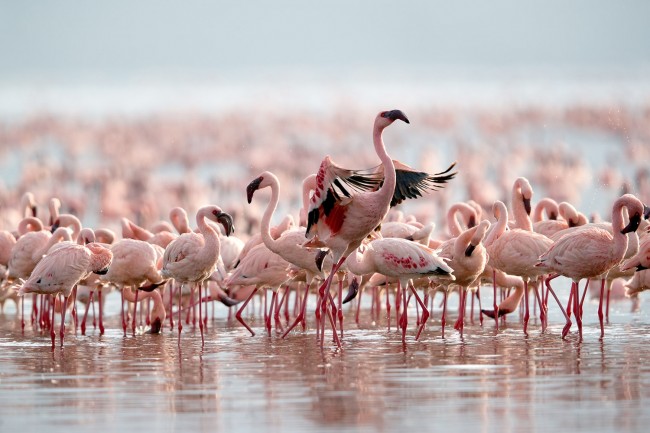
Gazetted in 1970, the reserve is best known for two things that rarely appear together anywhere else in Africa: enormous flocks of flamingos, numbering up to two million birds at peak times, and an actively geothermal western shoreline where geysers and hot springs break the surface close enough to the water’s edge that you can watch them from a short walk.
The geologist J.W. Gregory, after whom the Great Rift Valley’s Gregory Rift is named, called the view here the most beautiful in Africa when he surveyed the region in 1892, and more than a century of tourism development elsewhere in Kenya hasn’t dulled the case for that claim.
This guide covers what makes Bogoria worth the drive, how to time a visit around its flamingo populations, and what to expect from a reserve that combines birding, geology and dramatic Rift Valley scenery in a single compact area.
Should You Visit Lake Bogoria?
Bogoria suits travellers who want a dramatic, visually striking landscape without the long distances and logistics of northern Kenya’s more remote reserves. At roughly 260 kilometers and four to five hours from Nairobi by road, it’s accessible enough for a focused two- or three-day trip while still delivering a markedly different experience from the Maasai Mara or Amboseli circuit.
It particularly suits birders and photographers. Flamingo numbers here fluctuate with water chemistry and conditions at other Rift Valley lakes, particularly Nakuru, so Bogoria sometimes hosts the larger share of East Africa’s soda-lake flamingo population in a given year, a dynamic worth understanding before you plan your visit around a guaranteed spectacle. The hot springs add a geological dimension that few wildlife-focused reserves can match, making this a strong stop for travelers who want variety within a single location.
Where it suits people less is as a big cat or large-mammal safari destination. While greater kudu, zebra, gazelle and impala are present, Bogoria is not built around predator sightings, and travelers expecting a classic game drive experience should treat this as a complement to, rather than a substitute for, a savannah-based safari.
Why Lake Bogoria Is Worth the Drive
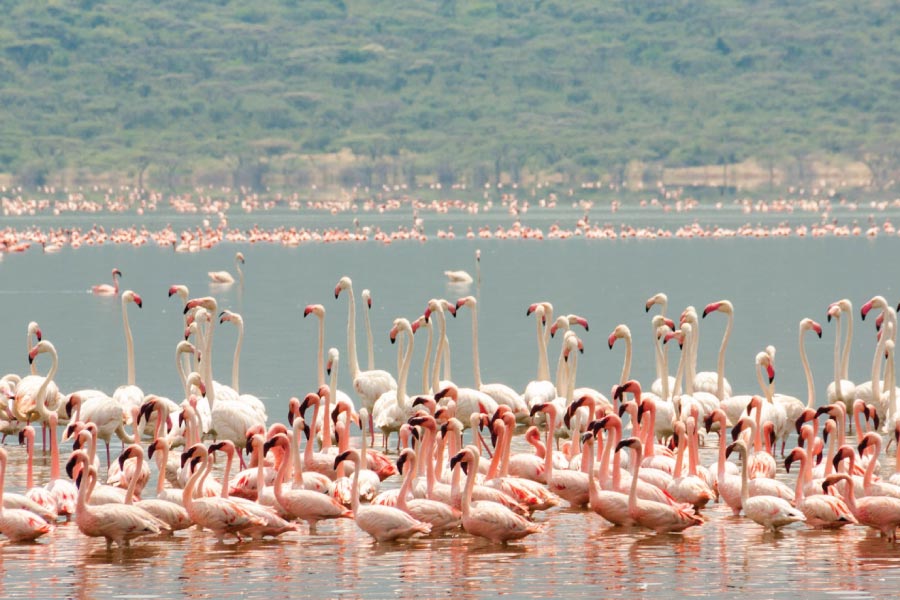
The scale of the flamingo gatherings here is hard to grasp until you’ve actually seen it. At peak times, the lake’s alkaline waters support algae blooms dense enough to draw close to two million birds, both lesser and greater flamingos, their combined pink mass visible along the shoreline from a considerable distance.
These numbers aren’t constant; flamingos move between Bogoria, Lake Nakuru National Park and Lake Natron in Tanzania depending on water conditions, which is part of what makes a well-timed visit, informed by current reports rather than assumption, worth the extra planning.
The geothermal activity along the western shore is the reserve’s other signature feature. Geysers erupt periodically and hot springs bubble up close to the lake’s edge, hot enough that guides will actively caution you against touching the water directly.
Walking this section of shoreline, with steam rising against the backdrop of flamingo flocks and the Ngendelel Escarpment towering behind, is one of the more visually striking combinations available anywhere in Kenya’s protected area network.
Greater kudu, a large, strikingly marked antelope with spiralling horns, maintain a resident population here, one of relatively few reliable places to see this species in Kenya. Birders beyond the flamingo spectacle will find pelicans, herons, storks and a range of raptors working the lake’s margins, adding depth to what’s already a strong birding destination.
Understanding the Flamingo Migration Pattern
One of the more common sources of disappointment among first-time visitors to Rift Valley soda lakes is arriving expecting a fixed, permanent population of flamingos, only to find relatively modest numbers on the day.
Understanding why helps set realistic expectations. Lesser and greater flamingos move between several Rift Valley lakes, principally Bogoria, Nakuru and Natron, across the border in Tanzania, following shifts in algae density driven by rainfall, water level and temperature.
In years when Nakuru’s water chemistry favors strong algae growth, significant numbers of birds may shift there, leaving Bogoria comparatively quieter, and the reverse happens just as readily.
This dynamic has played out repeatedly over the past few decades, with each lake taking turns as the primary gathering site depending on conditions nobody can fully predict season to season. The practical takeaway is simple: ask your operator or local guides for current reports before finalizing your visit, rather than assuming any specific month guarantees the full spectacle.
Where Is Lake Bogoria and How Do You Get There?
The reserve sits in Baringo County, roughly 260 kilometers north of Nairobi, a drive of four to five hours depending on traffic and road conditions. A 4×4 vehicle is recommended, particularly during the wet season when some access roads can deteriorate. Most visitors combine this drive with a stop at Lake Nakuru, roughly two hours south, building a multi-lake Rift Valley circuit rather than treating Bogoria as an isolated destination.
Flying is an option for travelers short on time, with charter flights to nearby airstrips followed by a road transfer, though this is less common here than for Kenya’s more established safari circuits given the relatively manageable road journey from Nairobi.
When to Visit: Seasons and Flamingo Numbers
| Season | Months | What to Expect | Best For |
| Long dry season | June – October | Easier road access, generally higher flamingo concentrations | General visits, photography, reliable road conditions |
| Short dry spell | January – February | Similar dry-season advantages, fewer visitors overall | Travellers wanting dry-season conditions outside peak months |
| Long rains | March – May | With a greener landscape, access roads can be more difficult. | Flexible travelers prioritizing scenery over convenience |
| Short rains | November – December | Lower visitor numbers, variable flamingo activity | Quieter visits, though with some logistical trade-offs |
Flamingo presence is never fully predictable, since the birds move between Rift Valley lakes based on algae levels and water chemistry that shift from year to year. Checking recent reports from your operator or local guides shortly before travel is the most reliable way to gauge current conditions, more useful than relying on a fixed seasonal calendar alone.
How Much Does a Visit Cost
| Component | Typical Cost Range | Notes |
| Park entry (non-resident) | USD 20 – 30 per day | Rates are tiered by citizen, East African resident and non-resident status; confirm current figures at the gate or with your operator. |
| Vehicle and guide fees | USD 20 – 50 per day | Charged separately from entry; confirm inclusions with your operator |
| Budget accommodation | USD 30 – 90 per night | Guesthouses and budget hotels in nearby towns |
| Mid-range lodge | USD 100 – 220 per night | Comfortable rooms, often with a swimming pool, near the reserve |
| Camping | USD 10 – 30 per person | Public and privately operated campsites with basic facilities |
Bogoria sits at a comfortable mid-range price point relative to Kenya’s major safari destinations, making it an accessible addition to a broader Rift Valley itinerary without significantly stretching most travel budgets.
Where to Stay
Lodges Near the Reserve
A handful of lodges and hotels near Bogoria offer comfortable rooms, restaurants and, at some properties, swimming pools, a welcome amenity given the Rift Valley’s warm daytime temperatures. These suit travelers wanting reliable comfort without camping.
Budget Guesthouses
Nearby towns offer a range of budget guesthouses and hotels, a practical option for travelers prioritizing cost, particularly if Bogoria is one stop within a longer, multi-destination Rift Valley trip.
Campsites
Three public campsites and one privately operated site sit within or near the reserve, offering basic facilities for travelers with their own equipment or booking through a mobile camping operator.
What to Do at Lake Bogoria
Flamingo Watching
The reserve’s signature activity is best experienced along the shoreline during daylight hours when birds are actively feeding. Photographers should plan for early morning or late afternoon light, which brings out the contrast between the pink flocks and the lake’s pale mineral-crusted shore.
Hot Springs and Geysers
A guided walk along the western shore brings you close to the reserve’s geothermal features, with periodic geyser eruptions and visibly steaming hot springs. Always follow your guide’s instructions here, since water temperatures can cause serious burns.
Birdwatching
Beyond the flamingo spectacle, pelicans, herons, storks and various raptors work the lake’s margins, giving dedicated birders plenty to focus on beyond the headline species.
Wildlife Viewing
Greater kudu, zebra, gazelle and impala are present throughout the reserve, giving game-drive enthusiasts a reasonable, if modest, mammal-watching component to combine with the birding and geothermal highlights.
Community Visits
Several operators arrange visits to nearby local communities, offering insight into the pastoralist and agricultural life of this part of the Rift Valley, a worthwhile addition for travellers wanting cultural context alongside the natural attractions.
Who Lake Bogoria Suits Best
| Traveller Type | Fit | Why |
| Birders and flamingo enthusiasts | Excellent | Among East Africa’s most significant flamingo gathering sites |
| Photographers | Excellent | A rare combination of geothermal features, dramatic escarpment scenery and mass bird flocks |
| Travellers building a Rift Valley circuit | Strong | Pairs naturally with Lake Nakuru and other nearby destinations |
| Families | Moderate to strong | Manageable drive from Nairobi, though hot springs require careful supervision of children |
| Big Cat and large-mammal focused safari travellers | Moderate | Better paired with a savannah park than visited as a primary wildlife destination |
Frequently Asked Questions
Are flamingos guaranteed at Lake Bogoria?
No. Flamingo numbers shift between Bogoria, Lake Nakuru and Lake Natron in Tanzania based on algae levels and water chemistry, which vary year to year. Checking recent reports with your operator before travel gives a far better sense of current conditions than relying on seasonal averages alone.
Is it safe to approach the hot springs and geysers?
Yes, with a guide and sensible caution. The springs and geysers reach very high temperatures, and direct contact with the water can cause serious burns, so always follow your guide’s directions and keep a safe distance from active vents.
How does Lake Bogoria compare to Lake Nakuru?
Both are Rift Valley soda lakes known for flamingos, but Bogoria adds geothermal features that Nakuru doesn’t have, while Nakuru offers a wider range of large mammals, including rhino. Many travellers visit both as part of a combined Rift Valley itinerary.
How many days should I spend at Lake Bogoria?
One to two days is typically sufficient to cover the flamingo viewing areas, the hot springs walk and a general game drive, making it a practical addition to a longer Kenya itinerary rather than a standalone multi-day destination.
Can I swim in Lake Bogoria?
No. The lake’s alkaline, saline water isn’t suitable for swimming, and the shoreline’s geothermal features make parts of it actively dangerous. Enjoy the lake visually and via guided shoreline walks rather than attempting to enter the water.
Is a 4×4 vehicle necessary to visit?
It’s strongly recommended, particularly during the wet season when some access roads can become difficult. Even in drier months, a higher-clearance vehicle makes for a more comfortable visit given the reserve’s terrain.
What should I pack for a Lake Bogoria visit?
Sturdy walking shoes for the shoreline walk near the hot springs, sun protection given the open, exposed terrain around the lake, binoculars for birding, and a telephoto lens if photography is a priority, since the best flamingo shots typically require some reach across the shoreline.
Planning Your Visit
Lake Bogoria rewards travellers willing to time their visit around current flamingo conditions rather than assuming any given month guarantees the full spectacle. Pair it with Lake Nakuru or another Rift Valley stop to build a well-rounded itinerary, and set aside enough time for an unhurried walk along the geothermal shoreline, which tends to be the part of the trip people remember longest.
A sensible rhythm for most visitors is an early-morning arrival at the shoreline for the best bird activity and softest light, a mid-morning walk along the geothermal features once the day has warmed slightly, and an afternoon game drive through the reserve’s wider terrain before settling into your accommodation for the evening. This pacing works with the landscape rather than against it, and it tends to produce the strongest photographs and the calmest overall experience.
If you’re building a Rift Valley circuit and want help deciding how to sequence Bogoria alongside Nakuru or other nearby destinations, our team can help put together a route that matches your timeline and interests.


