Mahali Mzuri | Olare Motorogi Conservancy, Kenya
Mahali Mzuri, Swahili for “beautiful place,” is Sir Richard Branson’s own safari camp, opened in 2013, and one of only five properties permitted to operate within the private Olare Motorogi Conservancy on the northern edge of the Maasai Mara.
With just twelve tented suites and a maximum capacity of 24 guests, it delivers precisely the kind of low-density, high-access safari experience the Mara’s private conservancy system was designed to offer, and it has been recognized for it, winning Condé Nast Traveller’s Middle East Readers’ Choice Award for Best Safari Camp in 2017 and finishing a close second in 2018.
I recommend Mahali Mzuri regularly to clients who want genuine exclusivity without an overly formal atmosphere, since the camp’s help-yourself bar policy and relaxed, home-like hospitality set it apart from some of the more buttoned-up ultra-luxury properties elsewhere in the region.
A Conservancy Built for Wildlife Density
The Olare Motorogi Conservancy spans roughly 13,500 hectares, sometimes cited at closer to 33,000 acres depending on the specific boundary measured, and sits directly in the path of the Great Wildebeest Migration, which typically arrives between July and September before moving on toward Tanzania’s Serengeti by November.
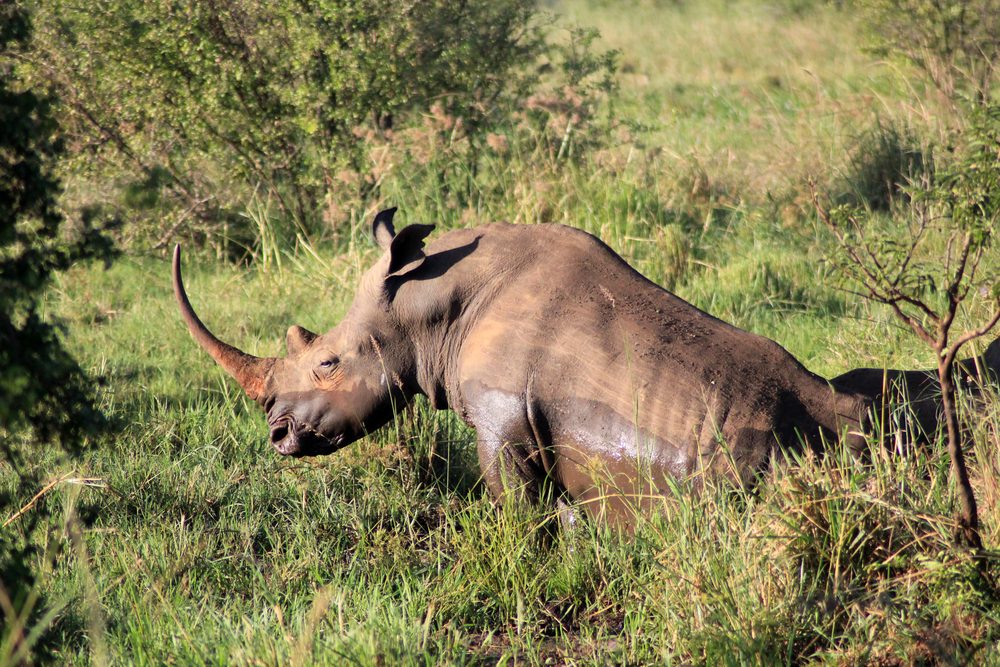
Even outside migration season, the conservancy sustains a resident population of around 150,000 wildebeest, alongside elephant, lion, leopard, and zebra in numbers that consistently impress even well-traveled safari guests.
The conservancy was formed through an agreement between Maasai landowners and a small consortium of tourism operators, a model now widely regarded as one of the more successful examples of community-based conservation in the wider Mara ecosystem, since landowners earn steady lease income from tourism rather than converting grazing land to agriculture or overstocking it with livestock.
Because access is limited to just five camps across the entire conservancy, sightings here happen with a fraction of the vehicle traffic found in the busier sections of the main Maasai Mara National Reserve, and the conservancy model permits activities, night drives, walking safaris, and off-road driving, that the reserve itself does not.
Guests staying at Mahali Mzuri can also extend into the national reserve itself when they want to range further afield, giving the best of both the conservancy’s exclusivity and the reserve’s broader scope, and the roughly one-hour flight from Nairobi’s Wilson Airport into Olare Orok airstrip, followed by a short game-drive transfer, means the whole journey from the capital to camp takes considerably less time than driving.
The Tents
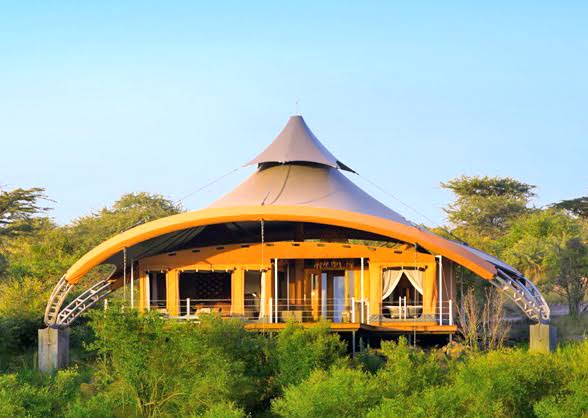
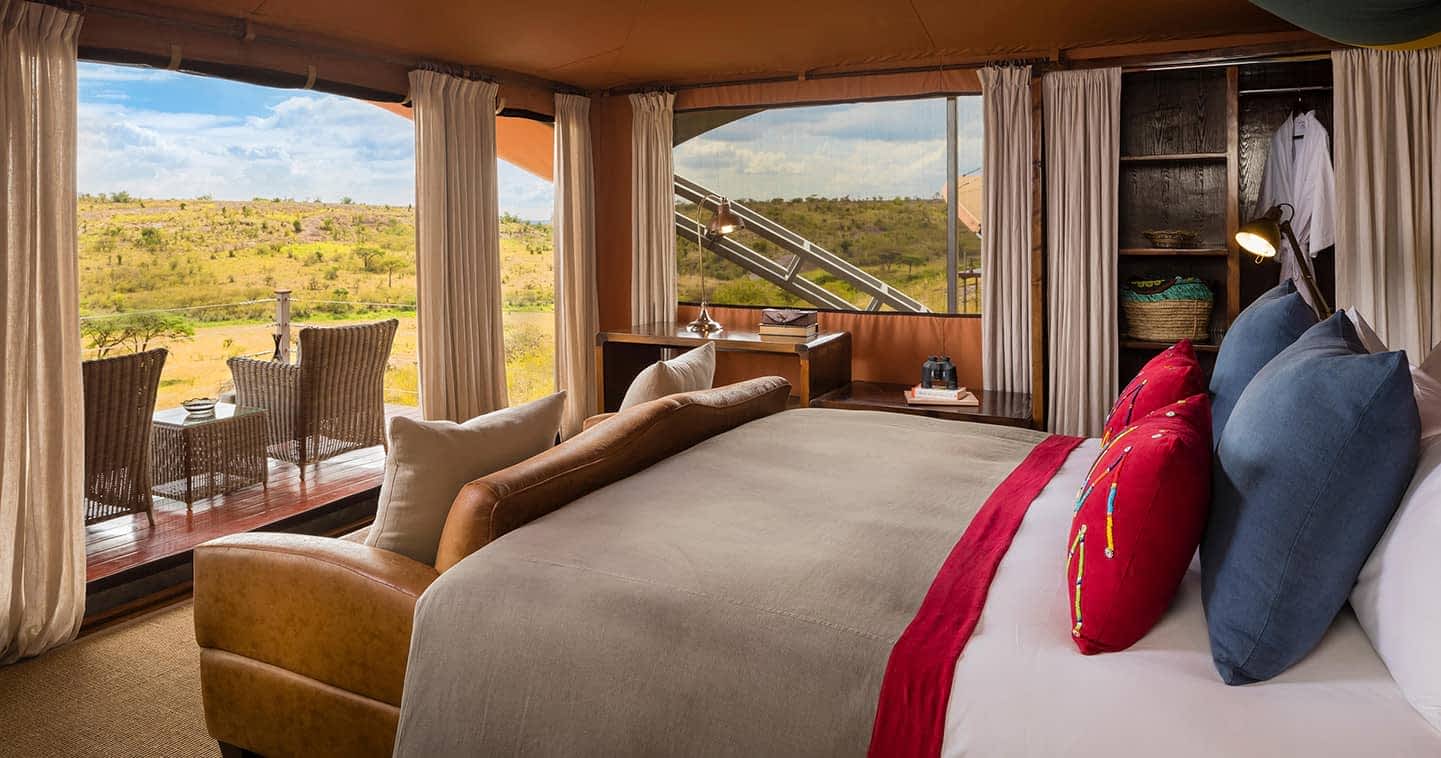
Each of Mahali Mzuri’s twelve tented suites covers around 106 square metres including its private deck, positioned along a ridge overlooking the valley below and connected to the expansive Main Tent via raised walkways.
Two of the twelve are family-style tents, each with a four-poster king bed in the main bedroom and a sofa bed in the living area capable of sleeping two additional children, making the camp a genuinely practical choice for families traveling with younger guests.
Design leans distinctly modern rather than traditional canvas-camp rustic, with air conditioning, private bathrooms, and outdoor furniture on every deck, and the camp operates on a genuinely all-inclusive, help-yourself bar policy that gives the whole property a relaxed, home-away-from-home atmosphere.
Every tent includes a hairdryer, sunscreen, insect repellent, torches, extra blankets, ponchos, bathrobes, slippers, a complimentary mini-bar restocked daily, snacks, and tea and coffee making facilities, along with hot water bottles for the genuinely cool early mornings and evenings that the Mara’s altitude produces even during the warmer months. Power sockets follow the British three-pin standard, and the camp provides adaptors in-room for guests arriving without their own.
Amenities
Mahali Mzuri centres its shared spaces around a twelve-metre heated infinity pool with sweeping views over the plains, alongside the Main Tent’s library, open fireplace, iPads, TV and DVD player, and games console, a genuinely comfortable spot to unwind before or after a game drive.
The Nasaro Spa, positioned at the base of the valley below camp, offers a curated menu of massages, facials, and grooming treatments, with the option to have a massage delivered directly to your own tent’s private deck for guests who’d rather not make the walk down. A small fitness area accommodates guests wanting to stay active during their stay, and the camp maintains family-friendly services and activities for younger travelers.
Dining is genuinely one of the camp’s standout features: chefs prepare pan-African dishes drawing on a wide range of regional cultures, flavours, and spices, served across a genuine variety of settings, the dining tent, the main deck, a private tent-side dinner, or a full bush barbecue under the stars.
All breads and pastries are baked fresh daily, and the kitchen is happy to arrange private meals for a special occasion, whether that’s a bush BBQ, a champagne picnic, or a quiet, candlelit dinner for two away from the main camp entirely. Complimentary Wi-Fi is available throughout camp, a detail worth noting for guests who need to stay loosely connected during their trip.
Activities
Twice-daily game drives with expert Maasai guides and trackers form the backbone of a Mahali Mzuri stay, conducted in the conservancy’s private vehicles with the flexibility to go off-road when a sighting calls for it, an option unavailable in the adjacent national reserve.
Night drives reveal a different cast of nocturnal wildlife entirely, genets, civets, aardvarks, and the more elusive nocturnal predators, and guided walking safaris offer a slower, more detailed way to engage with the conservancy’s ecology, its plant life, tracks, and smaller creatures that a vehicle inevitably passes by.
A typical day’s rhythm runs from a light breakfast bite and Kenyan coffee before the early game drive, through a genuine bush breakfast paused mid-drive, to a leisurely lunch back at camp or out on the plains, afternoon tea before the second game drive, and sundowners in the bush as the sun goes down.
Community visits to a nearby Maasai village, arranged with your guide, offer genuine insight into daily Mara life, and guests with a minimum three-night stay receive one complimentary day pass into the main Maasai Mara National Reserve, a useful way to combine the conservancy’s exclusivity with a taste of the reserve’s broader scope during a single trip.
Best Time to Visit
Given its position directly in the path of the Great Migration, Mahali Mzuri’s single best window is July through September, when the herds move through the Olare Motorogi Conservancy en route to the Mara’s central plains and, eventually, back toward the Serengeti by November.
Outside these months, the conservancy’s resident population, roughly 150,000 wildebeest alongside elephant, lion, and leopard, remains genuinely strong, meaning a visit at any time of year still delivers meaningful wildlife viewing, and travelers specifically hoping to avoid peak-season pricing and crowds often find April through June, and again in November, offer a compelling combination of lush scenery, lower rates, and still-excellent resident game.
The camp does apply a minimum two-night stay requirement over the festive season, worth building into holiday travel plans well in advance, and given its modest twelve-suite capacity, booking several months ahead is a sensible precaution regardless of which season you choose, particularly for July through September dates when demand across the entire conservancy peaks simultaneously.
Why It’s Worth the Price
Nightly rates at Mahali Mzuri typically fall between $1,500 and $2,500 per person, fully inclusive of accommodation, meals, drinks, safari activities, airstrip transfers, and conservancy fees, with published double-occupancy rates for the whole twelve-tent camp ranging from roughly $25,000 to $43,000 per night depending on season for a full buyout.
For that investment, guests receive genuinely exclusive access to one of the Mara ecosystem’s richest wildlife areas, a camp capped at just 24 guests at any time, and the kind of relaxed, unpretentious luxury that Branson’s Virgin brand has built its reputation on.
For travelers drawn to Branson’s broader design sensibility, and to a conservancy model that channels tourism revenue directly into protecting one of the Mara ecosystem’s richest wildlife areas, Mahali Mzuri delivers a genuinely distinctive stay within reach of the classic Mara experience.
I often position it for clients as a strong middle ground between the more traditional, formally styled camps elsewhere in the Mara and the ultra-contemporary design statements found at properties like Angama, offering genuine luxury without ever feeling stiff or overly formal.