Luxury Safaris in Kenya
Kenya invented the modern safari as a luxury travel concept, and it still does luxury better than almost anywhere else in Africa, but the word itself has been stretched thin by marketing copy attached to lodges that are comfortable rather than exceptional.
A real luxury Kenya safari is not just a nicer room with a higher price tag. It is private conservancy access that puts you ahead of the vehicle crowds, guiding of a caliber that turns a game drive into an education, and a level of logistical seamlessness, private airstrips, and pre-arranged everything that lets you forget you are managing a trip at all.
Understanding this distinction before you start comparing camps saves you from paying premium prices for what is, underneath the marketing language, a fairly standard experience.
This guide covers what genuine luxury looks like across Kenya’s main safari regions, what it costs, how to choose between the private conservancies and the national reserves, and how to build an itinerary that delivers on the promise the price tag makes.
Should You Prioritise Luxury for Your Kenya Trip?
Short answer: if this is a milestone trip, a honeymoon, an anniversary, or simply a holiday where comfort and exclusivity matter as much as the wildlife itself, yes, and Kenya rewards that investment more consistently than most other safari countries.
The honest case for paying for luxury in Kenya specifically, rather than treating it as an indulgence you could skip, rests on access. Kenya’s private conservancies, land leased directly from Maasai and other local landowners and managed for low-density, high-value tourism, offer activities simply unavailable inside the crowded public reserves: night game drives, off-road driving to follow wildlife, walking safaris, and a guest-to-vehicle ratio that can mean having a pride of lions entirely to yourself rather than sharing the sighting with a dozen other vehicles. That access, not the thread count of your bedsheets, is what genuinely separates a luxury Kenya trip from a merely expensive one.
Why Kenya Remains a Luxury Safari Leader
Kenya’s luxury safari reputation rests on three genuine structural advantages rather than marketing alone. First, the conservancy model surrounding the Maasai Mara, Naboisho, Olare Motorogi, Mara North, and others has matured over two decades into one of the most sophisticated private land conservation and tourism partnerships in Africa, directly channelling guest fees into land lease payments for local Maasai communities while strictly limiting bed density per conservancy.
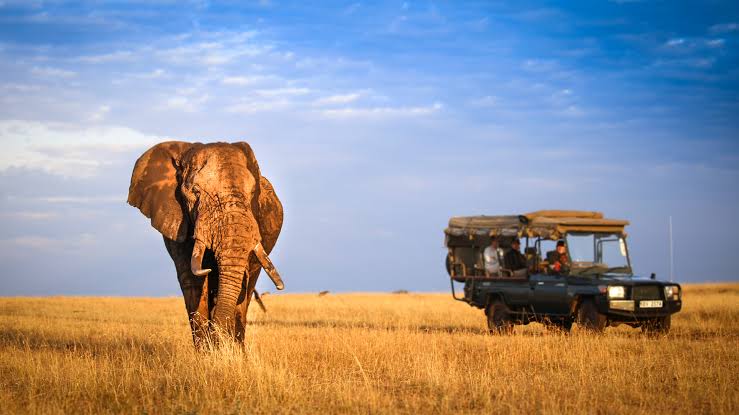
Second, Kenya’s professional guiding standard, formalized through rigorous qualification schemes, produces some of the most knowledgeable safari guides on the continent. Third, Kenya’s extensive network of private airstrips and light aircraft charter services makes fly-in luxury genuinely convenient, letting guests move between regions in under an hour rather than enduring long road transfers.
Where to Go for a Luxury Kenya Safari
|
Region |
Signature Luxury Draw |
Best For |
|
Maasai Mara Conservancies |
Private concessions, night drives, walking safaris, minimal vehicle crowding |
First-time luxury safari guests wanting the classic Kenya experience without the crowds |
|
Amboseli |
Elephant herds against Kilimanjaro’s backdrop |
Photographers seeking iconic imagery |
|
Laikipia Plateau |
Exclusive conservancies, rhino conservation, horseback and camel safaris |
Guests wanting genuine variety beyond vehicle game drives |
|
Samburu |
Distinct arid-landscape wildlife, unique species not found further south |
Repeat visitors seeking a different ecosystem and culture |
|
Lewa Wildlife Conservancy |
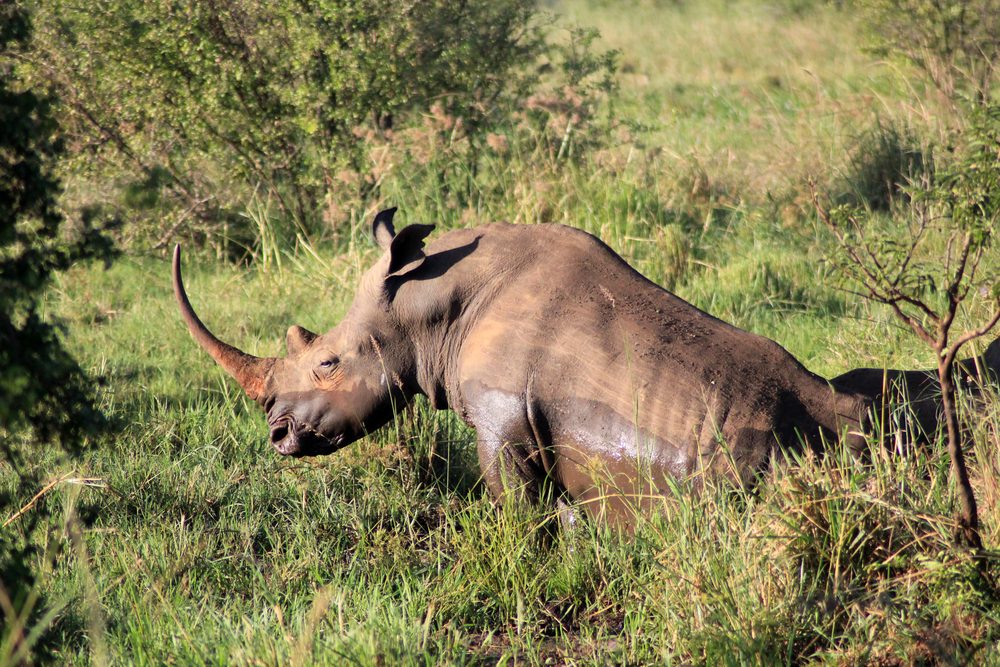
Leading rhino conservation success story, exclusive-use camps |
Conservation-minded travellers and those wanting very low visitor density |
Conservancy vs National Reserve: The Core Luxury Decision
This is the single most important decision shaping how “luxury” your Kenya safari actually feels, more than any individual lodge choice. The Maasai Mara National Reserve itself, while home to extraordinary wildlife including the annual migration, permits a high volume of vehicles, and popular sightings can draw ten or more vehicles simultaneously, an experience that undercuts the sense of exclusivity most luxury travellers are paying for.
The private conservancies bordering the reserve operate under strict, contractually enforced vehicle limits per sighting, often capping it at three to five vehicles maximum, and restrict access to guests staying at conservancy-linked camps only.
Practical implication: paying conservancy rates buys you exclusivity and activity variety, not just a nicer tent; staying inside the public reserve, even at an expensive lodge, does not grant the same access restrictions or off-road driving privileges.
This distinction surprises a fair number of first-time visitors who assumed their high nightly rate automatically included conservancy-style access, only to find themselves sharing sightings with a dozen other vehicles because their specific lodge sits inside the public reserve boundary rather than a private concession.
What Genuine Luxury Includes
It helps to be concrete about what separates a luxury booking from an expensive but otherwise standard one, since the word itself has been diluted by overuse across the industry.
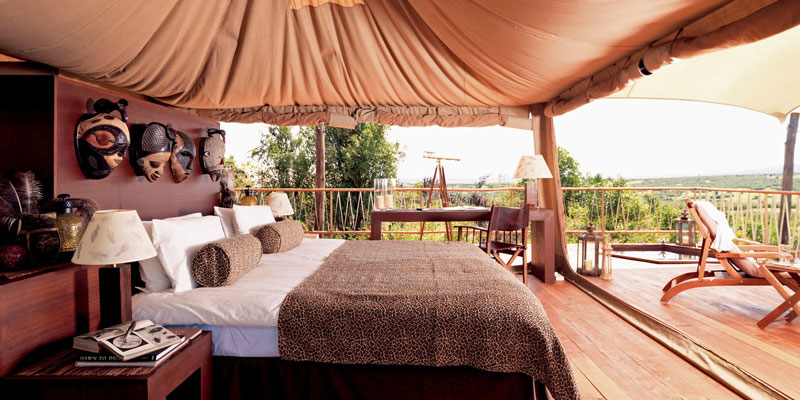
• Private guide and vehicle for your stay. Shared game drive vehicles with other guests are standard at mid-range properties; genuine luxury camps assign you a dedicated guide and vehicle for the duration of your stay.
• Off-road driving privileges. Only available in private conservancies, allowing your guide to leave the marked tracks to follow wildlife directly, unavailable within the public national reserve.
• Night game drives. Another conservancy-exclusive activity, revealing nocturnal species like leopard, aardvark, and civet that are essentially invisible during standard daytime drives.
• Walking safaris. Led by an armed, specially qualified guide, offering a completely different sensory experience of the bush than a vehicle-based drive.
• Genuinely private accommodation. Exclusive-use camps or villas that can be booked entirely for one group, common at the top end of Kenya’s luxury market.
• Seamless fly-in logistics. Private or shared charter flights connecting your camps directly, avoiding long road transfers between regions.
Who a Luxury Kenya Safari Suits
|
Traveller Type |
Fit |
Reasoning |
|
Honeymooners and anniversary travellers |
Strong fit |
Exclusive-use camps and private guiding create genuine privacy and romance |
|
First-time safari couples with flexible budget |
Strong fit |
Conservancy access delivers a markedly better wildlife experience than budget alternatives. |
|
Photographers |
Strong fit |
Off-road driving and low vehicle density are genuinely valuable for serious photography. |
|
Families with young children |
Moderate fit |
Some conservancies specifically welcome children with tailored activities; confirm minimum age policies first, as some camps restrict young children. |
|
Budget-conscious first-time visitors |
Poor fit |
Mid-range public reserve lodges deliver strong wildlife viewing at a fraction of conservancy pricing. |
What Luxury Costs
|
Style |
Per Person Per Night (all-inclusive) |
What’s Typically Included |
|
Upper mid-range |
$600 to $900 |
Comfortable ensuite tented camp, shared game drives, full board |
|
Luxury |
$1,000 to $1,800 |
Private guide and vehicle, conservancy access, premium tented suites, most drinks included |
|
Ultra-luxury / exclusive-use |
$2,000 to $5,000+ |
Entire camp or villa buyout, dedicated staff, bespoke activities, top-tier dining |
When to Travel for the Best Luxury Experience
|
Season |
Conditions |
Notes |
|
July to October |
Peak dry season, Mara River crossings possible |
Highest demand and pricing; book luxury camps 9 to 12 months ahead |
|
January to March |
Dry, good general game viewing, calving season nearby in Tanzania |
Slightly less crowded than peak migration months, excellent value for the experience quality |
|
April to May |
Long rains |
Lowest rates, some camps close for refurbishment, lush green scenery appeals to photographers |
|
November to December |
Short rains |
Good value, birdlife at its best, moderate crowds |
What Sets Kenya’s Top Camps Apart From Elsewhere in Africa
Guests who have safaried in southern Africa’s top lodges sometimes ask what genuinely distinguishes Kenya’s luxury tier beyond the conservancy access already covered. Part of the answer is guiding depth.
Kenya’s professional guide qualification system, including the demanding Silver and Gold level assessments administered by the Kenya Professional Safari Guides Association, produces guides with a level of ecological and behavioral knowledge that transforms a game drive from a wildlife-spotting exercise into a genuinely educational, often deeply personal experience.
Many of Kenya’s most respected guides have spent decades in a single conservancy, building relationships with specific prides, elephant families, and individual animals that they can discuss with a depth few other destinations can match.
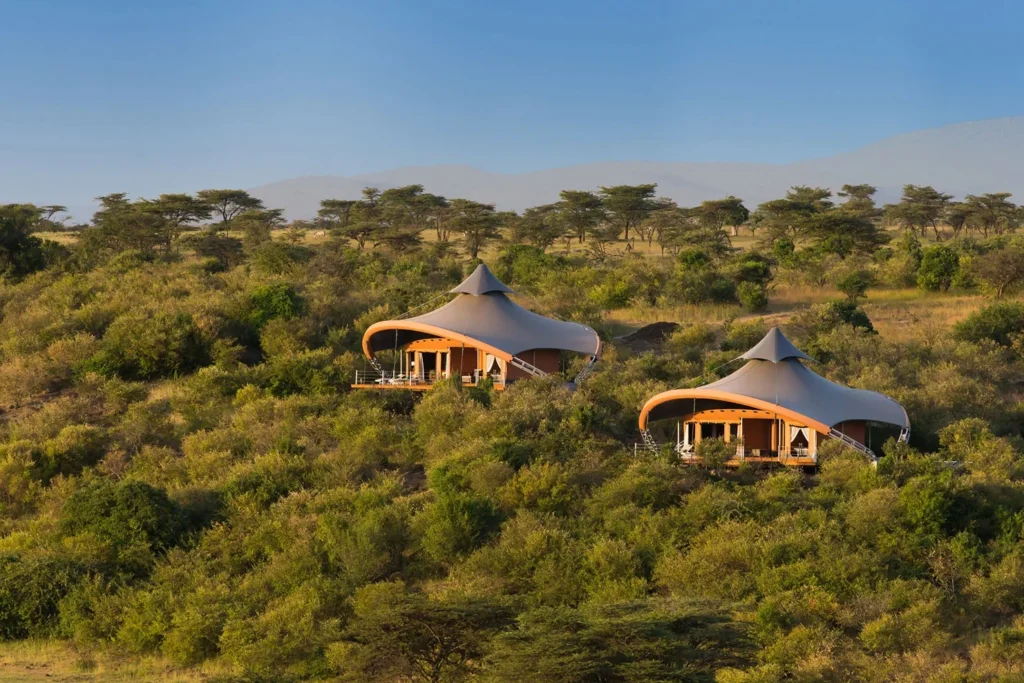
The other distinguishing factor is the sheer density of genuinely owner-run, character-driven camps rather than large chain-operated properties. Kenya’s conservancy model has historically favored smaller operators with direct relationships to the land and community, which shows up in a level of personal attention and authenticity that can be harder to find at scale elsewhere.
Guests frequently comment that the same manager or host greets them at the airstrip on arrival and again at the final farewell days later, a continuity of personal relationship that larger, more corporate lodge groups elsewhere on the continent sometimes struggle to replicate.
Building a Luxury Multi-Region Itinerary
The genuine advantage of Kenya’s fly-in infrastructure is that a well-built luxury itinerary can cover two or three distinct ecosystems within seven to ten days without the fatigue of long road transfers.
This is a meaningful differentiator compared with countries where road conditions or distances make multi-region trips considerably more tiring, and it is part of why Kenya suits guests with limited total holiday time but a desire to see more than one landscape and wildlife community.
• Days 1 to 3: Maasai Mara conservancy, focusing on classic game viewing and, if timed for migration season, river crossings.
• Days 4 to 5: Laikipia Plateau, adding rhino tracking, horseback safari options, and a genuinely different landscape.
• Days 6 to 7: Amboseli, for elephant herds and Kilimanjaro backdrop photography, or Samburu for a distinct northern ecosystem.
Each leg connects via a forty-five minute to one-hour light aircraft flight rather than a multi-hour road transfer, preserving the sense of effortlessness that defines a genuinely luxury trip.
Planning Advice for a Genuine Luxury Experience
• Choose conservancy-based camps over public reserve lodges if exclusivity matters to you. This single decision affects your experience more than any individual property’s decor or amenities.
• Book 9 to 12 months ahead for peak season. Kenya’s top luxury camps have limited capacity by design, and availability disappears early for July through October.
• Ask specifically about guide-to-guest ratio. A dedicated private guide for your group, rather than a shared vehicle, is one of the clearest markers of genuine luxury versus upper mid-range positioning.
• Confirm what “all-inclusive” actually covers. Premium spirits, spa treatments, and certain specialty activities are sometimes priced separately even at high-end camps.
• Ask about single-supplement policies if travelling solo. Many exclusive-use camps price per property rather than per person, which can make solo travel considerably more expensive unless a smaller, non-exclusive room category is available.
• Consider travel insurance that covers charter flight delays. Light aircraft schedules are generally reliable but weather-dependent, and a policy covering itinerary disruption protects against the knock-on cost of a missed connection.
• Build in fly-in connections rather than road transfers between regions. The cost difference is meaningful but preserves the pace and comfort that justifies the overall luxury positioning.
Frequently Asked Questions
Is a luxury conservancy safari actually better for wildlife viewing, or just more comfortable?
Both. Lower vehicle density and off-road driving privileges genuinely improve sighting quality and duration, not just comfort, making conservancy access a wildlife-viewing advantage as much as a lifestyle one.
How far in advance should I book a luxury Kenya safari?
Nine to twelve months ahead for peak season travel (July to October) is advisable given limited camp capacity. Six months ahead is generally sufficient for shoulder season travel.
Are conservancies more expensive than staying in the Maasai Mara National Reserve itself?
Generally yes, though the price difference reflects different access and activity privileges rather than purely cosmetic upgrades.
Can I combine a luxury Kenya safari with Tanzania or Uganda?
Yes, this is a common combination, particularly pairing Kenya with the Serengeti for an extended migration-focused trip, or with Uganda for gorilla trekking, though it requires careful routing since flights between countries are not always direct.
What is the single biggest mistake people make booking a “luxury” Kenya safari?
Booking an expensive lodge inside a crowded public reserve and assuming the price alone guarantees an exclusive experience, when the conservancy model is what actually delivers the low-density, off-road access most travellers associate with luxury.
Do luxury camps in Kenya cater to dietary restrictions and special requests?
Yes, virtually all luxury-tier camps handle dietary restrictions, allergies, and special occasion requests, such as anniversary setups or private dining, as a matter of course, given the personalised service level built into their pricing.
Is it worth paying for a private charter flight instead of a scheduled shared flight between camps?
For most itineraries, a scheduled shared light aircraft service is perfectly comfortable and considerably cheaper, since it still lands you directly at your camp’s private airstrip. Private charters are worth the extra cost mainly for large groups, tight scheduling needs, or additional privacy preferences.
Building Your Luxury Kenya Trip
Genuine luxury in Kenya is less about thread count and infinity pools, though the best properties have both, and more about access: which conservancies you can reach, how many other vehicles share your sightings, and whether your itinerary flows by air rather than long road transfers.
Understanding this distinction before you book is what separates a trip that merely looks luxurious in photographs from one that actually feels that way while you are living it.