Photographer’s Safari: Best Budget Trips Designed Around Great Light and Sightings
A genuine photographer’s safari schedules game drives, waterhole hides, and boat cruises specifically around optimal shooting light, animal behavior, and composition, rather than simply sightseeing on a standard tourist timetable.
The good news for budget-conscious photographers is that this approach doesn’t require the most expensive private vehicle or the most exclusive lodge; it requires the right destination, the right season, and a genuine understanding of when light and wildlife activity actually align.
This guide covers the destinations and budget-friendly strategies that deliver strong photography results without the $600-a-day price tag some photo-safari marketing implies is mandatory.
What Makes a Photography Safari Different
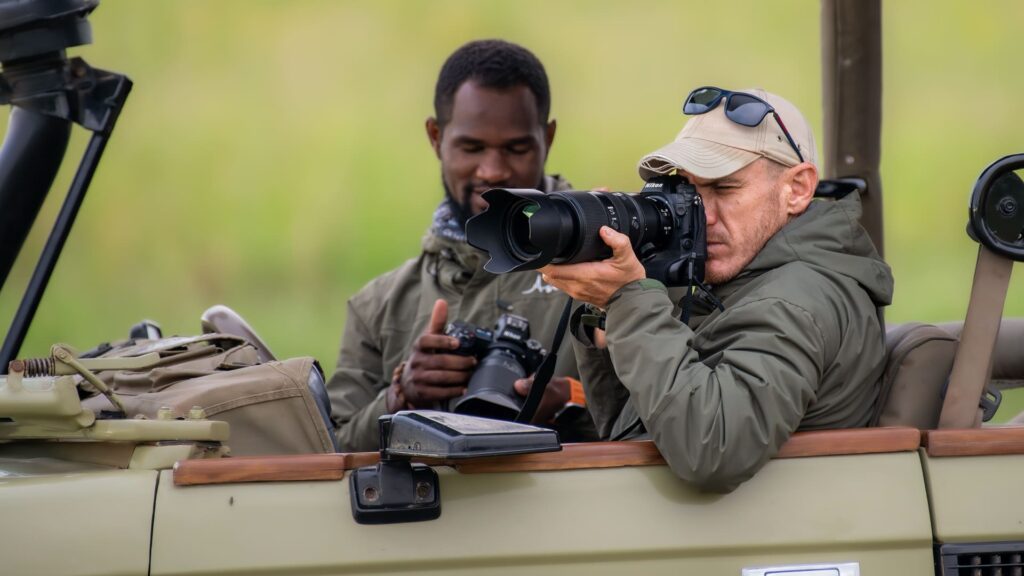
The core principle is unobtrusive observation, letting you record genuine wildlife interactions rather than staged or rushed sightings. Photography-focused itineraries prioritize dawn and dusk drives specifically for the quality of light rather than simply because that’s when tours are scheduled, and a guide who understands photography, vehicle positioning relative to the sun, patience at a sighting, and anticipating behavior before it happens transforms your results compared with a standard guide moving on a fixed schedule.
Genuine Budget Range for a Photography Safari
Photography safaris typically range from $250 to $800 per person per day, with budget camping options starting around $250, mid-range lodges at $400 to $500, and luxury properties exceeding $600 daily. Given this range, a rewarding photography-focused trip is entirely achievable at the lower end, provided you prioritize destination and timing over lodge exclusivity.
Top Budget-Friendly Photography Destinations
Kenya’s Masai Mara and Tanzania’s Serengeti remain the standout choices for photographing the Great Migration and big cats against dramatic savanna backdrops, and both offer meaningful budget camping and shared-group options alongside their more expensive private alternatives.
Tanzania’s Tarangire National Park delivers excellent elephant photography at considerably lower visitor density and cost than the more famous migration parks, making it an underrated budget-friendly addition.
South Africa’s Kruger National Park offers a further strong budget option specifically for photographers; self-drive access lets independent travellers control their own pace and positioning entirely for free beyond the vehicle rental itself, and the park’s excellent road network makes this practical for photographers comfortable navigating independently.
How to Keep Costs Down Without Sacrificing Shot Quality
Choosing budget camping accommodation over luxury lodges doesn’t affect your actual photography; you’re out on the game drive itself either way, and the animals don’t know or care what tier of lodge you’re returning to afterward.
Moving in larger groups to share transport and vehicle costs, and choosing a comfortable budget safari lodge over a five-star equivalent, both meaningfully reduce overall trip cost while preserving full access to the same wildlife and lighting conditions.
Why Season Matters More Than Budget for Photographers
The dry winter months, roughly May through October across Southern and East Africa, deliver the finest light for photography, clear skies, low sun angles, dramatic golden-hour conditions, and thinner vegetation that doesn’t obscure animals the way lush green-season growth does.
This seasonal light quality matters more to your final images than almost any accommodation upgrade, meaning a budget trip timed correctly for dry-season light outperforms a luxury trip poorly timed for flat, midday conditions.
For migration-specific photography, river crossings in the Masai Mara and northern Serengeti happen roughly July through October, while Botswana’s Okavango Delta flood peaks June through August, offering water reflection and aerial-perspective opportunities distinct from dry savanna photography elsewhere.
The Green Season: An Underrated Budget Photography Window
November through March, the green season, brings dramatic skies, newborn animals, and considerably lower prices across most destinations, a real opportunity for budget-conscious photographers willing to trade slightly less predictable wildlife concentration for atmospheric light and significant cost savings.
Storm clouds and lush, vivid landscapes during this period offer a different, arguably more painterly aesthetic than the classic dry-season golden light most photographers default to expecting.
Essential Gear That Doesn’t Require a Big Budget
A beanbag, not a tripod or monopod, is the standard support tool for vehicle-based photography; most lodges provide these for resting your lens on the vehicle rail, and they’re considerably more practical than any tripod alternative in a moving or idling vehicle.
Beyond that, spare batteries, considerably more memory cards than you think you’ll need, and a lens cloth cover the essential backup kit; dust gets everywhere on safari, and your camera sensor will collect it regardless of budget tier.
Know Your Gear Before You Arrive
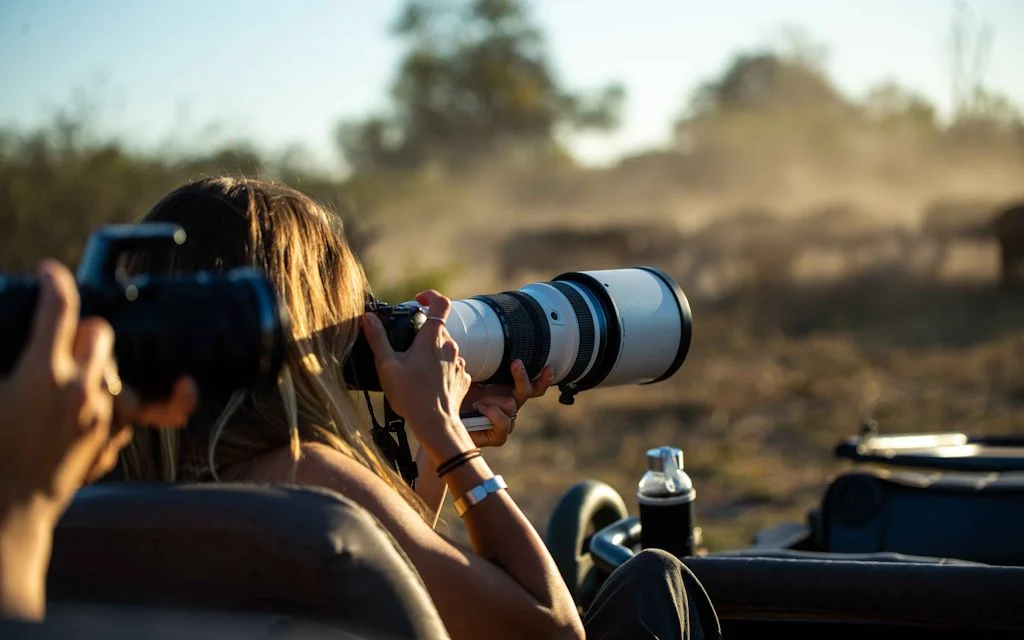
The single most repeated piece of advice from experienced wildlife photographers is simple: know your camera’s settings and your lens’s capabilities before you’re in the field. Some of the best sightings and action-packed moments last only a few fleeting seconds, and unfamiliarity with your own equipment costs genuine shots regardless of how much you’ve spent on the trip itself or the gear you’re carrying.
Choosing the Right Trip Length
A worthwhile photography-focused safari runs four to fifteen days depending on your specific goals; shorter trips suit photographers targeting one specific destination or event, while longer itineraries, ten to fourteen days, suit those wanting to properly cover a migration-focused circuit across both Kenya and Tanzania.
Attempting to cover too much ground too quickly, four parks in six to eight days by road, for instance, compromises photography time in favor of transit time, a trade-off worth avoiding regardless of budget.
Quick-Reference Budget Photography Guide
| Destination | Best For | Best Season for Light |
| Masai Mara / Serengeti | Migration, big cats, dramatic plains | Jul-Oct (crossings), year-round dry season light |
| Tarangire national park | Elephants, lower cost, fewer crowds | Jun-Oct dry season |
| Kruger (self-drive) | Budget independence, Big Five | May-Sep |
| Okavango Delta | Water reflections, aerial perspective | Jun-Aug (flood peak) |
Frequently Asked Questions
How much does a genuine photography-focused safari cost?
Roughly $250 to $800 per person per day, with budget camping options starting around $250 and mid-range lodges at $400-500, meaning strong photography results are achievable well below the luxury price tier.
What’s the best season for wildlife photography light?
The dry winter months, roughly May through October across Southern and East Africa, deliver the clearest skies, lowest sun angles, and thinnest vegetation, producing the finest overall light quality.
Do I need a tripod for safari photography?
No, a beanbag is the standard support tool for vehicle-based photography, resting on the vehicle rail. Most lodges provide these, and they’re considerably more practical than a tripod in a moving vehicle.
Is self-drive photography a good budget option?
Yes, particularly in South Africa’s Kruger National Park, where excellent roads and independent access let photographers control their own pace and positioning at no extra cost beyond vehicle rental.
Should I avoid green season for photography to save money?
Not necessarily. Green season (November-March) brings dramatic skies, newborn animals, and lower prices, offering a different, atmospheric photography style at meaningful cost savings.