
Arawale National Reserve : The Complete Travel Guide
Arawale National Reserve covers 533 square kilometres of Garissa County in north-eastern Kenya, roughly 77 kilometres south of Garissa town, bordered by the Tana River to the west and the Garissa-Lamu road to the east. It was gazetted in 1974 for one overriding purpose: to serve as the only in-situ conservation site for the hirola, an antelope so critically endangered that its loss would mark the first extinction of an entire mammal genus on the African continent in modern history.
We want to be upfront about something before going further. Most of the reserves in this series are places we’d actively encourage you to visit. Arawale is different. It is, first and foremost, a conservation stronghold with minimal visitor infrastructure, set in a part of Kenya where security conditions require careful, current verification before any trip is planned. This guide explains why the hirola matters, what Arawale actually offers a visitor today, and where a more realistic wildlife encounter with this species might take you instead.
Should You Visit Arawale National Reserve?
For the vast majority of travellers planning an African safari, the honest answer is no, not as a standalone destination. Arawale has essentially no tourism infrastructure built around general visitors: no established lodges, no routine game-drive circuits, no visitor centre. It functions as a protected area administered jointly by Garissa County and Kenya Wildlife Service, with access oriented toward conservation researchers, rangers and specialist programs rather than day-to-day tourism.
There’s also a security dimension that needs to be stated plainly. Garissa County sits within a part of Kenya where foreign government travel advisories have, at various points, discouraged travel outside specific towns and corridors, owing to the security situation along the Kenya-Somalia border region. Before any consideration of a trip near Arawale, check your government’s current advisory for Garissa County and consult directly with a Kenya-based operator who maintains active, verified knowledge of conditions on the ground. We’re not going to tell you this is simple or routine, because it isn’t.
If what draws you to this guide is a deep interest in the hirola itself, rather than Arawale specifically, there is a better answer: the Ishaqbini Hirola Community Conservancy, a fenced sanctuary established within the species’ range and run through Northern Rangelands Trust in partnership with local communities. It was created precisely because protecting hirola in an open, unfenced reserve like Arawale proved difficult, and it now offers a far more realistic, better-supported way to see this species in the wild.
Why the Hirola Matters
The hirola, whose Somali name means beige, is a slender, long-faced antelope with distinctive spectacled markings around its eyes, found nowhere else on earth outside this narrow strip of eastern Kenya and historically south-western Somalia. Population estimates have fallen from more than 15,000 individuals in the 1970s to roughly 500 today, a collapse driven primarily by habitat loss rather than direct hunting pressure.
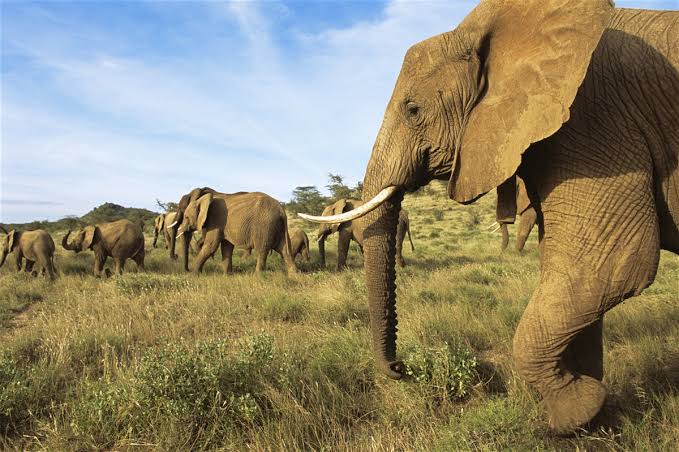
Research into that collapse points to a specific, interlocking set of causes. Tree cover across the hirola’s historical range increased by more than 250 percent between 1985 and 2012, driven in part by a steep decline in elephant numbers, which previously kept woody vegetation in check by browsing and trampling, and a parallel surge in goat and camel herding, which altered grazing pressure across the landscape. Hirola avoid areas with heavy tree cover, so as open grassland shrank, so did their usable habitat, even in the absence of increased predation.
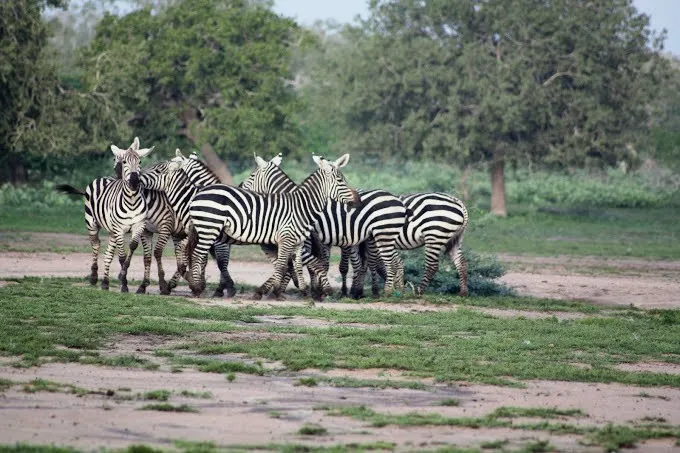
Arawale was gazetted specifically to halt this decline, and it remains the only reserve created for this single purpose. Since 2005 it has also functioned as a lion conservation unit alongside Somalia’s Lag Badana National Park, and surveys have recorded Grévy’s zebra, African wild dog and cheetah, all globally threatened species, within its boundaries, along with signs of elephant presence.
The Landscape Along the Tana River
Arawale sits within the lower Tana River ecosystem, a landscape shaped by the river’s floodplain to the west and drier Acacia-Commiphora bushland stretching east toward the Garissa-Lamu road. This mix of riverine forest fragments and open bush grassland is exactly the kind of terrain hirola depend on, and it’s also what made the area attractive to pastoralist communities grazing cattle, goats and camels, a dynamic that sits at the heart of the conservation challenge here.
Where livestock numbers and grazing patterns remain compatible with open grassland, hirola habitat holds up reasonably well. Where goat and camel numbers rise sharply, as they have across much of this range since the 1970s, woody shrub encroachment follows, and hirola habitat shrinks with it.
The Tana River itself adds a layer of ecological complexity and conservation opportunity. Riverine forest patches along its banks support a different suite of species from the surrounding bushland, and several conservation organisations working in the hirola’s range have focused on restoring the balance between grazing, tree cover and open grassland along this corridor, since piecemeal restoration efforts elsewhere have generally proven less effective without addressing the whole landscape at once.
How Conservation Work Here Has Evolved
Arawale’s creation in 1974 reflected an approach common to that era: gazette a protected area, restrict major land uses within it, and let enforcement do the rest. That approach worked reasonably well while elephant numbers remained high enough to naturally suppress woody vegetation and while grazing pressure from domestic livestock stayed moderate. Neither condition held through the following decades.
Elephant populations fell sharply across the region, removing a key natural check on tree and shrub growth, while livestock herding shifted toward browsing species like goats and camels that actually benefit from, rather than suppress, woody encroachment.
More recent conservation strategy has moved toward active rangeland restoration rather than passive protection alone: manual clearing of encroaching trees, reseeding with native grasses, and stronger enforcement within Arawale’s boundaries, paired with the fenced-sanctuary model pioneered at Ishaqbini. This shift mirrors a broader lesson in African conservation over the past few decades, that gazetting land on a map is rarely sufficient on its own, and that ongoing, adaptive management matters as much as the initial designation.
Where This Fits in a Kenya Itinerary
For travellers with a deep interest in rare antelope conservation specifically, and with the flexibility to work through a specialist operator on logistics and current security guidance, a visit oriented around Ishaqbini rather than Arawale itself is the more sensible path.
For everyone else, the hirola’s story is better understood through research, conservation reporting and, where available, exhibits or talks offered by conservation-focused safari operators and lodges elsewhere in Kenya, rather than through a direct visit to this specific landscape.
If your broader itinerary already includes northern Kenya destinations like Meru National Park, which shares some ecological characteristics with the hirola’s range and has its own conservation success stories, that’s often a more practical way to engage with this region’s conservation challenges without the access complications that come with Arawale and its immediate surroundings.
Comparing Arawale to a destination like Lewa Wildlife Conservancy, roughly 300 kilometres to the northwest, is instructive. Lewa also began with a single-species conservation focus, in its case black rhino, but built out visitor infrastructure, funded partly through tourism revenue, alongside its protection work, creating a model where conservation and responsible tourism reinforce each other.
Arawale has not followed that same path, partly because of resourcing, partly because of the security considerations already discussed, and that difference is worth understanding if you’re trying to picture what a hirola-focused trip might actually look like compared with Kenya’s more polished conservancy tourism model.
What a Specialist Visit Would Involve
| Consideration | What to Expect |
| Access | Requires coordination with a specialist operator and, where relevant, conservation organisation partners rather than independent travel |
| Security planning | Current advisory checks and local verification are essential before any itinerary is finalised |
| Accommodation | No established lodges within Arawale itself; logistics typically route through Garissa town or a partner conservancy |
| Realistic focus | Conservation engagement and research-oriented visits rather than conventional game drives |
| Better alternative for most travellers | Ishaqbini Hirola Community Conservancy, which offers more structured, better-supported access to the species |
Who This Might Still Suit
| Traveller Type | Fit | Why |
| Conservation researchers and students | Possible, with institutional coordination | Direct access to the only dedicated hirola conservation site |
| Specialist wildlife travellers with flexible planning | Possible, via Ishaqbini rather than Arawale directly | A realistic, better-supported way to encounter the species |
| General safari travellers | Not recommended | Minimal tourism infrastructure and ongoing access considerations make this unsuitable for a conventional trip |
| First-time Kenya visitors | Not recommended | Far better wildlife experiences, with established infrastructure, exist elsewhere in Kenya |
Frequently Asked Questions
Can tourists visit Arawale National Reserve?
In practice, general tourism infrastructure here is minimal to non-existent. Access is oriented toward conservation and research purposes, and any visit requires careful coordination with a specialist operator alongside current security verification for the area.
What is a hirola, and why is it so rare?
The hirola is a slender, long-faced antelope found only in a narrow range of eastern Kenya and historically south-western Somalia. Its population has fallen from over 15,000 in the 1970s to roughly 500 today, driven mainly by habitat loss as tree cover expanded across its historical grassland range.
Where can I actually see hirola in the wild?
The Ishaqbini Hirola Community Conservancy, a fenced sanctuary run through Northern Rangelands Trust in partnership with local communities, offers the most structured and realistic opportunity to see hirola today, though it still requires planning through a specialist operator familiar with the region.
Is it safe to travel to Garissa County?
This varies over time and by specific location within the county. Always check your government’s current travel advisory for Garissa County before planning any trip in this region, and rely on direct, up-to-date guidance from a Kenya-based operator rather than general assumptions.
Why would a reserve be created for just one species?
Arawale was established specifically because the hirola had no other protected stronghold and faced, even in the 1970s, a serious risk of extinction. Single-species reserves like this are relatively rare in Africa, but they reflect how urgent the conservation need was judged to be at the time.
Does Arawale protect any other wildlife?
Yes. Surveys have recorded Grévy’s zebra, African wild dog and cheetah within the reserve, all globally threatened species, along with signs of elephant presence, and the reserve has functioned as a lion conservation unit since 2005.
What caused the hirola population to collapse so dramatically?
Primarily habitat loss rather than hunting. A steep decline in elephant numbers removed a natural check on woody vegetation, while a sharp rise in goat and camel herding across the region encouraged further shrub encroachment, together shrinking the open grassland hirola depend on by well over 250 percent across their historical range between 1985 and 2012.
How does Ishaqbini differ from Arawale as a conservation model?
Ishaqbini uses a fenced sanctuary within a community-run conservancy, which gives hirola protection from both habitat pressure and predation in a more controlled setting. Arawale remains an open, unfenced reserve, which has made it harder to shield the population from the same pressures that drove the broader decline.


