Where to Go in East Africa to See Giraffes
East Africa is home to three genetically distinct giraffe populations, the Maasai giraffe, the reticulated giraffe, and the Rothschild’s giraffe (now classified as the Nubian giraffe), and each one occupies a specific, limited range shaped by geography, rainfall patterns, and decades of conservation history.
A safari built entirely around Nairobi and the Maasai Mara will show you Maasai giraffe reliably and rarely anything else. A traveler hoping to photograph the sharply netted coat pattern of a reticulated giraffe needs to be in northern Kenya, full stop.
Someone chasing the pale, unmarked legs of a Nubian giraffe needs Lake Nakuru, Soysambu, or Murchison Falls specifically, because outside a handful of protected areas, this subspecies has all but disappeared from the wild.
For wildlife photographers and serious safari planners, this is not a minor detail. Each subspecies has a different coat pattern, a different silhouette, and a different conservation story worth understanding before you build an itinerary around it.
This guide works through where each giraffe subspecies actually lives, which parks and conservancies deliver consistent sightings, and how to build a giraffe-focused stop into a wider Kenya, Tanzania, or Uganda safari without derailing your route or your budget.
East Africa’s Giraffe Subspecies
Giraffe taxonomy has shifted meaningfully in recent years. Genetic research led the IUCN’s Giraffe and Okapi Specialist Group to recognize four distinct giraffe species rather than one species with several subspecies, a change formally adopted in 2025.
For safari planning purposes, the practical distinctions that matter are the same three populations East Africa has always been known for, now classified as separate species: the Masai giraffe, the reticulated giraffe, and the Nubian giraffe, which absorbed the population long known as Rothschild’s giraffe once genetic testing showed the two were identical. Most lodges, guides, and travel resources still use the older name Rothschild’s giraffe, so expect to see both terms used interchangeably.
Maasai Giraffe (Giraffa tippelskirchi)
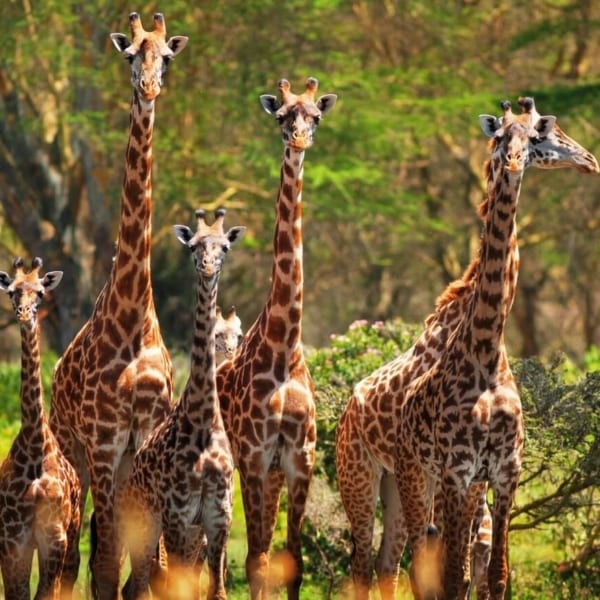
The Maasai giraffe is the one most travelers picture when they think of an African giraffe: tall, with jagged, star-shaped or oak-leaf spots that grow darker and more irregular with age. It is also the tallest giraffe subspecies and, by extension, the tallest land animal on earth, with mature bulls occasionally exceeding 18 feet.
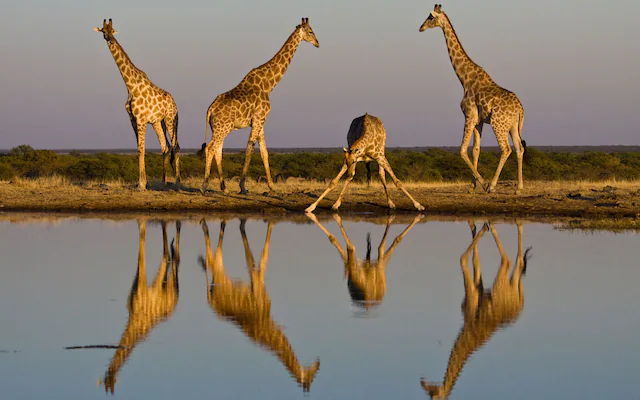
Maasai giraffe range across southern and central Kenya into central and northern Tanzania, making them the default giraffe of the classic Kenya-Tanzania safari circuit, Amboseli, Tsavo, the Maasai Mara, the Serengeti, Tarangire, and Lake Manyara all fall within their range.
An estimated 32,000 remain in the wild, and the IUCN lists the subspecies as Endangered following a documented population decline of roughly 50 to 56 percent over three decades, driven mainly by habitat loss and fragmentation rather than direct poaching.
Reticulated Giraffe (Giraffa reticulata)
The reticulated giraffe is the most visually striking of the three to photograph, with a tight, web-like network of white lines dividing large, polygonal, brick-orange patches, a pattern sharp enough to look almost architectural against Samburu’s dry-country light.
This subspecies is confined to northern and northeastern Kenya, with small historical populations extending into Somalia and Ethiopia, though Kenya’s protected areas now hold the best-secured populations.
Samburu National Reserve, neighboring Buffalo Springs and Shaba, and the private conservancies of the Laikipia Plateau are the reliable strongholds. Numbers have fallen hard: an estimated 15,780 to 20,900 reticulated giraffe remain today, down from roughly 36,000 in the mid-1980s, a decline of more than 50 percent in under four decades, and the subspecies is listed as Endangered.
Rothschild’s Giraffe / Nubian Giraffe (Giraffa camelopardalis camelopardalis)
This is the rarest and most conservation-dependent of the three. Pale-coated, with cream-colored legs that carry no markings below the knee, sometimes joked about by guides as looking like it is wearing white socks, the Nubian giraffe was reduced to an estimated 250 individuals in its core Ugandan range as recently as 2010, and was formally listed as Critically Endangered by the IUCN in 2018 following a documented decline of roughly 95 to 98 percent over three decades.
Its recovery is one of East African conservation’s genuine good-news stories: translocation programs and dedicated protection have rebuilt populations at Lake Nakuru National Park, Soysambu Conservancy, and Nairobi’s Giraffe Centre in Kenya, while Uganda’s Murchison Falls National Park now holds over 1,575 individuals, more than half of the entire wild population of the subspecies. Outside these specific protected areas, seeing a Nubian giraffe in the wild is genuinely difficult.
This brings up the objection we hear most often when discussing giraffe-focused planning: aren’t giraffe just everywhere on an African safari anyway? In a loose sense, yes, giraffe as a genus appear across a huge swath of savanna Africa.
But the three East African populations do not overlap, and several of the region’s most popular parks, the Maasai Mara and central Serengeti among them, host only Maasai giraffe. A traveler who wants to see all three subspecies, or who has a specific photographic target like the reticulated giraffe’s netted coat, needs to route deliberately rather than assume proximity to one giraffe guarantees exposure to another.
Top Giraffe-Viewing Locations at a Glance
Use this table to map the landscape quickly, then read the detailed profiles below for what each location actually offers and who it suits.
| Location | Country | Giraffe Subspecies | Best Season | Best For |
| Lake Nakuru National Park | Kenya | Rothschild’s (Nubian) | Year-round; June-Oct clearest | Guaranteed sightings, birding combo |
| Soysambu Conservancy | Kenya | Rothschild’s (Nubian) | Year-round | Off-the-beaten-path, walking safaris |
| Giraffe Centre, Nairobi | Kenya | Rothschild’s (Nubian, sanctuary-bred) | Year-round | Families, first close encounter |
| Samburu National Reserve | Kenya | Reticulated | Jun-Oct & Jan-Feb | Photographers, dramatic light |
| Laikipia Plateau (Ol Pejeta, Lewa) | Kenya | Reticulated | Year-round | Conservation-focused travelers |
| Amboseli National Park | Kenya | Maasai | Jun-Oct, Jan-Feb | Kilimanjaro-backdrop photography |
| Tarangire National Park | Tanzania | Maasai | Jun-Oct dry season | Highest giraffe density, baobabs |
| Murchison Falls National Park | Uganda | Rothschild’s (Nubian) | Dec-Feb, Jun-Sept | Largest wild population, river cruise |
Seasonal windows reflect general dry-season visibility across East Africa. Rift Valley locations (Nakuru, Soysambu) and sanctuary settings (Giraffe Centre) are reliable year-round since resident herds do not migrate.
The Best Giraffe-Viewing Locations, In Detail
1. Lake Nakuru National Park, Kenya (Rothschild’s / Nubian Giraffe)
Lake Nakuru is the single most reliable place in Kenya to see Rothschild’s giraffe, and for many travelers it is the easiest to add to an existing itinerary since it sits only about two and a half hours from Nairobi along the Rift Valley escarpment.
The park’s giraffe were not originally native to this specific location; roughly 65 individuals now live within the park after a 1977 translocation program brought them in from western Kenya specifically for conservation, and the population has been closely monitored ever since.
Recent shifts in the lake’s water level have pushed the resident herds toward the Naishi Plains and the southern cliffs, away from the flooded fever-tree forest where they were once easiest to find, so a guide with current local knowledge matters here more than in past years.
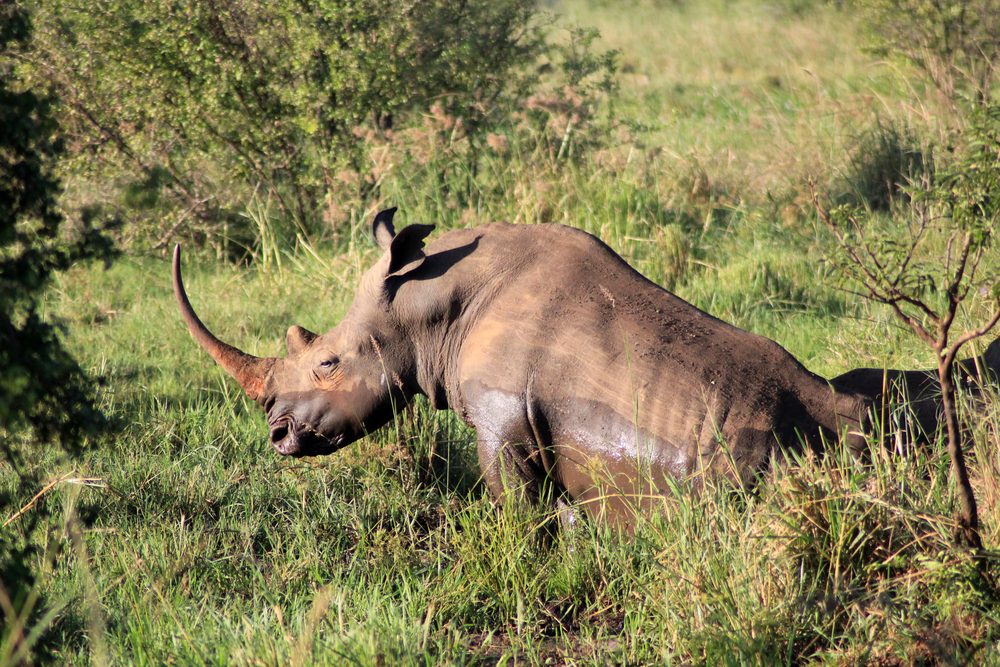
Beyond giraffe, Nakuru is a compact, fenced park known for both black and white rhino, dense lion prides, and, when conditions align, flamingo concentrations on the lake itself. It suits travelers who want a guaranteed Rothschild’s sighting without a long detour, and pairs naturally with a Rift Valley leg between Nairobi and the Maasai Mara.
2. Soysambu Conservancy, Kenya (Rothschild’s / Nubian Giraffe)
Soysambu sits between Lake Elmenteita and Lake Nakuru National Park in the Rift Valley, a 48,000-acre private conservancy that receives a fraction of the visitors that pass through the neighboring national park. It holds more than 90 Rothschild’s giraffe, close to 10 percent of the world’s population of this endangered subspecies, descended in part from animals translocated here from Lake Nakuru in 1995.
Because it is a conservancy rather than a national park, Soysambu permits activities not allowed inside Nakuru’s boundaries, including walking safaris and night drives, giving photographers and conservation-minded travelers a closer, quieter encounter with the same subspecies.
The setting is classic Rift Valley scenery, acacia woodland and open grassland framed by extinct volcanic cones, and it works well as a low-key overnight stop for travelers who want depth over speed, rather than a tick-box sighting from a moving vehicle.
3. Giraffe Centre, Nairobi, Kenya (Rothschild’s / Nubian Giraffe)
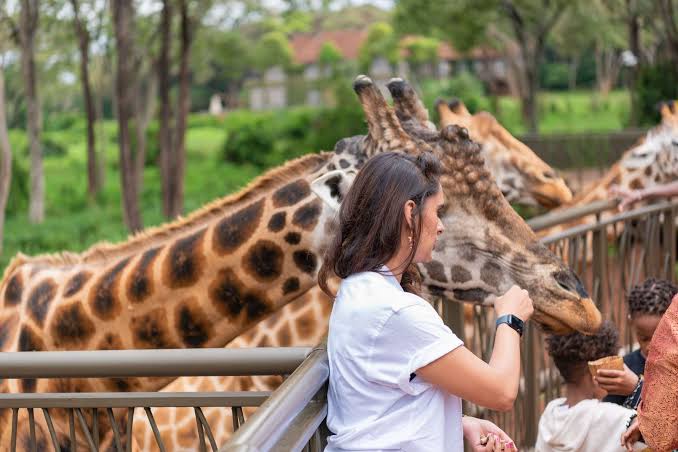
The Giraffe Centre, run by the African Fund for Endangered Wildlife (AFEW), is not a wild safari experience, and it does not pretend to be one. Founded in 1979 as a breeding sanctuary for the then-critically low Rothschild’s giraffe population, it sits within Nairobi’s Langata suburb and offers an elevated feeding platform where visitors hand-feed resident giraffe from arm’s length.
Breeding herds raised here have been translocated to Ruma National Park, Lake Nakuru, and Nasalot, making the center a genuine link in the subspecies’ recovery rather than simply a photo opportunity.
For travelers with only a day or two in Nairobi before or after a safari, or families traveling with young children who will not tolerate multi-hour game drives, it delivers a close, safe, and educational giraffe encounter in under an hour, easily combined with a Nairobi National Park half-day drive.
4. Samburu National Reserve, Kenya (Reticulated Giraffe)
Samburu is the definitive location for reticulated giraffe, and it delivers them reliably enough that local guides count the species among the reserve’s Samburu Special Five, the arid-adapted animals found here that are scarce or absent farther south.
The netted, brick-orange coat pattern that defines this subspecies stands out sharply against Samburu’s dry acacia woodland and the reddish soils along the Ewaso Nyiro River, making it a favorite stop for photographers specifically chasing this species.
Reticulated giraffe here are well adapted to the arid landscape, drawing much of their moisture from browsed vegetation rather than standing water, which lets them range across genuinely dry country most other browsers avoid.
Samburu combines naturally with neighboring Buffalo Springs and Shaba reserves, and its remoteness relative to the southern circuit means considerably lighter vehicle traffic at sightings, a real advantage for photography.
5. Laikipia Plateau: Ol Pejeta and Lewa Conservancies, Kenya (Reticulated Giraffe)
The private conservancies of the Laikipia Plateau, most notably Ol Pejeta and Lewa Wildlife Conservancy, sit just south of Samburu and hold healthy reticulated giraffe populations alongside some of Kenya’s most active rhino conservation programs.
What distinguishes Laikipia from the neighboring national reserves is flexibility: because these are privately managed conservancies rather than government-run parks, they permit night drives, walking safaris, and off-road driving, giving conservation-focused travelers direct access to anti-poaching and rhino monitoring work alongside standard game viewing.
Ol Pejeta in particular is known for its rhino sanctuary, including the last remaining northern white rhinos, but its reticulated giraffe population is equally well established and easy to find on a typical game drive. This makes Laikipia a strong choice for travelers who want their giraffe sighting embedded within a broader wildlife-conservation story rather than as an isolated stop.
6. Amboseli National Park, Kenya (Maasai Giraffe)
Amboseli’s giraffe sightings come with a backdrop no other park on this list can match: Mount Kilimanjaro rising across the Tanzanian border, often capped with snow in the early morning before cloud builds later in the day.
Maasai giraffe are common and easy to find across Amboseli’s open plains, and the classic photograph pairing an acacia, a giraffe, and Kilimanjaro’s silhouette is something of a holy grail for safari photographers, achievable here in a way it simply is not elsewhere in Kenya.
Beyond giraffe, Amboseli is known for large, relaxed elephant herds and swamp-fed grasslands that draw dense wildlife concentrations even in dry months. It suits photographers prioritizing composition and scenery as much as species count, and pairs naturally with Tsavo West or Tsavo East for travelers extending a southern Kenya circuit.
7. Tarangire National Park, Tanzania (Maasai Giraffe)
Tarangire has the highest giraffe density in Tanzania and is often described by guides as the giraffe capital of East Africa, with herds of twenty to thirty animals a realistic daily sighting during the June-to-October dry season, when wildlife concentrates near the Tarangire River as smaller water sources dry up elsewhere.
The park’s landscape, dotted with massive, swollen-trunked baobab trees, gives Maasai giraffe sightings here a distinctive visual signature that photographers specifically seek out, different from the flatter acacia savanna of the Serengeti or Amboseli.
Tarangire works well as a shorter add-on to a northern Tanzania circuit, typically paired with Lake Manyara and the Ngorongoro Crater before continuing on to the Serengeti, and its giraffe density means even a half-day game drive delivers strong sightings without the longer search times some other parks require.
8. Murchison Falls National Park, Uganda (Rothschild’s / Nubian Giraffe)
Murchison Falls is the global stronghold for the Nubian giraffe and, for travelers focused specifically on this subspecies, the single most important location in Africa. As recently as 2010, an estimated 250 Nubian giraffe survived in their native Ugandan range; today, more than 1,650 inhabit Uganda’s protected areas, and Murchison Falls alone holds over 1,575 of them, more than half of the entire global wild population, following sustained work by the Uganda Wildlife Authority, the Giraffe Conservation Foundation, and partner researchers since 2013.
Giraffe here are typically found across the park’s northern savanna sector, easily combined with the boat cruise to the base of the falls, chimpanzee trekking in nearby Budongo Forest, and the classic game drives that also produce lion, elephant, and buffalo sightings. Because Murchison Falls requires a longer journey, whether a full-day drive from Kampala or a short domestic flight, it suits travelers building a dedicated Uganda itinerary rather than a quick add-on, but for anyone serious about seeing this subspecies in genuinely wild numbers, it is difficult to justify skipping.
Planning Advice
Combining Giraffe Locations with a Broader Safari
Most travelers are not planning a trip solely around giraffe, and none of these locations require one. Lake Nakuru and Soysambu sit directly on the standard Rift Valley route between Nairobi and the Maasai Mara, so a Rothschild’s giraffe stop adds a half-day at most to an itinerary you were likely already building.
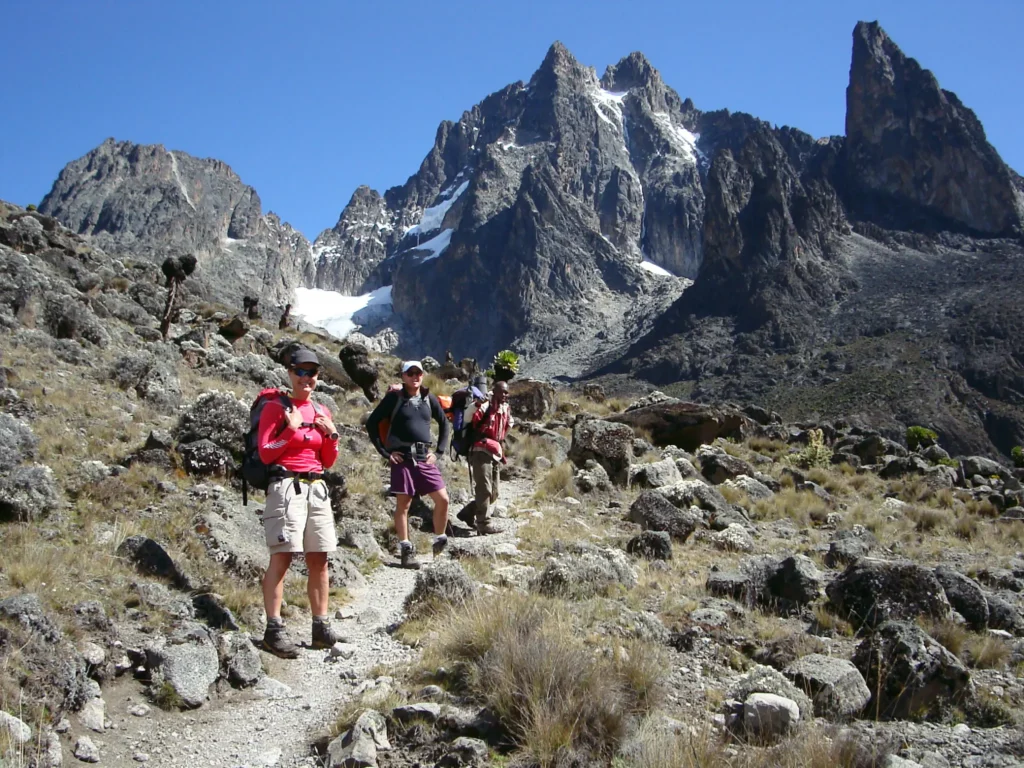
Samburu and the Laikipia conservancies pair naturally into a Central Kenya circuit alongside Mount Kenya or Aberdare National Park, and can be combined with a Maasai Mara extension for travelers who want both reticulated and Maasai giraffe on one trip.
In Tanzania, Tarangire slots directly into the standard northern circuit alongside Lake Manyara, the Ngorongoro Crater, and the Serengeti, with no extra routing required. Uganda’s Murchison Falls stands apart logistically; it is usually built as its own dedicated leg, often combined with chimpanzee trekking or as a lead-in to gorilla trekking in Bwindi Impenetrable Forest, rather than tacked onto a Kenya or Tanzania trip.
Best Time of Day and Year
Giraffe are most active browsing in the cooler hours of early morning and late afternoon, when they move steadily through acacia woodland feeding on new growth; through the heat of midday they tend to rest in shade, often standing quite still, which makes for a less dynamic sighting.
Scheduling a giraffe-focused game drive for the first two hours after sunrise or the last two before sunset generally produces more natural behavior, including the head-swinging combat between males known as necking.
Across most of the parks on this list, the dry season from June through October offers the clearest visibility, since thinner vegetation makes it easier to spot giraffe at a distance and easier to get an unobstructed photograph once you find them.
Lake Nakuru, Soysambu, and the Giraffe Centre are exceptions worth noting, since their resident, non-migratory herds make them reliable giraffe destinations at any time of year, useful if your travel dates are fixed around other priorities like the wildebeest migration.
Photography Tips
A giraffe’s height works in your favor for silhouette shots against open sky but can complicate a full-body frame at close range, so a little extra distance and a wider lens setting often produces a cleaner composition than zooming in tight.
Side-on shots that show the full coat pattern tend to read best for distinguishing subspecies in a photograph, particularly useful if you are documenting more than one type on a single trip.
In Tarangire, positioning a giraffe against a baobab trunk adds scale and context that a plain grassland background does not. In Amboseli, mornings offer the best odds of a clear, cloud-free Kilimanjaro backdrop, so plan that specific shot for the first game drive of the day rather than the afternoon.
Frequently Asked Questions
Can I get close to giraffe safely on safari?
Yes, giraffe are generally calm, non-aggressive animals and are not considered dangerous under normal safari conditions, though they can deliver a powerful kick if threatened, so guides still maintain sensible distance during game drives.
The Giraffe Centre in Nairobi and a small number of conservancy-based experiences allow supervised, safe hand-feeding at close range; inside national parks and reserves, sightings happen from the vehicle, generally at a distance that still allows excellent photographs with a standard zoom lens.
Which park has the most giraffe?
By density, Tarangire National Park in Tanzania is generally regarded as having the highest concentration of giraffe in East Africa, with herds of twenty to thirty Maasai giraffe common during the dry season.
By raw population of a single subspecies, Murchison Falls National Park in Uganda holds the largest number of Nubian giraffe anywhere, over 1,575 individuals, more than half the global wild population of that subspecies.
Can I see more than one giraffe subspecies on a single trip?
Yes, with deliberate routing. A Kenya-focused itinerary that includes Nairobi, the Rift Valley (Lake Nakuru or Soysambu), Samburu, and the Maasai Mara covers all three East African subspecies, Rothschild’s, reticulated, and Maasai, within one country. Combining Kenya with Uganda’s Murchison Falls adds a larger, wilder population of the Nubian giraffe but requires additional travel days.
What is the difference between Rothschild’s giraffe and the Nubian giraffe?
Genetically, none. DNA testing found the population long known as Rothschild’s giraffe to be identical to the Nubian giraffe, leading the IUCN to classify them as a single taxon. Most lodges, guides, and older travel resources still use the name Rothschild’s giraffe, so both terms describe the same pale-coated, unmarked-leg subspecies found at Lake Nakuru, Soysambu, and Murchison Falls.
Is the Giraffe Centre in Nairobi worth visiting if I’m also going on safari?
Yes, particularly for families or travelers with limited time in Nairobi before a flight to a safari camp. It is not a substitute for a wild sighting, but it offers a close, safe, educational encounter and a direct link to the Rothschild’s giraffe conservation story, useful context if you will later see the same subspecies in the wild at Lake Nakuru or elsewhere.
When is the best time of year to see giraffe in East Africa?
The June-to-October dry season offers the clearest overall visibility across most parks, since thinner vegetation makes spotting and photographing giraffe easier. Lake Nakuru, Soysambu, and the Giraffe Centre are reliable year-round because their giraffe populations are resident rather than migratory, which is useful if your travel dates are built around other priorities like the wildebeest migration.
Are giraffe endangered?
Two of the three East African subspecies are formally listed as Endangered by the IUCN, the Maasai giraffe and the reticulated giraffe, while the Nubian giraffe carries the more serious Critically Endangered listing following a historical decline of roughly 95 to 98 percent.
Combined African giraffe numbers have partially recovered in recent years to around 140,000 individuals continent-wide, but habitat loss remains the primary ongoing threat across all three East African populations.
Do I need a specialist guide to see a specific giraffe subspecies?
Not a specialist exactly, but local knowledge matters. Any established safari operator can route you to the correct park for the subspecies you want to see, since the distinction is really about geography, being in Samburu rather than the Mara, for instance, rather than requiring a giraffe expert.
What helps most is telling your consultant in advance which subspecies matter to you, so the itinerary is built around that priority from the start rather than adjusted after the fact.