
Kiunga Marine National Reserve: The Complete Travel Guide
Kiunga Marine National Reserve protects a scattered chain of more than fifty limestone and coral islands off Kenya’s far northern coast, stretching from the Lamu Archipelago almost to the Somali border.
It covers roughly 270 square kilometers of turquoise water, fringing reef and mangrove channel, and it was gazetted in 1979 specifically to protect dugongs, nesting sea turtles and an exceptional seabird colony found nowhere else on the Kenyan coast. On paper, it is one of the most ecologically significant marine reserves in East Africa.
In practice, Kiunga is also one of the hardest reserves in Kenya to responsibly recommend without a clear-eyed conversation about access and current travel advisories, and we think that conversation belongs at the front of this guide rather than buried at the end.
What follows covers the reserve’s ecology, how it compares to the more accessible marine parks further south, and the practical realities you need to weigh before including it in an itinerary.
Should You Visit Kiunga Marine National Reserve?
This is a reserve for a specific kind of traveler: someone who already has a serious interest in marine conservation, dugong ecology, or seabird colonies, and who is working with a specialist operator who maintains an active, well-informed presence on the northern coast. It is not a reserve to add casually onto a standard Mombasa or Diani beach holiday, and it is not the right choice if you’re looking for the easiest, most established marine park experience Kenya has to offer.
Here is the honest trade-off. Kiunga sits within Lamu County, close to the Kenya-Somalia border, and parts of this wider region have periodically been the subject of government travel advisories due to cross-border security concerns, most recently reaffirmed by the UK government’s late-2025 guidance, which advises against travel to most of Lamu County outside Lamu Island and Manda Island.
We’re not in a position to tell you what the current advisory says on the day you’re reading this, because these assessments change, sometimes quickly. What we can tell you is that checking the latest guidance from your own government’s foreign travel advisory service, and speaking directly with a Kenya-based operator who works this coastline regularly, is a non-negotiable first step before booking anything involving Kiunga.
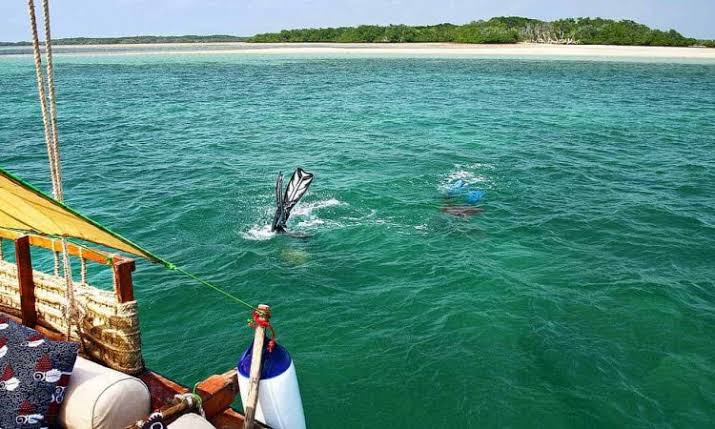
If current advisories allow travel and you’re working with an operator experienced in this specific area, Kiunga rewards the effort with a rare, largely undisturbed marine environment.
If advisories are restrictive at the time you’re planning, Watamu Marine National Reserve and Malindi Marine National Reserve offer a comparable, far more accessible introduction to Kenya’s reef ecosystems, and we’d steer most travelers toward those parks instead unless Kiunga specifically is the goal.
Why Kiunga Is Ecologically Significant
Kiunga protects one of the last meaningful dugong populations on the East African coast, a marine mammal so rare across its range that a confirmed sighting is considered noteworthy by marine biologists, not just tourists.
The reserve’s seagrass beds, which dugongs depend on almost exclusively for food, remain in better condition here than in more heavily trafficked coastal areas further south, largely because of the area’s remoteness rather than active large-scale tourism management.
Two species of sea turtle, green and leatherback, nest on the reserve’s beaches, and the outer islands host seabird colonies that Kenya’s ornithological authorities rank among the most important on the coast, including nesting roseate terns, sooty gulls, white-cheeked terns and bridled terns.
The reef system itself, built across dozens of small limestone and coral islands, remains in largely undisturbed condition, a direct result of how few visitors reach it in any given year.
The reserve borders Boni and Dodori National Reserves on the mainland side, forming part of a wider conservation landscape that links marine and terrestrial habitats along this stretch of coast. For conservation-minded travellers, that connectivity is part of what makes the broader region scientifically interesting, even where individual reserves differ sharply in how accessible they currently are to visitors.
Where Is Kiunga and How Do You Get There?
Kiunga lies off Kenya’s far northern coast in Lamu County, reached through a combination of road, sea and sometimes rail travel rather than a single direct route. The standard approach is to fly from Nairobi, Mombasa or Malindi into Manda Airstrip near Lamu, then continue by boat, typically a speedboat or traditional dhow, through the Mokowe jetty and on to Mkokoni or Kiwayu Island, the usual gateway points into the reserve itself.
An alternative route uses Kenya’s Standard Gauge Railway from Nairobi to Mombasa, followed by road and sea connections northward, a slower but scenic option for travelers with time to spare. Whichever route you choose, this is not a reserve you reach casually or without advance arrangement. Every credible visit to Kiunga is organized through a specialist operator who coordinates the boat transfers, permits and local logistics well in advance.
When to Visit: Seasons and Weather
| Season | Months | What to Expect | Best For |
| Northeast monsoon (Kaskazi) | December – March | Calmer seas, lower humidity, generally the most comfortable sailing conditions | Boat-based exploration, diving and snorkeling |
| Transition period | April – June | Long rains begin, seas can be rougher, and fewer operators are running trips. | Not generally recommended for first-time visitors |
| Southeast monsoon (Kusi) | July – September | Stronger winds and swells, more challenging boat conditions | Experienced sailors and specialist research trips only |
| Short rains and shoulder season | October – November | Transitional weather, improving conditions as the year closes | Flexible travellers willing to monitor forecasts closely |
Climate here is hot and humid year-round, with average temperatures between 22°C and 34°C and modest annual rainfall of around 500 millimeters concentrated in the long and short rains. The December to March window is consistently cited by operators as the most reliable for sea conditions, which matters more here than almost anywhere else on this list, given how much of the visitor experience depends on safe, comfortable boat travel between islands.
How Much Does a Visit Cost
Kenya Wildlife Service entry fees are modest by international standards: non-resident adults pay around USD 25 per day and children around USD 15, with East African citizens paying considerably less under local rates. The real cost of a Kiunga visit sits almost entirely in logistics rather than park fees, specifically the boat charters, specialist guiding and remote-area accommodation that make up the bulk of any itinerary here.
| Component | Typical Cost Range | Notes |
| Park entry (non-resident) | USD 25 – 40 per day | Set by Kenya Wildlife Service, subject to periodic revision |
| Boat charter and transfers | USD 150 – 500 per day, shared | Varies widely by boat type, distance and group size |
| Accommodation (Lamu/Kiwayu base) | USD 150 – 600+ per night | Privately owned hotels and lodges; no public campsite infrastructure within the reserve itself |
| Specialist marine guide | USD 80 – 200 per day | Essential for snorkeling, diving or wildlife-focused excursions |
Because so much of the cost depends on boat logistics, group size matters enormously here. A small group splitting a charter can bring per-person costs down meaningfully compared with a solo traveler or couple, which is worth factoring into how you plan the trip if budget is a significant consideration.
Where to Stay
Kiunga itself has no lodges within the reserve boundary. Visitors base themselves in Lamu town, on Manda Island, or at the small number of privately owned properties on Kiwayu Island near the reserve’s southern edge, then travel out to the reserve by boat for day trips or multi-day marine excursions.
Lamu and Manda Island
These remain the most practical and currently accessible bases, offering a range of accommodation from guesthouses to boutique hotels, along with the established tourism infrastructure, restaurants and cultural attractions of Lamu’s UNESCO-listed old town. Most operators running trips toward Kiunga coordinate transfers from one of these two bases.
Kiwayu Island
Closer to the reserve itself, Kiwayu has historically hosted a handful of exclusive, remote properties aimed at travelers specifically seeking this stretch of coast. Availability and operating status change depending on the security situation in a given period, so confirm directly with any property before relying on it as a base.
What to Do in Kiunga
Snorkelling and Diving
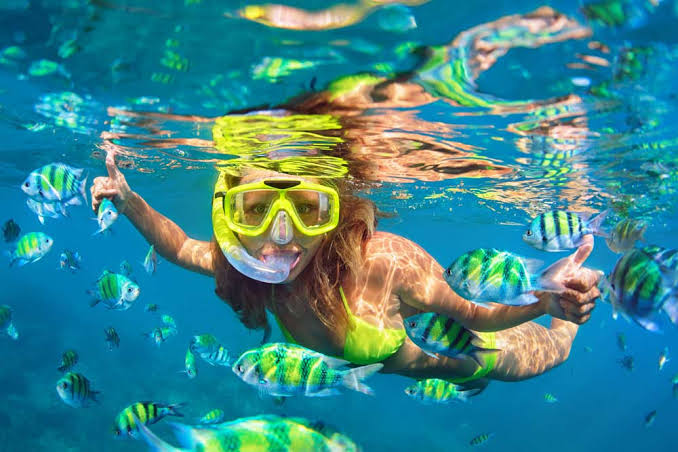
The reef systems around Kiunga’s outer islands remain in excellent condition, offering snorkeling and diving largely free of the crowding found at more accessible Kenyan marine parks. Visibility and conditions depend heavily on season, which is why the December to March window is worth prioritizing if underwater time is your main goal.
Dugong and Turtle Spotting
Sightings are never guaranteed; dugongs in particular are shy and increasingly rare across their entire range, but Kiunga offers a better realistic chance than almost anywhere else in East Africa. Turtle nesting season brings additional opportunities to observe green and leatherback turtles on protected beaches, typically arranged through a specialist guide familiar with current nesting sites.
Birdwatching
The outer islands host some of the most important seabird colonies on the Kenyan coast. Boat-based birding trips to observe nesting terns and gulls are a highlight for visiting ornithologists and serious birders, best arranged in coordination with a guide who knows the current state of each colony.
Dhow Excursions
Traditional Swahili dhows remain in regular use throughout the archipelago, and a sailing excursion aboard one adds a cultural dimension to what is otherwise a purely natural-history experience, connecting the reserve to the centuries-old trading culture of this coastline.
Comparing Kiunga to Kenya’s Other Marine Reserves
| Reserve | Access | Infrastructure | Best Suited To |
| Kiunga Marine | Remote, boat-based, advisory-dependent | Minimal, no in-reserve lodging | Specialists and experienced travellers with flexible plans |
| Watamu Marine | Easy, by road from Malindi or Mombasa | Well established, range of hotels nearby | First-time snorkellers, families, general beach travellers |
| Malindi Marine | Easy, by road, close to Malindi town | Well established, long tourism history | Day-trippers and travellers combining a reef visit with a coastal town stay |
Who Kiunga Suits Best
| Traveller Type | Fit | Why |
| Marine biologists and conservation researchers | Excellent, when access permits | Among the most ecologically intact reef and dugong habitats on the East African coast |
| Serious birders | Excellent, when access permits | Nationally significant seabird colonies on the outer islands |
| Experienced dive and sailing travellers | Strong, with a specialist operator | Remote, uncrowded reef diving, dependent on favourable sea conditions |
| General beach holidaymakers | Not recommended | Far simpler and more reliably accessible marine parks exist further south |
| First-time Kenya visitors | Not recommended | Logistics, access constraints and the need to monitor advisories make this unsuitable as an introductory destination |
Frequently Asked Questions
Is it currently safe to visit Kiunga Marine National Reserve?
This depends entirely on current conditions at the time you’re planning, and it can change. Always check your government’s latest travel advisory for Lamu County and speak directly with a Kenya-based operator before booking. We will not make a blanket safety claim here because conditions can shift from one season to the next.
Can I visit Kiunga as part of a standard Lamu holiday?
Not casually. Lamu Island and Manda Island have their own well-established tourism infrastructure and are generally the more accessible part of a Lamu trip. Extending out to Kiunga itself requires additional boat logistics and, depending on current advisories, may not be offered by every operator.
What is the best alternative if Kiunga isn’t accessible when I want to travel?
Watamu Marine National Reserve and Malindi Marine National Reserve, both further south on the Kenyan coast, offer excellent reef ecosystems, established tourism infrastructure and considerably easier access, without the same travel advisory considerations.
Are dugong sightings guaranteed in Kiunga?
No. Dugongs are naturally shy and rare across their entire range, and no responsible operator will guarantee a sighting. Kiunga offers a meaningfully better chance than most of East Africa, but patience and realistic expectations still matter.
Do I need diving certification to visit the reefs here?
Snorkelling requires no certification and is accessible to most visitors. Diving in more remote reef sections is best reserved for certified divers, given the limited rescue and medical infrastructure this far from major coastal towns.
How many days should I allow for a Kiunga trip?
A minimum of three to four days is realistic once you account for transfers from Lamu or Manda Island, weather-dependent boat scheduling, and enough time on the water to make the logistics worthwhile.
Planning Your Visit
Kiunga is not a reserve we recommend lightly, and that’s a deliberate choice in how we’ve written this guide. It holds real ecological value and rewards the travellers who can reach it responsibly, but getting there well means starting with current, verified information rather than assumptions based on how accessible Kenya’s better-known marine parks have become.
If you’re weighing Kiunga against the more established marine reserves further south, or want an honest read on current conditions before committing to this part of the coast, our team keeps in regular contact with operators working this exact region and can help you plan a trip, or a sensible alternative, based on what’s actually feasible right now.


