Bucket List Things to Do in Masai Mara
Masai Mara does not need much of an introduction; it is the reserve most people picture when they hear the word ‘safari,’ but knowing that it is famous is different from knowing what to actually do once you are there.
Game drives alone will show you plenty, but the Mara rewards travelers who build a few specific, bucket-list experiences into their itinerary rather than simply driving around and hoping for the best. Here is what is genuinely worth prioritizing and how to fit the right ones into the time you have.
Why the Mara Earns Its Reputation
Few places on earth combine this density of predators with landscapes open enough to actually watch them work. The Mara’s rolling grasslands, cut through by the Mara River and its riverine forest, create ideal hunting terrain, which is exactly why lion, cheetah and leopard sightings here are consistently among the best in Africa.
Add the seasonal arrival of the Great Migration and a genuine, still-thriving Maasai culture on the reserve’s borders, and you have a destination that supports far more than a single style of activity.
The Bucket List
1. Take a Hot Air Balloon Safari at Dawn
Few experiences reframe a landscape the way ballooning does. Lifting off before sunrise, you drift silently over golden grassland, acacia forest and riverine forest as the light changes beneath you, and if timing and luck align, you may catch the Mara River from above, herds moving toward a crossing point long before any vehicle would spot them.
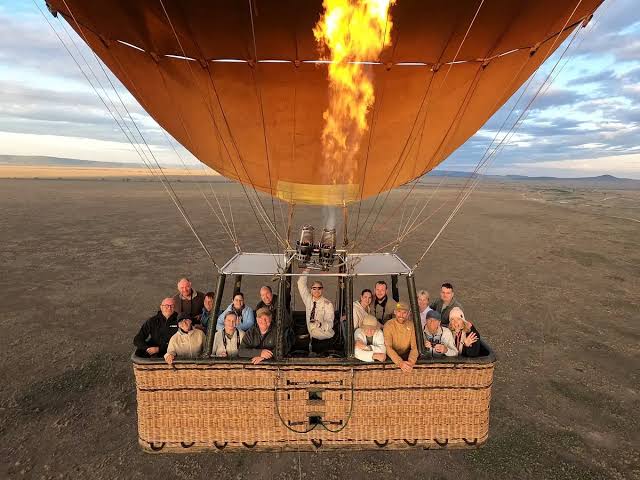
Every flight ends with a champagne bush breakfast set up in the middle of the plains, which sounds like a cliché until you are actually standing there. Book this early in your stay if possible, both because flights are weather-dependent and because an early wake-up is easier to justify on day one than day four.
2. Witness a Mara River Crossing
Between July and October, roughly two million wildebeest, along with zebra and gazelle, funnel through the Mara as part of the Great Migration, and the river crossings are the single most dramatic scene in African wildlife viewing: herds building courage at the water’s edge, then surging across through crocodile-infested currents while hippos watch from the shallows.
Crossings are unpredictable and can happen at any hour, so this is not something you schedule so much as something you position yourself for, with an experienced guide who reads herd behaviour and radios other vehicles when a crossing looks imminent.
3. Visit a Maasai Village
A guided visit to a Maasai boma, a homestead enclosed by a thornbush fence, adds essential context to everything else you are seeing in the Mara. You will typically be welcomed with a traditional adumu jumping dance, shown how homes are built from mud, sticks and cow dung, and given an honest look at a pastoral way of life that has coexisted with this land and its wildlife for centuries. Choose a visit arranged through your camp rather than an informal roadside stop, since proceeds from properly organised visits go directly to the community rather than a middleman.
4. Go on a Walking Safari in a Private Conservancy
The reserve itself does not permit walking safaris, but the private conservancies bordering it, Naboisho, Mara North and Olare Motorogi among them, do. Walking with an armed guide changes your relationship with the landscape entirely: you notice tracks, dung, insect life and plant use that a vehicle simply drives past, and the pace forces a kind of attention that game drives rarely demand. It is a strong addition for travellers who have already done a few classic drives and want a different register of experience.
5. Take a Night Game Drive
Like walking safaris, night drives are only permitted in the private conservancies, not the main reserve, which is one of several good reasons to base at least part of your stay there. Spotlighting after dark reveals a genuinely different cast of characters: hyena, genet, civet and, if you are fortunate, leopard on the move, species that are far harder to see during standard daytime drives when they are typically resting in shade.
6. Track a Big Cat Sighting with an Expert Guide
The Mara’s guide network is genuinely excellent, and radio-sharing between vehicles means a lion pride or cheetah sighting spotted by one guide is often relayed across camps within minutes. Ask your guide about the resident prides and individual cats in your area, many have been tracked and named for years by local guiding teams, and following one family’s story across a multi-day stay adds a narrative thread to your trip that a single sighting cannot match.
7. Have a Bush Breakfast or Sundowner
Beyond the balloon safari’s built-in breakfast, most camps will arrange a private bush breakfast or evening sundowner setup on request, a table laid out in the open plains with your vehicle nearby and a 360-degree view in every direction. It is a simple addition, but pairing a golden-hour setting with a G&T and no other vehicles in sight is exactly the kind of moment that separates a good safari from a genuinely memorable one.
8. Go Birdwatching Beyond the Big Cats
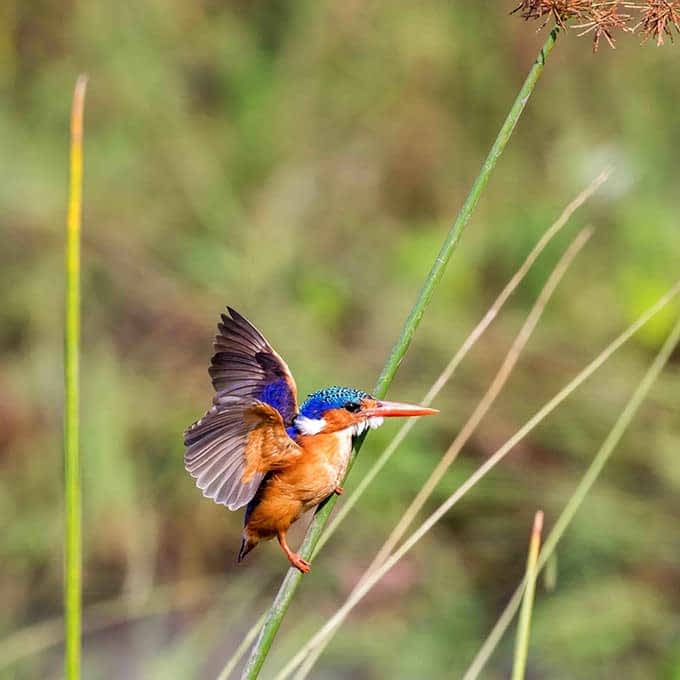
With over 470 recorded species, the Mara rewards travellers who occasionally lower their binoculars from the horizon to the trees. Lilac-breasted rollers, secretary birds, and, during the migration season, huge numbers of raptors following the herds are all common sightings, and a guide with genuine birding knowledge, worth requesting specifically, adds an entirely different layer to a game drive.
9. Cross Into the Serengeti (If Your Itinerary Allows)
The Mara is the northern extension of the same ecosystem as Tanzania’s Serengeti, and for travellers with enough time, crossing the border to combine both reserves in a single trip is genuinely worthwhile, offering a broader sense of scale for the migration and access to sights, including the Ngorongoro Crater, that the Mara alone cannot provide.
This requires additional planning and typically a light-aircraft transfer, so it suits travellers with ten or more days available rather than a standard week-long trip.
10. Stay in a Conservancy for at Least Part of Your Trip
This is less a single activity than a structural decision that shapes everything else on this list: night drives, walking safaris and lower vehicle density at sightings are all only available in the private conservancies bordering the main reserve, not inside the reserve itself. Splitting a stay between the main Masai Mara National Reserve, for the classic drama and migration viewing, and a conservancy, for the activities the reserve does not permit, is consistently the best-structured way to experience the region.
Reserve vs Conservancy: Where to Base Yourself
The main Masai Mara National Reserve delivers the highest concentration of vehicles at a big sighting, since it is open to any licensed operator, but also the highest concentration of wildlife, particularly during migration season when herds funnel through its river crossing points.
The private conservancies that ring the reserve, including Naboisho, Mara North, Olare Motorogi and Ol Kinyei, cap the number of beds per acre by contract, which means fewer vehicles, more exclusive sightings, and access to walking safaris and night drives that the reserve itself does not allow.
Many well-built itineraries split a stay across both: two or three nights in the reserve for the classic drama, and one or two in a conservancy for the activities and quieter pace the reserve cannot offer.
What to Pack for the Mara
Mornings on an open vehicle are cold even during the warmer months, so pack layers you can remove as the day heats up rather than a single heavy jacket. A wide-brimmed hat, polarised sunglasses and a strong sunscreen matter more than most first-time visitors expect, since you are exposed to sun for hours at a time during game drives.
Binoculars are worth bringing even if photography is not your main interest, and neutral-coloured clothing, khaki, olive and brown, is both more practical for staying comfortable in dust and less disruptive to wildlife than bright colours or white.
When to Plan Each Experience
| Experience | Best Timed For |
| Mara River crossing | July-October |
| Hot air balloon safari | Year-round, book early in your stay |
| Night drives & walking safaris | Year-round, conservancy stays only |
| Calving-season predator action | January-February, southern Serengeti side |
| Quieter, lower-cost game viewing | November, March-May (green season) |
Budgeting for These Experiences
Standard game drives and Maasai village visits are typically included in your camp’s nightly rate. Hot air balloon safaris are a notable add-on, generally $450 to $550 per person, and worth booking in advance since flights are limited and popular.
Conservancy stays tend to cost somewhat more than reserve-adjacent lodges due to lower guest density per acre, but the access to walking and night safaris usually justifies the premium for travellers who want the fuller range of experiences on this list.
Planning Advice
If you only have four or five nights, prioritise a split stay: two or three nights in the main reserve for classic game viewing and migration season drama, and one or two nights in a conservancy for the experiences the reserve does not allow.
Book your balloon safari for early in the stay rather than the last morning, so a weather cancellation does not cost you the experience entirely. And if a river crossing is your top priority, build in more nights than you think you need, since crossings are governed by herd behaviour, not a schedule, and patience genuinely pays off here.
Frequently Asked Questions
Can I do a night game drive inside the main Masai Mara Reserve?
No, night drives and walking safaris are restricted to the private conservancies bordering the reserve, which is why many well-planned itineraries include at least one conservancy stay.
How likely am I to see a river crossing?
Reasonably likely during July to October if you stay four or more nights near the river, though crossings cannot be guaranteed on any single day since they depend on herd behaviour rather than a fixed schedule.
Is the hot air balloon safari worth the extra cost?
Most travellers who do it say yes. It offers a perspective on the landscape you cannot get from a vehicle, and the included bush breakfast is a memorable experience in its own right.
Are Maasai village visits respectful, or are they exploitative?
It depends entirely on how the visit is arranged. Visits organized through your camp, with proceeds going directly to the community, are generally respectful and beneficial. Informal roadside stops are worth avoiding.
How many days should I spend in the Masai Mara?
Four nights is a reasonable minimum to fit in a balloon safari, a village visit and enough game drives to have a genuine shot at a strong predator sighting. Five to six nights gives you room to split between the reserve and a conservancy without feeling rushed.