Things to See and Do in Nairobi
Nairobi National Park is situtaed close enough to downtown that a lion’s roar can carry over rush-hour traffic, and within thirty minutes of the airport you can watch orphaned elephant calves take their midday mud bath or feed a giraffe at eye level from a raised platform.
For travelers connecting through Jomo Kenyatta International Airport en route to the Maasai Mara, Amboseli, or the Serengeti, Nairobi is not dead time to endure. It’s an efficient way to add wildlife, culture, and genuinely good food to the trip before the safari vehicle even leaves the lodge.
We have routed thousands of travelers through this city, and the question we hear most is some version of “do we really need more than a night here?” The answer depends on your flight schedule, your interests, and how much history and culture you want folded into the trip. This guide covers what is genuinely worth doing, how much time each activity actually takes once you account for Nairobi’s traffic, and how to build a stop that earns its place on the itinerary rather than just filling a gap between flights.
How Much Time to Budget in Nairobi, and Why
How long you need in Nairobi depends less on how much there is to see and more on how the logistics line up. A single overnight, arriving late afternoon and departing the next morning, is enough for one focused activity, such as the Giraffe Centre or a sunset drive in Nairobi National Park. It is not enough to do the city justice, and it leaves no buffer if a flight is delayed or the roads are worse than expected, which in Nairobi happens more often than not.
For travelers who want to experience Nairobi properly, one full day plus a night on each side works well: a morning game drive or elephant visit, an afternoon in Karen for the Giraffe Centre and , and an evening free for dinner and Westlands nightlife. Two full days lets you add the National Museum and a market morning without feeling rushed.
One scheduling detail catches people out: the David Sheldrick Wildlife Trust’s visiting window runs strictly from 11 a.m. to noon and cannot be moved for late arrivals. Build your day around that hour if elephants are a priority. Nairobi National Park’s best wildlife viewing happens early, roughly 6:15 to 9 a.m., so a pre-dawn start rewards you with more sightings and lighter traffic on the way back.
Top Things to Do in Nairobi at a Glance
Use this as a starting point, not a checklist. Most travelers combine three or four of these into a single day, since several of the best options sit within a few minutes of each other in the Karen and Langata area.
|
Activity |
Time Needed |
Cost Tier (non-resident adult) |
Best For |
|
Nairobi National Park game drive |
3-4 hours (half-day) |
$$ (~$80 entry + vehicle/guide) |
Wildlife-focused travelers, short layovers wanting a real safari preview |
|
David Sheldrick Wildlife Trust |
1-1.5 hours (fixed 11am-12pm) |
$ (donation + separate park gate fee) |
Families, elephant lovers; must be pre-booked directly |
|
Giraffe Centre |
45 min – 1 hour |
$ (~$15 entry) |
Families, first-time visitors, easy Karen loop add-on |
|
Karen Blixen Museum |
1-1.5 hours |
$ (~$12 entry) |
History and culture lovers, Out of Africa fans |
|
Maasai Market / craft shopping |
1-2 hours |
$ – $$ (bargaining expected) |
Souvenir shoppers, culture-focused travelers |
|
Nairobi National Museum & Snake Park |
1.5-2 hours |
$ (~$12 entry) |
Rainy-day plan, culture-focused travelers, Rift Valley context |
|
Karura Forest walk or cycle |
1.5-2 hours |
$ (~$6-10 entry) |
Nature lovers, joggers, an easy half-day stopover |
|
Nyama choma dinner / Westlands nightlife |
2-3 hours (evening) |
$$ – $$$ |
Foodies, evenings with free time, layover travelers wanting a taste of Kenya |
Nairobi National Park
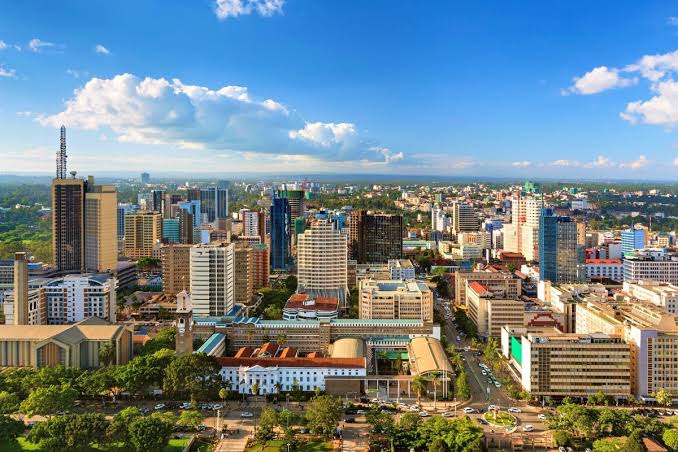
Nairobi National Park is the reason this city can credibly claim wildlife appeal on its own terms, not just as a gateway. It sits roughly seven kilometers from the city center, close enough that photographs routinely capture lions, giraffes, or zebras with the Nairobi skyline behind them. It is the only national park in the world located within a capital city, and it functions as a real ecosystem rather than a fenced enclosure: the southern and eastern boundaries remain open to the Kitengela plains, letting wildebeest, zebra, and eland migrate seasonally, which is part of why sightings vary by time of year.
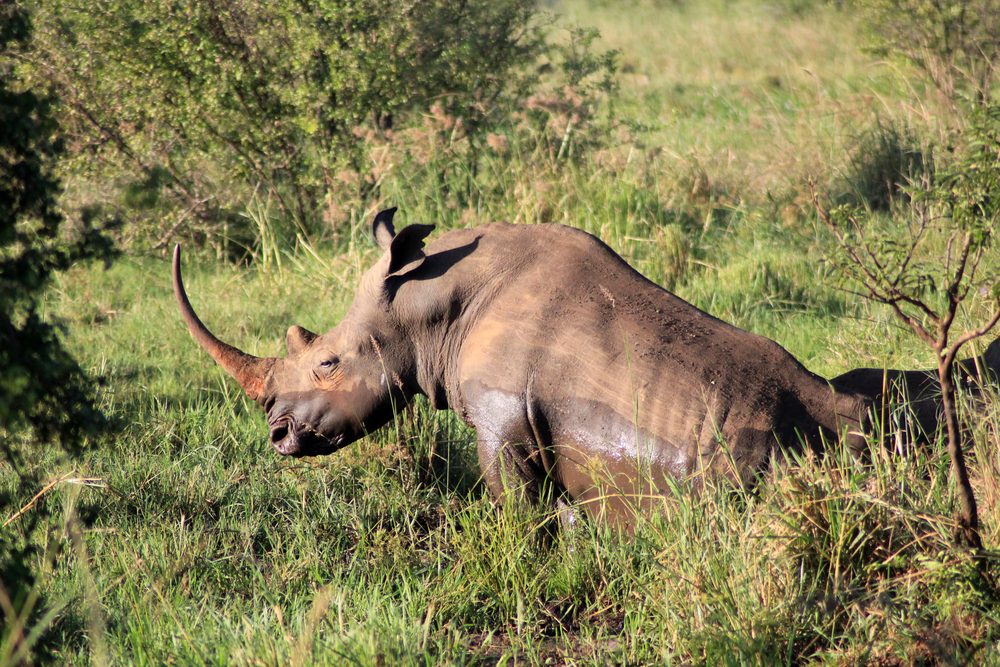
The park is best known for its black rhino sanctuary, one of Kenya’s most successful, along with healthy populations of lion, cheetah, buffalo, giraffe, zebra, and more than four hundred recorded bird species. One expectation worth setting: elephants are not resident here, since the surrounding urban boundary doesn’t accommodate their range.
For elephants, the David Sheldrick Wildlife Trust nearby fills that gap. For everything else, a three-to-four-hour game drive delivers a legitimate safari experience, not a diluted preview.
Entry runs about eighty US dollars for non-resident adults plus a small gateway fee, and the park is open 6 a.m. to 6:30 p.m. daily. Payment goes through the Kenya Wildlife Service portal online, best done the night before rather than at the gate. There is no re-entry on the same ticket, so plan the drive as one continuous outing. A private vehicle with a knowledgeable driver-guide makes a real difference, both for spotting wildlife in tall grass and for knowing which loops are producing sightings that week.
This park is the best option for travelers with a short layover who still want a real wildlife encounter, since it doesn’t require a long drive out of the city. It also works well as a soft opening for a first Kenya wildlife safari, and for families with young children who can’t manage longer game drives later in the trip.
David Sheldrick Wildlife Trust
The David Sheldrick Wildlife Trust runs the most established elephant and rhino orphan rescue program in Africa, having hand-raised more than 320 orphaned elephants and rhinos since 1977. Calves that lose their mothers to poaching, drought, or human-wildlife conflict are brought to the Nairobi Nursery, hand-reared around the clock, and eventually reintroduced to wild herds in Tsavo.
The public visiting hour, 11 a.m. to noon daily, is when the current orphans come in for their midday mud bath and milk feeding, and keepers narrate each calf’s rescue story as it happens.
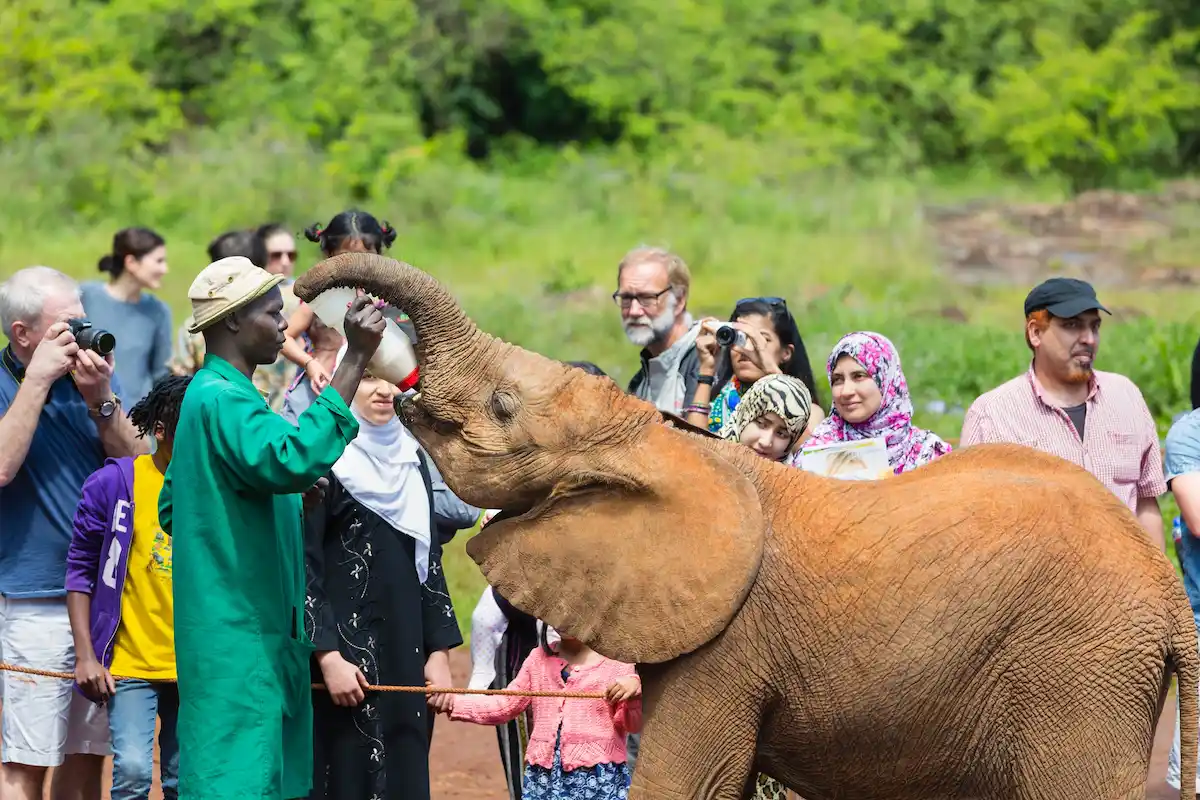
Booking is not optional and not last-minute. Reservations must be made directly with the Trust by email, up to three months ahead; confirmations from third-party booking sites are not honored at the gate. Arrive by 10:30 a.m., since the visit cannot be extended for latecomers, and the Nairobi National Park gate fee, separate from the Sheldrick donation, takes its own time to process.
The Trust sits inside Nairobi National Park’s boundary near the Main Gate, so it pairs naturally with a morning game drive. This is the single best activity in Nairobi for families and for anyone whose safari wish list includes elephants specifically, and it tends to be the most memorable stop of a Nairobi stay, adults included.
Giraffe Centre
The Giraffe Centre in Langata protects the endangered Rothschild’s giraffe, down to a few hundred individuals in the wild, through a breeding and education program that has released numerous giraffes into protected areas around Kenya.
Visitors climb a raised platform built to eye level with an adult giraffe, hand-feed them pellets, and get the close-up “giraffe kiss” photo that shows up in most Nairobi trip reports. A short nature trail leads down to the Gogo River through indigenous forest for those who want to extend the visit.
Plan for forty-five minutes to an hour; entry runs around fifteen US dollars for non-resident adults, and the center is open daily. It reliably delights children, making it one of the better choices for families with a mix of ages. Since it sits a few minutes from the Karen Blixen Museum and the David Sheldrick Wildlife Trust, it slots naturally into a half-day loop around Karen and Langata.
Karen Blixen Museum
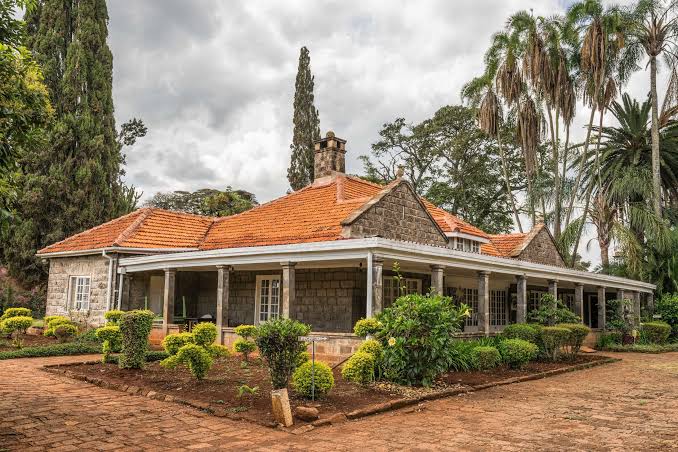
This is the restored farmhouse where Danish author Karen Blixen lived and ran a coffee plantation between 1917 and 1931, later chronicled in her memoir Out of Africa and the film it inspired. Guided tours move through rooms furnished with period pieces, some original to Blixen’s tenancy, and cover the farm buildings and grounds at the foot of the Ngong Hills, visible from the property much as she described them.
The museum is open daily 9:30 a.m. to 6 p.m., tickets run around twelve dollars for adults and six for children, and a tour takes an hour to ninety minutes. It suits travelers with an interest in colonial-era East African history or the book and film specifically; if neither appeals, this is the one stop you can skip without missing much. Pairing it with the Giraffe Centre makes efficient use of a single trip to Karen.
Maasai Market and Craft Shopping
Nairobi’s Maasai Market is not a fixed location but a rotating open-air market that sets up in a different part of the city depending on the day of the week, generally running 8 a.m. to 6 p.m. wherever it lands.
The rough pattern: Tuesday near Westgate or Village Market, Wednesday at Capital Centre on Mombasa Road, Thursday off Ngong Road, Friday at Village Market in Gigiri, Saturday behind the Hilton near the High Court, Sunday at Yaya Centre. Schedules shift with mall events, so confirm the current location with your hotel or driver-guide.
Stalls sell Maasai beadwork and jewelry, wood carvings, kitenge and kanga fabric, paintings, and leather goods, almost all handmade and open to negotiation; starting an offer at roughly half the asking price is reasonable. If tracking a moving market feels like too much coordination, Village Market and Two Rivers Mall both host curio stalls daily.
Budget one to two hours. This is the best activity for travelers who want a tangible souvenir with a real story behind it, and it works well as a late-afternoon stop before dinner.
Nairobi National Museum and Snake Park
The Nairobi National Museum organizes its collection around four themes, culture, natural history, political history, and contemporary art, and it’s worth visiting for the paleontology alone.
Kenya’s Rift Valley has produced some of the most significant hominid fossil discoveries in the world, connecting directly to the human origins story behind Louis and Mary Leakey’s work nearby. For travelers heading on to the Rift Valley or the Mara, this context adds real understanding to the landscape ahead.
Across the road, the Snake Park houses venomous and non-venomous snakes native to East Africa, crocodiles, tortoises, and an aquarium, all in a compact space.
The museum is open daily 8:30 a.m. to 5:30 p.m., entry runs around twelve dollars with a combination ticket available for the Snake Park, and a full visit takes ninety minutes to two hours. It’s a reliable option on a rainy morning or for culture-focused travelers who want Nairobi’s history laid out before heading into the wilder parts of a safari.
Restaurants and Nightlife
Nairobi’s signature culinary experience is nyama choma, meat grilled slowly over charcoal and served with ugali and kachumbari. The Carnivore Restaurant in Langata is the best-known version for visitors, an all-you-can-eat feast that’s become something of a Nairobi institution; go once for the experience, not as your only meal in the city. For a more local take, Njuguna’s in Westlands and Red House Grill in Karen are both well regarded by residents.
Westlands and Kilimani hold most of Nairobi’s better restaurants and nightlife, from Nyama Mama’s modern spin on Kenyan dishes to rooftop bars that stay lively into the evening, often with live Afrobeats.
For a quieter dinner, Tamambo at the Karen Blixen Coffee Garden serves a strong seafood and grill menu near the museum. For evenings out, use Uber or Bolt rather than hailing a taxi off the street, and treat downtown Nairobi as a daytime destination rather than a nighttime one.
Where to Stay
Where you base yourself should follow your itinerary, not just hotel ratings. Westlands is the most walkable of Nairobi’s upscale neighborhoods, with malls, cafes, and restaurants within strolling distance, suiting first-time visitors who want nightlife or shopping without needing a car for every outing.
It sits thirty to forty-five minutes from Wilson Airport depending on traffic, which matters if you have an early domestic flight.
Karen is the quieter, leafier alternative and the more practical choice for most safari travelers. It sits close to the Giraffe Centre, David Sheldrick Wildlife Trust, and Karen Blixen Museum, with a shorter, calmer run to Wilson Airport than from Westlands or downtown. Hemingways Nairobi is frequently cited as the city’s standout property.
Giraffe Manor, where giraffes put their heads through the breakfast room windows, sits in the same area but books out many months ahead at a significant premium.
If you’re arriving late at night or departing on an early international flight with no interest in sightseeing around it, a business hotel near Jomo Kenyatta International Airport removes the transfer altogether, at the cost of Nairobi’s better restaurants and neighborhoods. Match your hotel to what you actually plan to do with your time in the city.
Getting Around, Safety, Money, and the Airport
Getting Around and Nairobi’s Traffic
Nairobi’s traffic is the single biggest variable in planning your day. During rush hours, an eighteen-kilometer trip can take ninety minutes, and distances that look short on a map routinely take much longer.
Uber and Bolt are well established and the safest way to get around as a visitor; many safari companies, including ours, arrange a private driver-guide for the day, which removes the guesswork. Whatever you choose, build in a buffer, especially before a flight or a timed booking like the Sheldrick Trust’s 11 a.m. window.
Is Nairobi Safe for Tourists?
Nairobi is safe for the vast majority of visitors who take normal urban precautions, and millions of tourists pass through every year without incident. The realistic concern is petty crime, pickpocketing and phone or bag snatching in crowded areas, rather than anything more serious.
Stick to established neighborhoods such as Westlands, Karen, and Gigiri, use registered taxis or rideshare apps after dark, keep valuables out of sight, and treat downtown Nairobi as a daytime area. Eastleigh and Kibera carry genuine security concerns and are best visited only with a knowledgeable local guide, if at all.
Currency and Payments
The Kenyan shilling is the local currency, and US dollars are widely accepted for park fees, hotels, and larger purchases, though you’ll want shillings for markets, tips, and taxis. ATMs are common in malls and hotels, and cards are accepted at most established restaurants. Dollar bills printed before 2013 are frequently refused, so bring newer notes if carrying cash. Tap water is not safe to drink; stick to bottled or filtered water throughout your stay.
Connecting to the Airport and Onward Safari Flights
Jomo Kenyatta International Airport (JKIA) is Kenya’s main international gateway, but nearly all domestic safari flights to the Maasai Mara, Amboseli, and Samburu depart from Wilson Airport, a separate airport roughly seventeen kilometers away.
The transfer typically takes twenty to forty-five minutes depending on traffic. If your itinerary has you flying internationally into JKIA and out to a safari camp from Wilson the same day, build in a buffer of at least three hours for immigration, luggage, and the cross-town transfer; many travelers instead overnight in Nairobi to remove this risk and gain a day of sightseeing, which is generally the approach we recommend.