10 Best Masai Mara Safari Tours
10 Best Masai Mara Safari Tours; Masai Mara is an ecosystem large enough, and a tourism infrastructure mature enough, to support different ways of experiencing it, and the right choice depends far more on who you are traveling with, what you want to see, and how much time and budget you have than on any objective ranking.
Over years of planning tailor-made itineraries into this part of Kenya, the most common mistake we see is travelers researching “the Masai Mara” as though it were one destination with one correct itinerary.
In practice, choosing a Mara safari means choosing a style first – budget group camping versus fly-in luxury, main reserve versus private conservancy, general wildlife viewing versus a migration river-crossing trip timed to the month and then fitting the details underneath that decision.
This guide walks through ten distinct, different tour types available in the Mara today, what each one actually includes, and who each one suits, so you can narrow the field before you start comparing individual lodges and operators.
Reserve vs. Conservancies
Before comparing tour types, it helps to understand the two zones that make up the Greater Mara ecosystem, because this single distinction shapes almost every other decision in this guide – price, wildlife density, activity options, and crowd levels.
The Masai Mara National Reserve is the government-managed core, split into the main reserve (accessed via gates such as Sekenani, Talek, and Oloolaimutia) and the Mara Triangle, a separately managed western section along the escarpment.
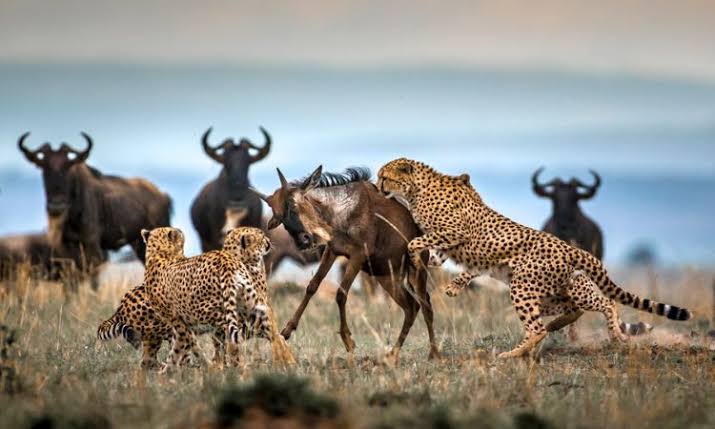
This is the Mara most people picture: open savannah, the Mara River, and the highest concentration of safari vehicles during peak season. Game drives here are restricted to daylight hours and designated tracks – no off-roading, no night drives, no walking.
The private conservancies – Mara North, Naboisho, Olare Motorogi, Ol Kinyei, and several others – sit on community-owned Maasai land bordering the reserve. Landowners lease their land to a limited number of camps under strict bed-density caps, which is why conservancies typically host far fewer vehicles per square kilometer than the reserve.
In exchange for a nightly conservancy fee (usually built into your camp rate), guests get access to activities the reserve does not allow: off-road driving to follow a hunt, night game drives to spot leopard and genet, and guided walking safaris.
Neither zone is objectively “better.” The reserve delivers the sheer scale and density of wildlife, plus reliable access to the Mara River crossing points during migration season. The conservancies deliver exclusivity, flexibility, and activities you cannot do inside the reserve.
Many of the tour types below combine both – a few nights in a conservancy for privacy and walking, paired with a day or two in the reserve for the river and the open plains. That combination, in fact, is what most experienced repeat visitors choose once they understand the tradeoff.
Comparing All 10 Masai Mara Safari Tours
The table below is a starting point for narrowing your options. Prices are approximate per-person figures based on double occupancy and current 2026 rates; they will vary by camp, season, and group size. Treat this as a filter, not a final quote.
| Tour / Style | Duration | Area Covered | Best For |
| 1. Classic 3-Day Group Road Safari | 3 days / 2 nights | Masai Mara National Reserve | First-timers, backpackers, short-notice trips |
| 2. 4-6 Day Mid-Range Lodge Safari | 4-6 days | Reserve, sometimes + 1 conservancy | First-timers wanting comfort without luxury cost |
| 3. Fly-In Luxury Safari | 2-4 days | Reserve or a single conservancy | Time-poor travelers, repeat visitors, honeymooners |
| 4. Private Conservancy Safari (Mara North, Naboisho, Olare Motorogi) | 3-5 days | One private conservancy | Photographers, repeat visitors, privacy seekers |
| 5. Great Migration River-Crossing Safari | 4-7 days | Reserve + Mara Triangle / Olare Motorogi / Naboisho | Bucket-list travelers, July-October only |
| 6. Hot Air Balloon Safari Combo | Add-on to any stay (1 dawn flight) | Reserve or conservancy airspace | Special-occasion travelers, honeymooners, families |
| 7. Family Safari | 4-6 days | Reserve + family-geared conservancy camp | Multi-generational groups, parents with children 6+ |
| 8. Honeymoon / Romantic Safari | 3-5 days | Private conservancy or exclusive-use camp | Couples, honeymooners, anniversaries |
| 9. Walking Safari | 3-6 days (walking is one activity) | Naboisho, Mara North or other conservancies | Fit, curious travelers wanting slower immersion |
| 10. Dedicated Photographic Safari | 5-8 days | One or two conservancies, hides, low-density zones | Serious photographers, repeat visitors |
The 10 Best Masai Mara Safari Tours, In Detail
1. Classic 3-Day Group Road Safari from Nairobi
This is the entry point for most first-time visitors to Kenya, and for good reason. A shared group vehicle, typically a 4×4 Land Cruiser or minivan with a pop-up roof, picks you up from your Nairobi hotel and drives roughly 5 to 6 hours southwest via Narok to one of the reserve’s gates. You spend two nights at a budget tented camp just outside the reserve boundary, with two or three game drives inside the reserve itself, before returning to Nairobi on day three.
What it includes typically: shared 4×4 transport, a professional driver-guide, park entry fees, full board at a budget camp (canvas tents with shared or en-suite facilities), and two to three game drives. What it usually excludes: the balloon safari, alcoholic drinks, and tips.
Who it suits: solo travelers, backpackers, and anyone testing whether safari travel is for them before committing to a bigger trip. It is also the most practical option if your Kenya time is limited to a long weekend. It is not the right choice if privacy, off-road access, or a slower pace matter to you – you will be sharing a vehicle with strangers and sticking to reserve tracks and hours.
2. 4-6 Day Mid-Range Lodge Safari
This is the safari most first-time visitors picture when they imagine “a proper Kenya safari”: a comfortable tented lodge or permanent camp with a pool, a la carte dining, and en-suite rooms, combined with twice-daily game drives over four to six days. Many mid-range itineraries add a night or two at Lake Nakuru or Amboseli before or after the Mara to build a fuller Kenya circuit, though a Mara-only version is equally common.
Transport is usually a private vehicle rather than a shared one at this tier, which means your schedule flexes around what you actually want to see rather than a fixed group itinerary. Some mid-range lodges sit just outside the reserve boundary; a smaller number sit inside a conservancy at conservancy-adjacent rates, giving you a taste of both zones without paying full luxury pricing.
Who it suits: first-time safari travelers who want comfort and a private vehicle without stretching to luxury camp pricing, and couples or friends traveling together who want more flexibility than a shared group tour allows. It is a sensible middle ground if you are unsure how much you want to spend on your first Africa trip.
3. Fly-In Luxury Safari
Rather than the 5 to 6 hour road transfer, you fly from Wilson Airport in Nairobi on a scheduled light aircraft – operators including Safarilink, AirKenya, and Governors’ Aviation run multiple daily flights – landing 45 to 60 minutes later at one of roughly nine airstrips serving the Mara, such as Musiara, Keekorok, or Kichwa Tembo. A camp vehicle meets you on the airstrip and you are on your first game drive within the hour.
Accommodation at this tier means a luxury tented camp or lodge with high staff-to-guest ratios, fine dining, and often a private plunge pool or verandah per tent. Because you save roughly half a day of driving in each direction, even a short 2 to 3 night trip feels unrushed, which is precisely why this format appeals to travelers with limited vacation time.
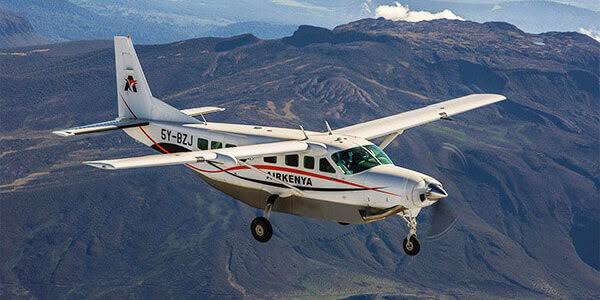
Who it suits: time-poor professionals, repeat Africa visitors who no longer need the novelty of the road transfer, and anyone prioritizing comfort over cost. It is also a strong option for honeymooners layering a Mara leg onto a coastal Kenya trip, since flying eliminates the need for a long drive on either end of a short stay.
4. Private Conservancy Safari (Mara North, Naboisho, or Olare Motorogi)
This tour type bases you entirely, or almost entirely, within one of the private conservancies bordering the reserve rather than inside the reserve itself. Each conservancy has its own character worth understanding before you book:
- Mara North Conservancy – the largest of the three by area, known for sweeping classic Mara scenery, strong elephant movement, and reliable leopard sightings, with a lower camp density than Olare Motorogi.
- Naboisho Conservancy – roughly 52,000 acres with one of the highest lion densities recorded anywhere in Africa (over 70 identified resident lions), rolling terrain that is more varied than the open reserve plains, and a strong community revenue-sharing model involving around 500 Maasai landowning families.
- Olare Motorogi Conservancy – formed by merging the former Olare Orok and Motorogi conservancies into roughly 33,000 acres, with one of the lowest bed-to-acre ratios in the Greater Mara and a reputation as the most exclusive and private of the three.
Across all three, expect strict vehicle limits at any wildlife sighting (typically five vehicles or fewer), off-road driving, night game drives, and guided walking – none of which the main reserve permits. Most conservancy camps also arrange a day trip into the reserve itself so you do not miss the open plains or, in season, the river crossings.
Who it suits: photographers who need uncrowded sightings, repeat visitors who have already done the classic reserve safari, and anyone who finds the idea of sharing a leopard sighting with fifteen other vehicles unappealing. First-timers with only three or four days sometimes worry a conservancy-only trip means missing the “real” Mara – in practice, a well-planned itinerary blends a conservancy base with a reserve day, giving you both.
5. Great Migration River-Crossing Safari
This is a season-specific itinerary built around one goal: witnessing wildebeest and zebra cross the Mara River as part of the Great Migration‘s annual clockwise loop through the Serengeti-Mara ecosystem. Herds typically begin arriving in the Mara from the Serengeti in late July, with the highest frequency of major river crossings occurring in August and September, and reasonably good activity continuing into October before the short rains pull the herds back south.
A dedicated crossing safari usually bases you at a camp positioned near known crossing points – along the Mara River in the reserve, the Mara Triangle, or a river-adjacent conservancy such as parts of Naboisho or Olare Motorogi – and builds in full days near the river with a packed breakfast, rather than the shorter drives typical of a standard itinerary. No operator, however experienced, can guarantee a crossing on a specific day; the animals do not follow a published schedule, and multi-day trips of 4 or more nights meaningfully improve your odds over a 2-night stay.
Who it suits: bucket-list travelers specifically chasing this one wildlife spectacle, and repeat visitors who have already seen the Mara’s general game and want the migration as the centerpiece. It is worth being direct about the tradeoff: this is peak season, camps book out up to a year in advance, and both park fees and camp rates run at their highest from July through October.
6. Hot Air Balloon Safari Combo
A balloon safari is not a standalone trip but an add-on activity, typically slotted into the middle of a longer Mara stay. You are collected from camp around 4:30am, driven to the launch site in darkness, and lift off around sunrise for a roughly 60-minute flight drifting silently over the plains, followed by a champagne bush breakfast set up in the field once you land. Most camps in both the reserve and the conservancies can arrange this regardless of which tour type you have otherwise booked.
Expect to pay in the range of $450 to $650 per person for a standard shared-balloon flight in 2026, with private charters for a couple or small exclusive group running from roughly $1,800 to $2,500 for the entire balloon. Confirm what is included when you book – some lower-priced operators now exclude the bush breakfast to keep the headline price down, and the reserve’s park entry fee is charged separately since balloons launch and land within reserve boundaries.
Who it suits: honeymooners and anniversary travelers looking for a standout single-day experience, families with older children, and photographers wanting the classic aerial-shadow-over-the-plains shot. It suits almost anyone as an add-on; the main planning consideration is booking it early, since balloon slots are limited and sell out fast during migration season.
7. Family Safari
A family-oriented Mara trip differs from a standard itinerary less in the game drives themselves and more in the camp choice and the pacing. Look for family tents or interconnected rooms rather than standard doubles, flexible mealtimes rather than a fixed dinner seating, a pool for the heat of the day, and camps with a genuine children’s program – &Beyond Kichwa Tembo’s WILDchild activities and Mara Intrepids’ Adventurer’s Club are two established examples, alongside family-owned options like Cottar’s 1920s Camp, which sits within its own private conservancy bordering the reserve.
Typical family activities beyond the game drive itself include Maasai village visits, bead-making with local women, bow-and-arrow lessons, junior ranger tracking exercises, and bush breakfasts by a hippo pool. Most reputable camps set a minimum age for game drives and night drives (commonly 6 years for daytime drives, higher for night drives and walking), so confirm age policies before booking if you are traveling with young children.
Who it suits: multi-generational groups and parents traveling with children roughly six and older. Families with toddlers or infants are usually better served by a shorter, closer-to-Nairobi itinerary, or by a private-vehicle mid-range safari where nap schedules and shorter drives are easier to accommodate than in a fixed-departure group tour.
8. Honeymoon / Romantic Safari
A honeymoon-oriented Mara safari prioritizes privacy and setting over ground covered. Expect a private conservancy base or an exclusive-use camp, a secluded tent away from the main mess area, and small, intimate touches most camps offer on request – a private bush dinner under the stars, a champagne send-off on your final morning, or a couples’ massage. Camps frequently cited by past guests for this purpose include Governors’ Il Moran Camp along the Mara River, Angama Mara for its escarpment views, Olonana for its riverside forest setting, and Cottar’s 1920s Camp for old-safari romance.
Expect to pay $500 to $2,750 per person per night at this tier depending on camp and season, with a typical 3-night honeymoon stay running roughly $4,000 to $18,800 per couple all-in. January and February offer noticeably lower rates, fewer vehicles, and the bonus of newborn wildlife season, while July through October delivers the migration but at peak pricing and higher vehicle density – a genuine tradeoff worth discussing with your consultant rather than defaulting to migration season by habit.
Who it suits: couples on honeymoon or a significant anniversary who want the Mara’s wildlife without sacrificing privacy or romance. If budget is a bigger constraint than privacy, a mid-range lodge with a private vehicle and a requested “honeymoon table” for dinner can deliver much of the same feeling at a fraction of the nightly rate.
9. Walking Safari
Walking is not permitted inside the Masai Mara National Reserve itself, but several conservancies – Naboisho and Mara North among them – offer guided bush walks led by a professional guide paired with a Maasai warrior, often armed and always deeply knowledgeable about tracking and bush survival. A typical walk covers 9 to 15 kilometers over roughly 2.5 to 3 hours, usually at dawn before the heat sets in, and focuses on what a vehicle necessarily misses: tracks, dung, insect life, medicinal plants, and the smaller details of the ecosystem, with a guide reading the landscape for signs of the larger animals you will then approach cautiously and respectfully on foot.
A dedicated walking safari itinerary typically builds this into a broader 3 to 6 day conservancy stay rather than being the sole activity – you might walk at dawn and take a vehicle game drive in the afternoon, or spend one full day on a longer guided walk with a fly-camp overnight. Expect to pay $90 to $150 per person for a standalone morning walk on top of your camp rate.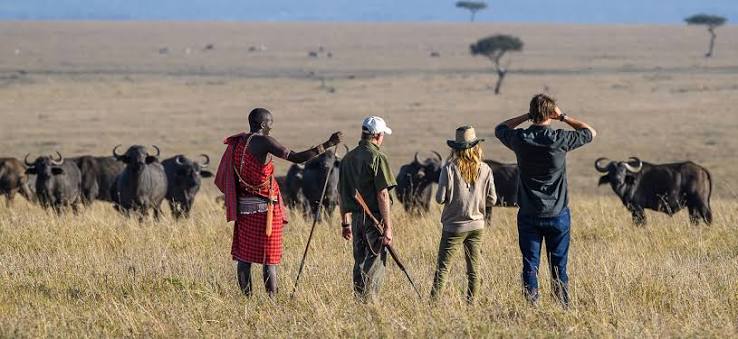
Who it suits: fit, curious travelers who want a slower, more sensory way of experiencing the bush, and repeat visitors who have already done several vehicle-based safaris and want a genuinely different perspective. It is not the right centerpiece for a first-ever Africa trip if seeing the “Big Five” in volume is the priority – pair it with vehicle drives rather than replacing them entirely.
10. Dedicated Photographic Safari
A true photographic safari differs from a standard game drive in the vehicle, the guide, and the schedule. Specialist operators use modified long-wheelbase Land Cruisers with pop-up roofs, bean bags for lens stabilization, and a strict cap of around four guests per vehicle rather than the six to seven common on standard drives, often paired with a professional photographic host in addition to the driver-guide. Some camps, such as Oltepesi Tented Camp founded by a working wildlife photographer, are built specifically around this niche and include hide access at ground level for eye-line shots of predators and waterholes.
Schedules on a photo safari run around the light rather than around meal times – out before sunrise, back for a late breakfast, out again for the golden hour before sunset – and itineraries usually concentrate on one or two conservancies rather than covering ground, since repeat visits to the same pride or den site over several days produce far better images than constantly moving on. Expect to pay from roughly $650 to $1,000 or more per person per day, or dedicated 8-day photo safari packages in the $4,400 to $6,000 range, reflecting the specialist vehicle, low guest ratio, and expert-led format.
Who it suits: serious amateur and professional photographers, and repeat Mara visitors who have already collected the standard sightings and now want the technical conditions to do those sightings justice. Casual travelers who simply enjoy taking photos on a normal game drive do not need this tier – any of the conservancy or mid-range options above will give you strong images without the specialist premium.
Practical Planning Advice
Best Months for the Migration and River Crossings
If witnessing a Mara River crossing is your primary goal, timing matters more than any other single decision. The wildebeest and zebra herds typically begin arriving in the Mara from Tanzania’s northern Serengeti in late July, with scattered early crossings as scouting groups test the water. August is generally the most reliable single month for major crossings, as the bulk of the herd is established in the Mara and the grass is drying out, pushing animals back and forth across the river in search of grazing. September continues to deliver strong crossing activity, and October remains reasonable before the short rains begin drawing the herds back south, typically by early November.
It is worth being honest with clients about what no operator can promise: nobody can predict the exact day or location of a crossing, since the animals respond to grass and water conditions rather than a calendar. Booking a longer stay of 4 nights or more near known crossing points, and staying flexible on which days you visit the river, meaningfully improves your odds compared to a fixed 1-day visit.
Booking Timelines
For a July to October migration-season trip, especially anything involving named luxury camps or conservancy properties, plan to book 9 to 12 months ahead – top camps in the Mara and northern Serengeti routinely sell out for peak migration dates a year in advance. Outside migration season, 2 to 4 months of lead time is usually sufficient for mid-range and luxury bookings, and budget group safaris can often be arranged with as little as a few weeks’ notice given how many departures run weekly.
Getting There: Road vs. Fly-In
The distance from Nairobi to the Mara’s gates runs roughly 225 to 280 kilometers depending on which entrance you use, and the drive takes about 5 to 6 hours on a paved road via the town of Narok, with scenic views into the Great Rift Valley along the way. Flying from Wilson Airport takes 45 to 60 minutes on scheduled light aircraft operated by carriers such as Safarilink, AirKenya, and Governors’ Aviation, landing at one of roughly nine airstrips serving different parts of the reserve and conservancies.
Road transport is cheaper and part of the classic safari experience for many first-timers, and it is the default for budget and mid-range group departures. Flying costs more but saves roughly a full day of round-trip driving, which matters most on shorter trips of 2 to 3 nights, for families with young children, or for anyone who simply prefers to spend vacation time in the bush rather than on the road.
What’s Typically Included (and What Isn’t)
Across nearly every tour type in this guide, your camp or lodge rate includes full board (all meals), twice-daily game drives with a driver-guide, and either park entry fees (reserve stays) or conservancy fees (conservancy stays) bundled into the nightly rate at private camps, though budget group tours often list park fees as a separate line item. What is almost never included: international flights, Kenya visa fees, travel insurance, alcoholic drinks at budget and some mid-range camps, the balloon safari, laundry, and guide tips, which are customary and usually run $15 to $25 per guest per day for your driver-guide.
2026 Reserve Entry Fees, for Reference
Non-resident adult entry to the Masai Mara National Reserve runs $100 per person per day from January through June 2026, rising to $200 per person per day from July 1 through December 31, 2026 to reflect peak migration-season demand. Children aged 9 to 17 pay half the adult rate, and children 8 and under enter free.
Tickets are valid for a 12-hour window and you must exit by 10am the following morning or a further full day is charged, so factor this into any early fly-out departure. The Mara Triangle, managed separately by the Mara Conservancy on the reserve’s western side, charges its own rate of roughly $70 per adult per 24 hours. These reserve fees are separate from conservancy fees, which are typically bundled into your nightly camp rate rather than paid at a gate.