
Shaba National Reserve: The Complete Travel Guide
Shaba National Reserve sits on the eastern edge of the Samburu ecosystem, separated from Samburu and Buffalo Springs by a short drive but a world apart in atmosphere. It is the least developed and least visited of the three reserves that share this stretch of northern Kenya, and that single fact shapes almost everything about the experience of being there.
Where Samburu has a cluster of lodges and a steady stream of vehicles, Shaba has two, maybe three properties and long stretches of track where you won’t see another car all morning.
Should You Visit Shaba National Reserve?
Shaba suits travellers who have already experienced a conventional safari and want something quieter and less curated. If you’re drawn to the idea of having a landscape largely to yourself, and you don’t need guaranteed Big Five sightings on every drive, Shaba delivers an experience that’s noticeably different from the rest of Kenya’s safari circuit.
The terrain is rugged and varied rather than postcard-flat, with Shaba Hill rising over 2,100 meters above the surrounding plains and steep ravines cutting through its southern section.
It suits travelers interested in conservation history and storytelling as much as wildlife spotting. The Joy Adamson connection gives Shaba a narrative depth that few reserves can match, and a visit here feels less like ticking off species and more like stepping into a specific, well-documented chapter of African conservation.
It suits people less if your main priority is wildlife density or a guaranteed Big Five sighting within a tight timeframe. Thicker riverine forest and more rugged terrain make animals harder to spot than in open Samburu, and with fewer vehicles on the ground, there’s less shared intelligence about where the day’s sightings are happening.
Arriving with that expectation already set makes a real difference to how the visit feels. First-time safari travelers with only a day or two to spare are usually better served starting in Samburu and adding Shaba only if time allows.
Why Shaba Stands Apart
Shaba was gazetted in 1974, administered then as now through Isiolo County, and covers 239 square kilometers of riverside forest, scattered woodland, dry grassland and semi-desert broken by isolated hills and natural springs.
The Ewaso Ngiro River runs along roughly 34 kilometers of its northern boundary, and Shaba Hill, an extinct volcano, dominates the southern skyline at over 2,100 meters. Annual rainfall here is modest, typically between 250 and 500 millimetres, which keeps the landscape dry and the vegetation sparse outside the riverine strip.
The Joy Adamson story is central to why many travelers choose Shaba specifically. Adamson and her husband George raised Elsa the lioness in this landscape before releasing her back into the wild, a story that became the 1966 film Born Free and reshaped public attitudes toward wildlife conservation worldwide.
Adamson later returned to live and work in Shaba and was killed within the reserve in 1980. A memorial marks the spot today, and Joy’s Camp, one of the reserve’s two lodges, sits on the site of her former home overlooking a natural spring.
Shaba has also drawn Hollywood for other reasons. Parts of Out of Africa were filmed here, and the reserve hosted the 2001 season of Survivor: Africa, during which roughly two-thirds of the park was closed to the public for four months. These episodes are footnotes rather than reasons to visit, but they underline how distinctive this corner of Kenya has long been considered.
Where Is Shaba and How Do You Get There?
Shaba lies in Isiolo County in northern Kenya, roughly 70 kilometers north of Mount Kenya and immediately east of the combined Samburu and Buffalo Springs reserves. By road from Nairobi, expect a journey of around six to seven hours via Nanyuki and Isiolo town, slightly longer than the drive to Samburu given Shaba’s position further east.
Flying remains the preferred option for most visitors. Scheduled and charter flights connect Nairobi’s Wilson Airport to airstrips serving the Samburu ecosystem, followed by a road transfer into Shaba. If your itinerary already includes Samburu or Buffalo Springs, extending into Shaba typically adds only a short additional transfer rather than a separate flight.
Roads inside the reserve are rougher than in neighbouring Samburu, reflecting the lower volume of traffic and maintenance. A 4×4 vehicle with an experienced guide is strongly recommended, both for navigation across less-marked tracks and because Shaba’s terrain, with its ravines and hill country, is less forgiving than flat savannah if you lose your way.
When to Visit: Seasons and Weather
| Season | Months | What to Expect | Best For |
| Long dry season | June – October | Vegetation thins, and wildlife concentrates near the Ewaso Ngiro River and springs. | Best overall wildlife viewing odds |
| Short dry spell | January – February | Similar dry-season conditions, fewer visitors than the mid-year peak | Travellers wanting dry-season sightings outside the busiest months |
| Long rains | March – May | Greener landscape, more dispersed wildlife, some tracks difficult after storms | Birdwatchers and landscape photographers comfortable with lower predictability |
| Short rains | November–mid-December | Scattered showers, strong migratory bird presence | Travellers prioritizing solitude and birdlife |
Shaba’s dry seasons bring the same benefits as elsewhere in the Samburu ecosystem: thinner cover and concentrated water sources make wildlife easier to locate. Because Shaba already has fewer vehicles than Samburu, visiting in the shoulder months of January and February often means near-total solitude on the game-drive circuits, a real draw for travellers who have already seen Africa’s busier parks and want something that feels unrehearsed.
How Much Does a Shaba Safari Cost?
Park entry fees are set by the reserve’s administering authority and should be confirmed with your operator closer to travel, but non-resident rates generally sit in a similar range to Samburu and Buffalo Springs, with lower tiers for Kenyan residents and citizens. Because Shaba has so few beds, accommodation pricing tends to sit at the mid-range to luxury end rather than offering extensive budget options.
| Budget Tier | Typical Nightly Cost (per person, sharing) | What You Get |
| Mid-range | USD 300 – 500 | Chalet-style lodge rooms, full board, scheduled game drives, swimming pool access |
| Luxury | USD 600 – 1,100+ | Small exclusive tented camp, personalized guiding, dining overlooking a natural spring, high staff-to-guest ratio |
Unlike Samburu and Buffalo Springs, Shaba does not offer an extensive public campsite network geared toward independent budget travel, so most visitors arrive through a lodge-based itinerary rather than self-catering camping. Factor in park fees, guiding costs if not already included, and transport, whether a flight or a longer road transfer from Nairobi.
Where to Stay: Accommodation Options
Shaba’s accommodation is deliberately limited, which is part of its appeal. Two properties anchor the reserve.
Joy’s Camp
Built on the site of Joy Adamson’s former tented home and overlooking a natural spring, this small, exclusive camp draws guests specifically for its history and its low-key, intimate atmosphere. Expect elegant tented rooms, attentive personalized service, and a setting where wildlife regularly visits the spring in view of the camp itself. This is the property to choose if the Adamson connection is part of why you’re visiting.
Sarova Shaba Game Lodge
Set beside the Ewaso Ngiro River, this lodge offers chalet-style rooms, a large swimming pool and a more conventional lodge experience than Joy’s Camp. It suits families and travelers who want reliable comfort and river views without the smaller, more exclusive footprint of a boutique tented camp.
A handful of additional options exist in the wider Samburu ecosystem just outside Shaba’s boundaries, useful if you want to split your stay across reserves without constantly repacking.
What to Do in Shaba
Game Drives
Early morning and late afternoon drives remain the core activity, timed to the cooler hours when animals are most active. Expect a slower pace of sightings than Samburu, offset by the reward of having sightings largely to yourself.
Guided Bush Walks
Several properties offer walking safaris with an armed ranger, a chance to engage with the landscape, tracks and smaller details that a vehicle-based drive simply moves past. These work particularly well around Shaba Hill’s lower slopes, where the terrain itself becomes part of the story.
Bush Breakfasts and Sundowners
Lodges commonly arrange breakfast or evening drinks set up in the bush, usually at a scenic point overlooking the river or the hills. These add-ons are simple but effective and worth requesting if your itinerary allows the flexibility.
Visiting Samburu Villages
Seasonal visits to nearby Samburu communities offer insight into pastoralist traditions, beadwork and daily life. As with Buffalo Springs, these are best arranged through a lodge with an established community relationship rather than an ad hoc stop.
Wildlife You Can Expect to See
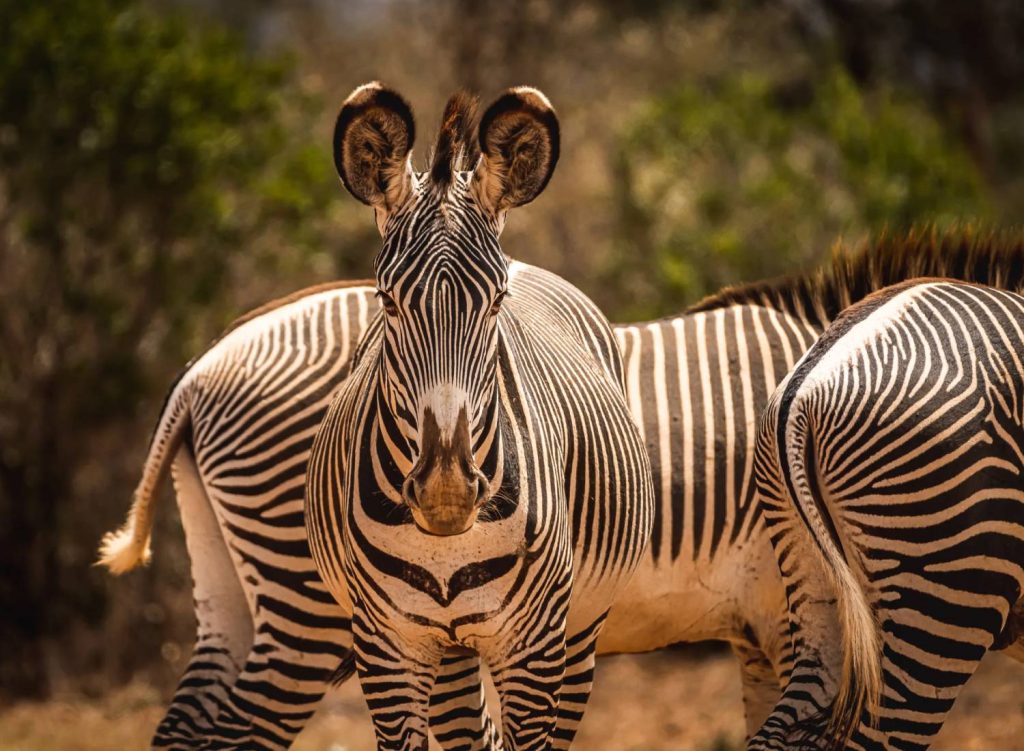
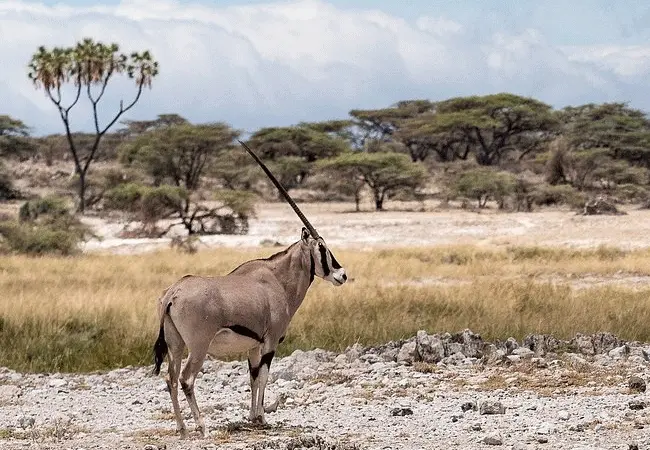
Shaba holds large lion prides and a healthy population of leopards, though the thicker riverine forest makes both harder to spot than in more open terrain. Elephant, eland, impala, gerenuk, oryx and kudu are all present, alongside the same arid-adapted specialists found across the Samburu ecosystem: Grévy’s zebra, reticulated giraffe and Somali ostrich. Hyena are common, and their calls at night are one of the more memorable parts of staying in Shaba’s quieter camps.
Birders have a particular reason to visit. Shaba is the only protected area where the near-threatened Williams’s lark has reliably been recorded, which makes it a specific, deliberate draw for serious birding travellers rather than a casual add-on. White-headed vultures and martial eagles are also regularly seen, part of a raptor population that benefits from the reserve’s low disturbance levels.
What Makes Shaba Harder to Plan Than Samburu
Part of the reason Shaba stays quiet is practical rather than mysterious. With only two lodges inside the reserve, availability is tighter than in Samburu, and popular travel windows, particularly July through October, can book out months ahead. Tour operators who know the reserve will typically secure Joy’s Camp or Sarova Shaba early in the planning process rather than leaving it until the rest of the itinerary is confirmed, since it’s usually the first component to sell out.
Transfers also take longer to arrange than a straightforward Samburu booking, since most flights route through the shared airstrips serving the wider ecosystem before a road transfer into Shaba itself. None of this makes the reserve difficult to visit, but it does mean booking further in advance pays off, especially if you want a specific room or tent at either property.
Combining Shaba With Other Reserves
- Samburu National Reserve – a short transfer away, with a wider range of lodges and higher wildlife density; most itineraries pair Shaba with Samburu as a two- or three-night combination.
- Buffalo Springs National Reserve – similarly close, offering the natural spring swimming spot that Shaba itself does not provide in the same accessible way.
- Lewa Wildlife Conservancy – roughly two to three hours south, a private conservancy with strong rhino conservation credentials and a different, more curated safari style.
- Meru National Park – further east, greener and larger, a sensible add-on for travellers wanting contrast after the arid landscapes of the Samburu ecosystem.
Few travellers build an itinerary around Shaba alone. The strongest trips treat it as a deliberate, quieter chapter within a broader northern Kenya circuit, typically one or two nights added onto a longer Samburu or Buffalo Springs stay.
Who Shaba Suits Best
| Traveller Type | Fit | Why |
| Repeat safari travellers | Excellent | A quieter, less crowded alternative to Kenya’s busier reserves |
| History and conservation enthusiasts | Excellent | The Joy Adamson and Elsa the lioness story is woven into the landscape itself |
| Serious birders | Strong | Home to the near-threatened Williams’s lark, recorded nowhere else among protected areas |
| Honeymooners seeking privacy | Strong | Joy’s Camp offers an intimate, low-traffic setting |
| First-time safari travellers on a tight schedule | Moderate | Lower wildlife density than Samburu makes it a better second stop than a first |
| Budget campers | Limited | Minimal independent camping infrastructure compared with neighbouring reserves |
Planning Your Visit
Shaba works best as a deliberate choice rather than a default stop. It suits travellers who already understand what they want from a safari, whether that’s solitude, conservation history or a serious attempt at a rare bird species, and who are willing to trade some wildlife-spotting convenience for an experience with far fewer other visitors in it.
If you’re trying to decide how Shaba fits into a wider Kenya itinerary, or want to understand whether it’s worth the extra transfer time from Samburu, our team has planned safaris through this ecosystem and can talk through the trade-offs honestly, based on what you actually want from the trip.


