Maasai Mara vs Amboseli National Park
When travellers plan a Kenyan safari, two names rise above all others: the Maasai Mara Vs Amboseli. They are the country’s most celebrated wildlife destinations, and for many visitors the hardest part of planning a Kenya trip is deciding between them. Both are magnificent.
Both deliver world-class game viewing, iconic African landscapes, and encounters with the continent’s most sought-after animals. Yet they are strikingly different from each other, and understanding those differences is the key to choosing the reserve that will give you the safari you are dreaming of.
The Maasai Mara is Kenya’s flagship reserve famous for its extraordinary density of big cats and for the Great Migration, when millions of wildebeest and zebra thunder across its plains and rivers.
Amboseli, further south on the Tanzanian border, is a smaller, drier park defined by two things above all: its enormous, tusk-heavy elephant herds and the breathtaking backdrop of Mount Kilimanjaro, Africa’s highest peak, rising snow-capped above the savannah. One is about predators and spectacle; the other is about elephants and scenery. Choosing between them depends entirely on what you most want from your safari.
This guide compares the Maasai Mara and Amboseli National Park across every factor that matters, from wildlife and landscapes to the Great Migration, elephants, birdlife, scenery, cost, accessibility, and the overall feel of each place. It also looks at whether you can, and should, visit both.
By the end you will know clearly which of these two remarkable Kenyan destinations belongs on your itinerary, and why so many travellers ultimately decide they want to experience both.
The Two Parks at a Glance
| Factor | Maasai Mara | Amboseli |
| Location | Southwest Kenya, Tanzania border | Southern Kenya, Tanzania border |
| Size | About 1,510 sq km (plus conservancies) | About 392 sq km |
| Famous for | Big cats and the Great Migration | Elephants and Mount Kilimanjaro views |
| Landscape | Rolling grassland savannah | Dry plains, marshes, dust and mountain backdrop |
| Great Migration | Yes, July to October | No |
| Big cats | Exceptional lion, cheetah, leopard | Present but fewer, especially cheetah |
| Elephants | Present | Outstanding, large tusked herds |
| Scenery highlight | Endless golden plains | Kilimanjaro rising above the savannah |
| Best for | Predators, migration, classic safari | Elephants, photography, mountain views |
The Maasai Mara:
The Maasai Mara National Reserve, in southwestern Kenya, is arguably the most famous safari destination in Africa. Covering around 1,510 square kilometres of open, rolling grassland and dotted acacia, and bordered by a ring of community conservancies that expand its wildlife range considerably, the Mara is the northern extension of the vast Serengeti ecosystem. This is the classic African savannah of the imagination: endless golden plains under enormous skies, teeming with wildlife in every direction.
Wildlife in the Maasai Mara
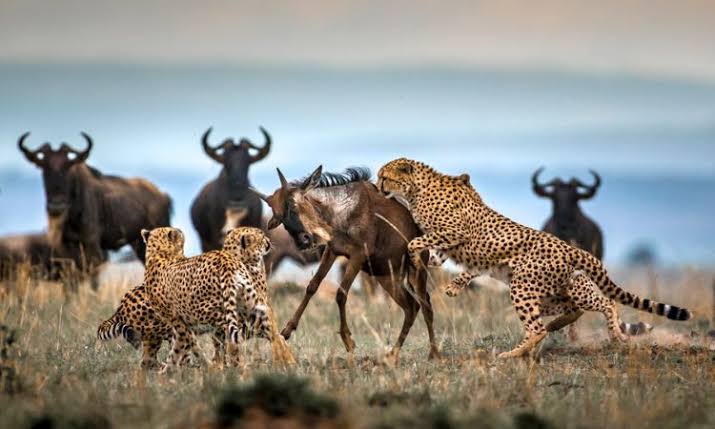
The Mara is renowned above all for its big cats. It holds one of the highest densities of lions in Africa, along with excellent populations of cheetah and leopard, making it perhaps the finest big-cat destination on the continent.
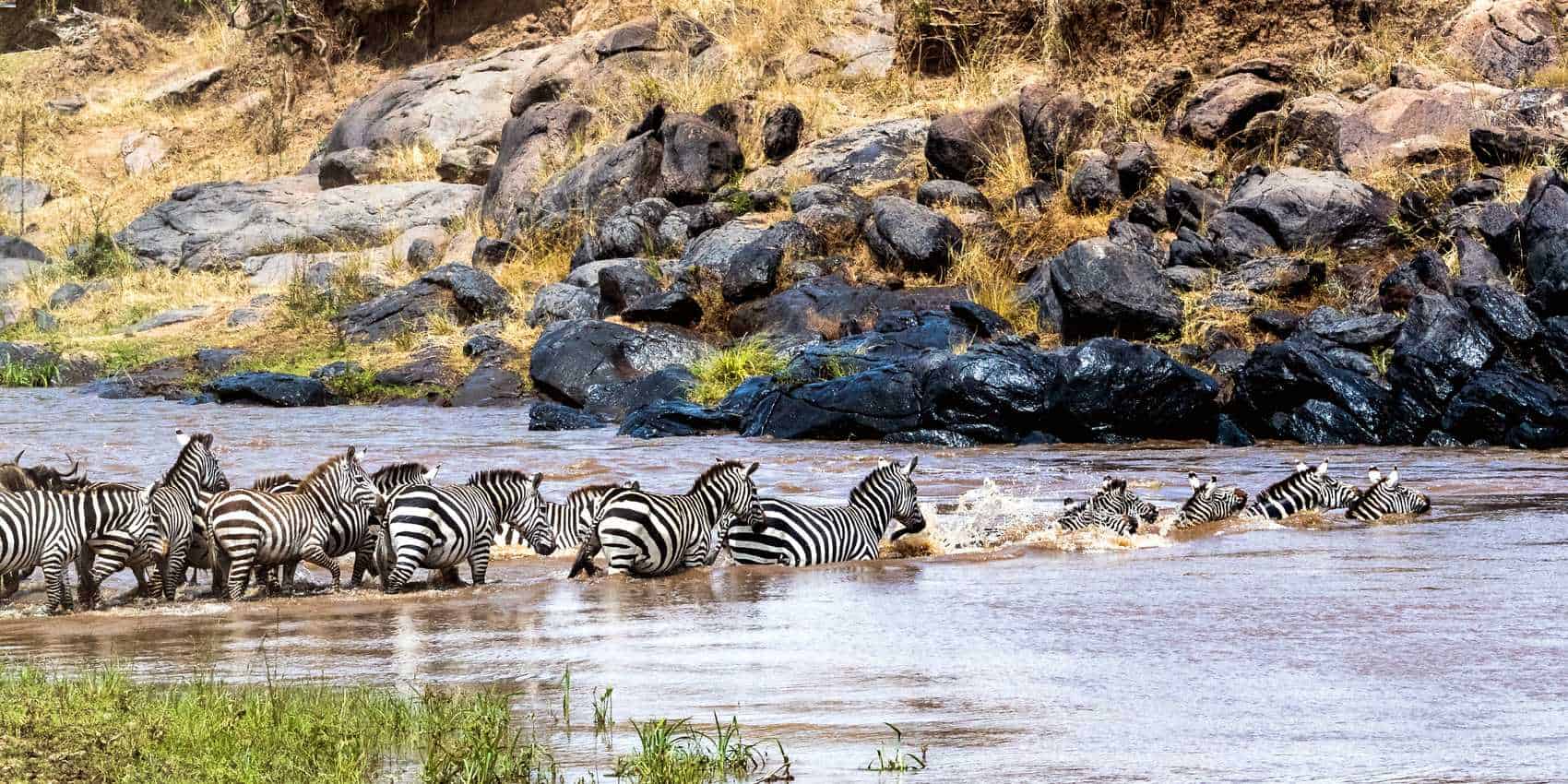
The reserve is also home to elephants, buffalo, giraffes, zebras, hippos, and huge numbers of antelope and other plains game, meaning the Big Five are all present and regularly seen. For visitors whose dream is to watch a lion pride on the hunt, a cheetah sprinting across the plains, or a leopard draped in a tree, the Mara delivers like nowhere else in Kenya.
The Great Migration
The Mara’s greatest claim to fame is the Great Migration. Between roughly July and October each year, more than a million wildebeest, together with hundreds of thousands of zebra and gazelle, cross from the Serengeti into the Maasai Mara in search of fresh grazing. The dramatic river crossings, where the herds plunge through crocodile-infested waters of the Mara River, are among the most thrilling wildlife spectacles on earth. This is a phenomenon Amboseli simply cannot offer, and for many travellers the chance to witness the migration is reason enough to choose the Mara, provided they visit in the right season.
Landscape and Atmosphere
The Mara’s scenery is the quintessential safari landscape: wide open grasslands rolling to the horizon, broken by lone acacia trees, meandering rivers, and gentle hills. It is a place of vast skies and golden light, especially beautiful at sunrise and sunset. The reserve can get busy in peak season, particularly around migration river crossings, but the surrounding private conservancies offer quieter, more exclusive game viewing with fewer vehicles and the added bonus of night drives and walking safaris not permitted in the main reserve.
Amboseli National Park
Amboseli National Park, in southern Kenya on the Tanzanian border, is a smaller park of around 392 square kilometres, but it delivers one of the most iconic images in all of Africa: great herds of elephants crossing dusty plains with the snow-capped summit of Mount Kilimanjaro towering behind them. Though Kilimanjaro itself lies across the border in Tanzania, it is from Amboseli that the mountain is best seen, and that unforgettable backdrop gives the park a scenic drama unlike anywhere else in Kenya.
Wildlife in Amboseli
Amboseli is, above all, elephant country. It is one of the best places in the world to observe elephants at close range, home to some of the largest and most impressive tusked individuals left in Africa, and the subject of one of the longest-running elephant research projects anywhere. Watching these great, gentle giants move across the plains, families and calves together, often just metres from your vehicle, is the defining Amboseli experience. The park is also home to lions, cheetahs, buffalo, giraffes, zebras, wildebeest, hyenas, and abundant plains game, though big cats are generally less numerous and harder to find here than in the Mara. Leopards and rhinos are rare or absent, so Amboseli does not reliably deliver the full Big Five.
Kilimanjaro and the Landscape
Amboseli’s landscape is one of contrasts. Much of the park is dry, dusty savannah and open pan, the bed of a seasonal lake that turns to shimmering dust in the dry season, yet at its heart lie lush, spring-fed swamps and marshes that draw wildlife, especially elephants, all year round. Above it all floats Kilimanjaro, most visible in the clear light of early morning and late afternoon, when the clouds part to reveal the snow-capped peak. For photographers, that combination of elephants, dust, marsh, and mountain makes Amboseli one of the most rewarding parks in Africa.
Birdlife
Amboseli is also a superb birding destination. Its swamps and the seasonal Lake Amboseli attract more than 400 bird species, including pelicans, flamingos, herons, and countless waterbirds, making it especially rewarding for bird lovers, particularly in the wet season when migratory species arrive in force.
Key Differences
Big Cats and Predators
If big cats are your priority, the Maasai Mara wins decisively. Its lion, cheetah, and leopard populations are among the densest and most reliably seen in Africa. Amboseli has predators, but they are fewer and harder to find, and it lacks the Mara’s sheer big-cat spectacle. For the classic drama of the hunt, choose the Mara.
Elephants
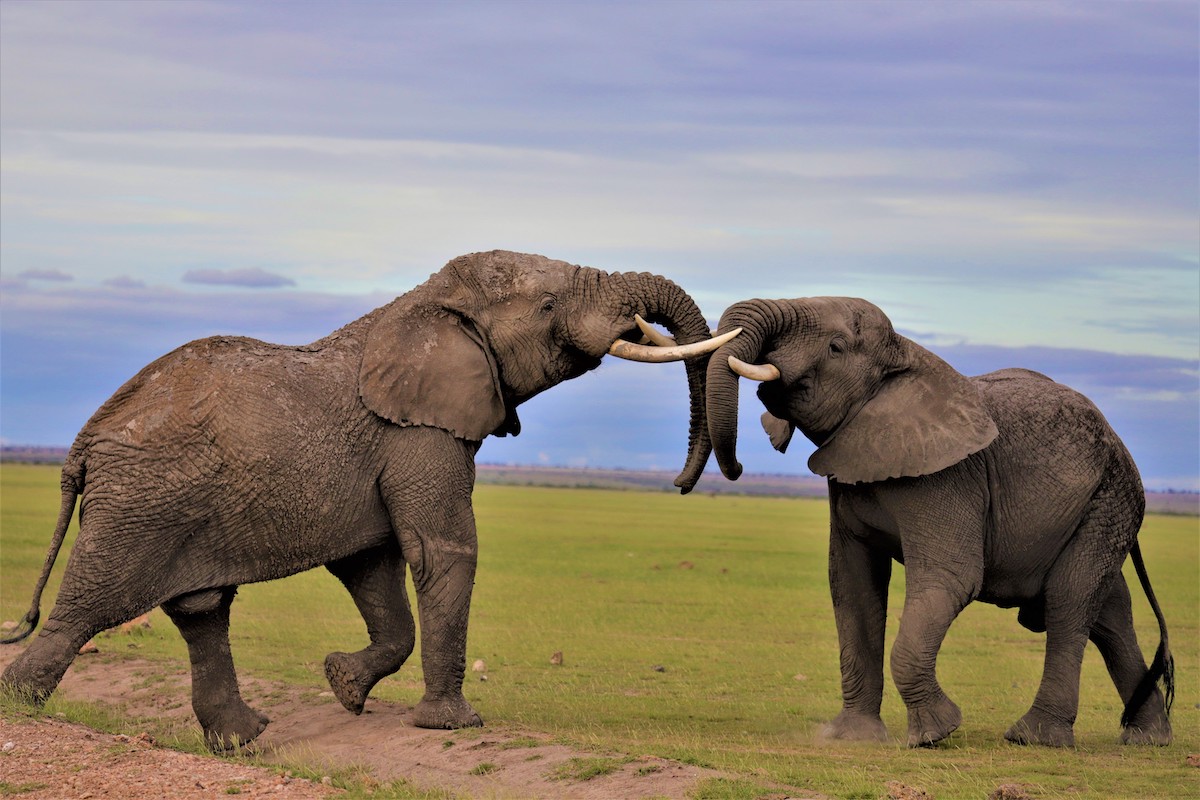
For elephants, Amboseli is unmatched. Nowhere in Kenya offers such close, reliable, and majestic elephant encounters, set against the world’s most beautiful mountain backdrop. The Mara has elephants, but they are not its defining feature the way they are in Amboseli.
The Great Migration
Only the Maasai Mara offers the Great Migration. If witnessing the river crossings and the massed herds is your dream, the Mara is the only choice of the two, and timing your visit to the July-to-October window is essential.
Scenery
Both are beautiful, but in different ways. The Mara offers the archetypal endless golden savannah, while Amboseli offers the singular drama of Kilimanjaro rising above elephant herds. For sheer photographic iconography, Amboseli’s mountain backdrop is hard to beat; for classic safari vistas, the Mara is unrivaled.
Crowds and Exclusivity
Both parks are popular and can feel busy in peak season. The Mara’s private conservancies offer a more exclusive experience with night drives and walking safaris. Amboseli, being smaller, can concentrate vehicles around the best elephant and mountain-view spots, though it generally sees fewer visitors than the Mara at the height of the migration.
Cost and Accessibility
Both parks are reached most commonly from Nairobi. Amboseli is closer, around four to five hours by road or a short scheduled flight, making it an easier and quicker trip from the capital. The Maasai Mara is farther, roughly five to six hours by road on variable roads, or about a 45-minute flight, which many visitors prefer. In terms of park fees and lodging, both offer a full range from budget camps to ultra-luxury lodges, but the Mara, especially its private conservancies and during the migration, tends to be the more expensive of the two at the top end. Amboseli can be slightly more affordable and is often combined with other southern Kenyan parks.
Which One Should You Choose?
Choose the Maasai Mara If…
- You want the best big-cat viewing in Kenya, with abundant lions, cheetahs, and leopards.
- Witnessing the Great Migration and its river crossings is a priority, and you can travel between July and October.
- You dream of the classic endless-savannah safari landscape.
- You want the option of exclusive conservancy experiences with night drives and walking safaris.
- Seeing the full Big Five on a single reserve matters to you.
Choose Amboseli If…
- Elephants are your priority, and you want to see large, tusked herds up close.
- The iconic view of wildlife beneath Mount Kilimanjaro is high on your wish list.
- You are a keen photographer seeking that unmistakable mountain-and-elephant image.
- You want a shorter, easier trip from Nairobi.
- Birdlife and scenery matter as much to you as big-cat action.