
Buffalo Springs National Reserve: Complete Travel Guide
Buffalo Springs National Reserve sits on the southern bank of the Ewaso Nyiro River in Isiolo County, separated from its better-known neighbor, Samburu National Reserve, by nothing more than a shallow, sand-bottomed channel.
Measured on a map, it looks almost incidental, barely 131 square kilometers against the vast conservancies and national parks that dominate most Kenya itineraries. On the ground it reads very differently.
The reserve holds a concentration of arid-adapted wildlife that few places in East Africa can match, animals shaped by a landscape of volcanic rock, doum palm groves and thorn scrub rather than the open grass plains most people picture when they hear the word “safari.”
This guide is written for travellers who are trying to work out whether Buffalo Springs deserves a place on their itinerary, and if it does, how to plan the visit properly. We cover who the reserve suits, what it costs, when to go, where to stay, and the trade-offs against nearby alternatives like Samburu and Shaba.
The aim is to give you the same grounding a seasoned safari planner would, so that by the end you can make the call with confidence rather than guesswork.
Should You Visit Buffalo Springs?
Buffalo Springs rewards travelers who have already done a classic savannah safari or who specifically want to see species that the Maasai Mara and Amboseli simply don’t have. If your priority is the sweeping grassland, enormous herds and dense predator sightings associated with southern Kenya and northern Tanzania, this reserve will feel quieter and more specialized.
If instead you’re drawn to a starker, more textured landscape, and you want a real chance at Grévy’s zebra, reticulated giraffe and gerenuk alongside the more familiar lion and elephant, Buffalo Springs earns its place.
It also suits travellers who want a shorter, more intimate reserve experience without sacrificing wildlife density. Because Buffalo Springs is small and its animals concentrate near the river, a well-timed two-night stay can deliver sightings that would take considerably longer in a larger park. Families with children, first-time safari-goers nervous about long game drives, and photographers chasing specific species all tend to come away satisfied.
Where it suits people less is as a sole safari destination. Most visitors combine Buffalo Springs with Samburu National Reserve directly across the river, and often with Shaba to the southeast, since all three share an ecosystem and a single entry ticket into one does not grant access to the others.
Budget travellers working with a single park fee, or those with only one day to spare, are usually better served choosing Samburu alone, since it has a wider range of lodges and a marginally larger wildlife population.
Why Buffalo Springs Is Different From a Typical Kenya Safari
The reserve takes its name from a natural spring near the Samburu Lodge area, a clear, chest-deep pool fed by underground water that pushes up through volcanic rock and flows out as a permanent stream.
In a landscape where daytime temperatures regularly climb past 30°C and rainfall is unreliable, that spring functions as a true oasis, drawing elephants, baboons and birdlife even in the driest months. It is one of the few places in Kenya where you can watch wildlife drink from water that never stops flowing, regardless of season.
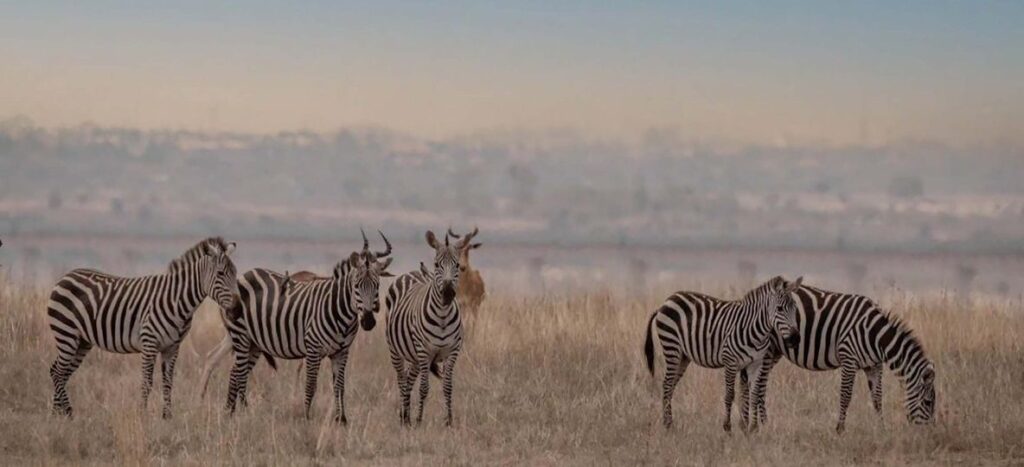
Buffalo Springs is best known for what safari guides call the Samburu Special Five: Grévy’s zebra, reticulated giraffe, Somali ostrich, beisa, oryx, and gerenuk. All five are adapted to arid country and are largely absent from Kenya’s southern circuit, which is exactly why repeat visitors seek this ecosystem.
Grévy’s zebra, in particular, is endangered, with the wild population now concentrated almost entirely in northern Kenya and a small part of Ethiopia, so a sighting here carries real conservation weight.
The terrain itself is worth understanding before you arrive. Expect open flat plains broken by rocky outcrops, acacia and doum palm woodland along the river, and low thorn scrub further from the water. Mount Kenya is visible on clear days to the south, a useful orientation point and a reminder of how dramatically the landscape changes within a few hours’ drive of the capital.
Where Is Buffalo Springs and How Do You Get There?
Buffalo Springs lies roughly 325 to 345 kilometers north of Nairobi, a drive of five to seven hours depending on road conditions and how many stops you make. Most self-drive and overland travellers take the A2 highway north through Nanyuki and Isiolo town before turning onto the reserve’s access roads. The route itself is part of the experience, since it passes through the central highlands before dropping into the drier, flatter country that defines Samburu-land.
Flying is the faster and more comfortable option, and it’s what most lodges recommend for guests with limited time. Scheduled flights leave Nairobi’s Wilson Airport for Samburu’s airstrips, a journey of around an hour, after which it’s a short transfer by road into Buffalo Springs.
If you’re combining the reserve with other northern Kenya destinations such as Lewa or Meru, chartered flights between airstrips are straightforward to arrange through any lodge or tour operator.
Within the reserve, a 4×4 vehicle is necessary. Tracks range from graded dirt roads to rougher routes through riverine sections, and during the rains some can become temporarily impassable. Self-drive is possible for confident, well-prepared travellers, but most visitors use a guided vehicle, both for navigation and because guides read animal behaviour and radio sightings between each other in ways that significantly improve your odds of good viewing.
When to Visit: Seasons and Weather
Buffalo Springs has a hot, semi-arid climate year-round, with daytime temperatures typically between 25°C and 34°C and cooler nights, especially from June through September. There is no season where you need heavy clothing, but early morning game drives are noticeably chilly, and a light jacket is worth packing whatever month you travel.
| Season | Months | What to Expect | Best For |
| Long dry season | June – October | Vegetation thins out, animals concentrate along the Ewaso Nyiro River, and visibility is excellent. | First-time visitors, photographers wanting predictable sightings |
| Short dry spell | January – February | Similar conditions to the long dry season, slightly fewer crowds | Travellers wanting dry-season wildlife without peak-season pricing |
| Long rains | March – May | The landscape turns green, wildlife disperses, and some tracks become difficult. | Birdwatchers, budget travellers comfortable with lower density sightings |
| Short rains | November–mid-December | Intermittent showers, good migratory bird activity, fewer vehicles | Travellers prioritizing solitude and birdlife over guaranteed Big Cat sightings |
If wildlife density is your main concern, aim for July through October or January and February. Animals have fewer water sources to choose from in dry months, so they gather predictably near the river and the spring itself, which is exactly where most lodges are positioned.
If you’re more interested in birding, lush scenery and lower rates, the rainy months have their own appeal, though you should expect longer drive times between sightings and build some flexibility into your itinerary.
How Much Does a Buffalo Springs Safari Cost?
Park entry fees are set by the Kenya Wildlife Service and reviewed periodically, so always confirm current rates with your operator before budgeting, but as a general guide non-resident adults pay in the region of USD 70 per day, non-resident children less, and Kenyan residents and citizens considerably less under local rates.
Camping fees apply separately if you’re travelling independently rather than staying in a lodge that already includes park fees in its rates.
| Budget Tier | Typical Nightly Cost (per person, sharing) | What You Get |
| Budget | USD 80 – 180 | Public campsites or simple tented camps, often self-catering or basic board, shared facilities |
| Mid-range | USD 250 – 450 | Comfortable tented camps or lodges, full board, included game drives, en-suite bathrooms |
| Luxury | USD 550 – 1,200+ | Premium tented camps or private conservancy-style lodges, exclusive guiding, enhanced service and amenities |
These figures cover accommodation and meals only. Add park fees, vehicle and guide costs if you’re not on an all-inclusive package, and transport to and from Nairobi, whether that’s a flight or a chartered vehicle for the road transfer.
A realistic three-night, two-park itinerary combining Buffalo Springs and Samburu, flying in and out, tends to land in the USD 1,200 to USD 2,500 per person range at the mid-range level and considerably more at the luxury end.
Where travelers tend to overspend without realizing it is on single-supplement charges for solo travel and on last-minute flight bookings. Both are avoidable with earlier planning, and a good operator will flag them upfront rather than let them surprise you at checkout.
Where to Stay: Accommodation Options
Buffalo Springs itself has fewer standalone properties than Samburu across the river, and several well-known lodges, such as Samburu Simba Lodge, sit on the Buffalo Springs side while drawing guests into both reserves. Most visitors base themselves at a property in this shared ecosystem and simply cross the river for game drives in whichever reserve has the best current sightings.
Luxury Tented Camps
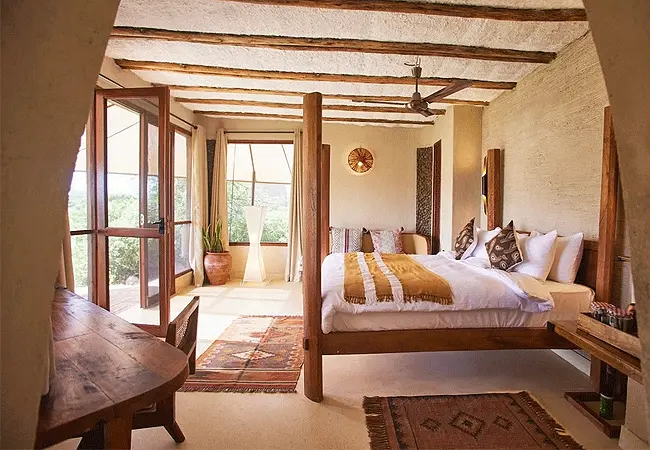
Properties at this level typically offer spacious safari tents with private verandas overlooking the river, en-suite bathrooms, personalized guiding, and dining that reflects the surrounding landscape.
Expect a deeply immersive experience, with the sound of the river and resident wildlife close enough to hear from your tent at night. This tier suits honeymooners, anniversary travelers, and anyone who wants the classic safari atmosphere without compromise.
Mid-Range Lodges and Camps
This is where most travellers land, and for good reason. Mid-range properties around Buffalo Springs and Samburu generally deliver comfortable en-suite rooms or tents, reliable full-board meals, and competent guiding, without the premium price tag of the top-tier camps. Families and first-time safari travellers are well served here, particularly at properties with swimming pools, a welcome relief given the heat.
Budget Camping and Public Campsites
Kenya Wildlife Service maintains public campsites within the reserve for travellers with their own equipment or those booking through a budget mobile camping operator. Facilities are basic, usually long-drop toilets and limited or no water supply, and you share the environment with unfenced wildlife, so sensible camp discipline matters. This option suits overlanders, backpackers and seasoned safari travellers who prioritise cost and authenticity over comfort.
What to Do: Activities in Buffalo Springs
Game Drives
Game drives are the core activity, typically run at dawn and late afternoon when temperatures are lower and animals are most active. A single drive of three to four hours is usually enough to cover the reserve’s main circuits, since Buffalo Springs’ modest size means you’re not spending hours in transit between sightings the way you might in a larger park. Full-day drives that cross into Samburu are common and worth arranging if your lodge straddles both reserves.
Swimming at the Natural Spring
The spring that gives the reserve its name is open to swimmers in a dedicated, supervised section, a rare chance to cool off during an African safari. It’s a memorable stop, particularly for families travelling with children who need a break from the heat and the structure of game drives.
Birdwatching
Buffalo Springs sits in a transition zone between East African savannah species and Somali-Maasai biome specialists, which makes for a notably varied bird list. Keep an eye out for the vulturine guineafowl, a striking, cobalt-breasted bird found almost nowhere outside this ecosystem, along with Somali ostrich, numerous raptors, sandgrouse and, during the wet season, a strong showing of migratory species.
Cultural Visits
Several lodges arrange visits to nearby Samburu villages, where community members explain traditional pastoralist life, beadwork and customs that differ in meaningful ways from the better-known Maasai traditions further south.
These visits work best when arranged through a lodge with an established community relationship, which ensures the visit is respectful and the proceeds actually support the community rather than functioning as a staged photo stop.
Wildlife You Can Expect to See
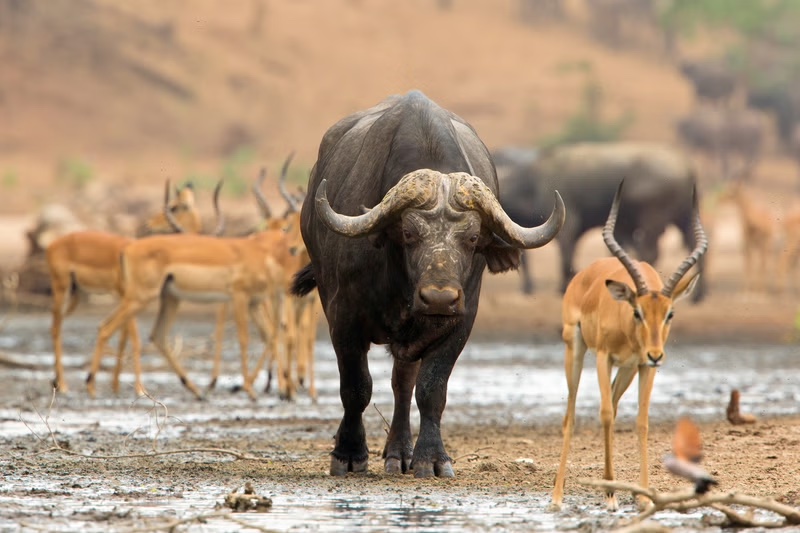
Predators are well represented for a reserve this size. Lions move between Buffalo Springs and Samburu following prey, leopards are present but, as everywhere, require patience and a sharp-eyed guide, and cheetahs hunt the more open sections where their speed gives them an advantage. Spotted hyenas and black-backed jackals round out the predator community.
Elephants are a near-guaranteed sighting, particularly near the river and the spring, where family groups come to drink and bathe. Among the arid specialists, gerenuk are a highlight for many first-time visitors, an antelope that stands on its hind legs to browse from branches too high for other grazers, a behaviour unique enough that guides will usually stop specifically to point it out.
Reticulated giraffe, distinguished by their sharply defined, net-like coat pattern, and beisa oryx, with their striking black-and-white facial markings and long straight horns, complete the roster of species that make this ecosystem distinct from southern Kenya.
Wildlife density is noticeably lower here than in parks like the Maasai Mara, and that’s worth setting expectations around. What Buffalo Springs offers instead is a higher proportion of sightings you won’t easily get elsewhere, which is precisely why it tends to appeal most to travellers on their second or third Kenya trip rather than those on their very first.
Combining Buffalo Springs With Other Parks
Almost nobody visits Buffalo Springs in isolation, and for good reason. The reserve sits within a cluster of complementary destinations that reward a slightly longer itinerary.
- Samburu National Reserve – directly across the Ewaso Nyiro River, with a wider lodge selection and marginally higher overall wildlife numbers; most visitors treat Buffalo Springs and Samburu as a single combined experience.
- Shaba National Reserve – southeast of Buffalo Springs, quieter still, and a good add-on for travellers who want to extend their stay in this ecosystem without changing scenery dramatically.
- Lewa Wildlife Conservancy – roughly two hours south, a private conservancy known for rhino conservation and a more exclusive, lower-density safari experience.
- Meru National Park – further east, larger and lusher, known as the setting for the Born Free story and a good option if you want a greener contrast after the aridity of the Samburu ecosystem.
- Maasai Mara – typically reached by a separate flight, this remains the destination of choice if your trip has room for only one park and you want the highest possible wildlife density.
A well-balanced northern Kenya itinerary often runs four to five nights across Buffalo Springs, Samburu and one additional stop such as Lewa, giving you the arid specialists and strong predator sightings of the Samburu ecosystem alongside the different character of a neighbouring reserve.
Who Buffalo Springs Suits Best
| Traveller Type | Fit | Why |
| Repeat Kenya visitors | Excellent | Access to species not found on the southern safari circuit |
| Photographers | Excellent | Predictable water-point sightings and distinctive arid-adapted species |
| Families with children | Strong | Shorter drives, the natural spring for swimming, manageable heat with the right timing |
| First-time safari travellers on a single-park trip | Moderate | Better paired with Samburu than visited alone; consider the Mara if time allows only one stop |
| Budget backpackers | Moderate to strong | Public campsites keep costs down, though self-drive requires confidence and preparation |
| Honeymooners | Strong, at the luxury tier | Intimate tented camps along the river deliver a quieter, more private atmosphere than busier parks |
Frequently Asked Questions
Is Buffalo Springs the same as Samburu National Reserve?
No, though the two are often treated as one destination. They sit on opposite banks of the Ewaso Nyiro River, share an ecosystem and much of the same wildlife, but are separately gazetted reserves with separate entry fees. A ticket into one does not automatically grant access to the other.
How many days do I need in Buffalo Springs?
Two nights is enough to see the main attractions, including the spring and a solid range of wildlife, especially if you’re also crossing into Samburu. Travellers wanting a deeper, more relaxed pace, or combining it with Shaba, typically plan three to four nights across the ecosystem.
Is Buffalo Springs safe to visit?
Yes, as part of an organised safari with a reputable operator or lodge. The reserve is well patrolled, and guided game drives are standard practice. As with any wildlife area, you should never leave your vehicle except at designated, supervised spots such as the swimming area at the spring.
Can I self-drive through Buffalo Springs?
Yes, with a 4×4 vehicle and some planning. Roads are generally manageable in the dry season but can be difficult after rain, and signage is limited compared to Kenya’s more heavily visited parks, so a GPS, a reserve map and a buffer in your schedule are all worth having.
What is the best time of year to see the Samburu Special Five?
Dry season months, from June through October and again in January and February, give you the best odds, since thinner vegetation and concentrated water sources make sightings more predictable across all five species.
Do I need a visa to visit Kenya for this safari?
Most visitors require an eVisa or an East Africa Tourist Visa, arranged online before travel. Requirements vary by nationality, so check Kenya’s official immigration guidance well ahead of your trip rather than assuming on-arrival entry is guaranteed.
Is malaria a risk in this area?
Buffalo Springs falls within a malaria risk zone, and most travel health authorities recommend prophylaxis for visitors to this part of Kenya. Speak with a travel health clinic or your doctor before departure, and pack appropriate repellent for evening hours.
Planning Your Visit
Buffalo Springs rewards travellers who do their homework before arriving, not because it’s complicated, but because it’s easy to underestimate how different it is from the safari parks most people picture first. Pair it thoughtfully with Samburu or Shaba, time your visit around the dry season if predictable wildlife sightings matter to you, and choose accommodation that matches both your budget and how immersive an experience you’re after.
If you’re still weighing Buffalo Springs against other northern Kenya options, or want help building an itinerary that fits your timeline and budget, our team has planned safaris across this exact ecosystem and is happy to talk through what would work best for your trip. There’s no obligation, just honest advice from people who know the terrain.


