Best Places for Walking Safaris in Uganda & Kenya
Best Places for Walking Safaris in Uganda & Kenya; A walking safari is exactly what it sounds like: a guided walk-through wildlife habitat with a professional ranger or guide, on foot, in the company of wild animals
On a game drive, you are elevated and enclosed. The vehicle is part of your identity. Animals largely ignore it, and you watch from a safe, comfortable distance. Walking changes that relationship entirely. You are at eye level with everything.
The pace of a walking safari is different. A game drive covers ground quickly, ticking off species. A bush walk covers perhaps five kilometers in three hours, stopping to examine the claw marks on an acacia trunk, the dung beetle working a pile of buffalo dung, and the ground squirrel watching you from its burrow entrance. Your guide reads the landscape out loud. By the end of the walk, you know more about how an African ecosystem actually functions than you will learn from ten hours of driving through it.
Uganda and Kenya are both excellent countries for walking safaris, but they offer quite different experiences. Uganda’s walks are dominated by forest and primate encounters; the gorilla trek is the world’s most celebrated walking wildlife experience.
Kenya’s walks happen on open savannah, scrubland, and volcanic terrain, in conservancies that have pioneered the guided bush walk as a distinct activity. Together, they cover the full spectrum of East African on-foot wildlife encounters.
Best Places or Destinations for Walking Safaris in Uganda
Lake Mburo National Park
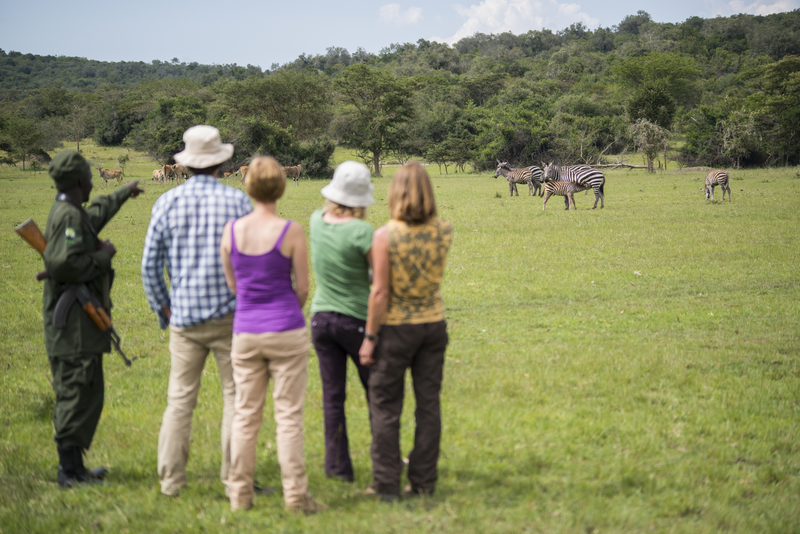
Are you looking for a classic, open-savannah walking safari in Uganda? Lake Mburo National Park is the right destination to start. It is the only park in Uganda where guided walking among large game is widely available and regularly conducted, and the reason comes down to one important ecological fact: Lake Mburo has no lions. That absence makes it the safest park in Uganda for on-foot wildlife encounters, and it means you can walk among zebras, impalas, topi, elands, warthogs, buffaloes, and the occasional giraffe without the level of armed escort required in lion country.
Walking safaris at Lake Mburo are conducted with Uganda Wildlife Authority rangers who carry rifles, but the walks here have a relaxed, exploratory character rather than a tense, high-alert one.
What to expect: Morning and late-afternoon walks of two to three hours. Open acacia woodland and lakeshore terrain. Encounters with zebra, impala, eland, topi, giraffes, buffalo, warthogs, and hippos near the shore and outstanding birdwatching. The park holds over 350 bird species.
Bwindi Impenetrable National Park
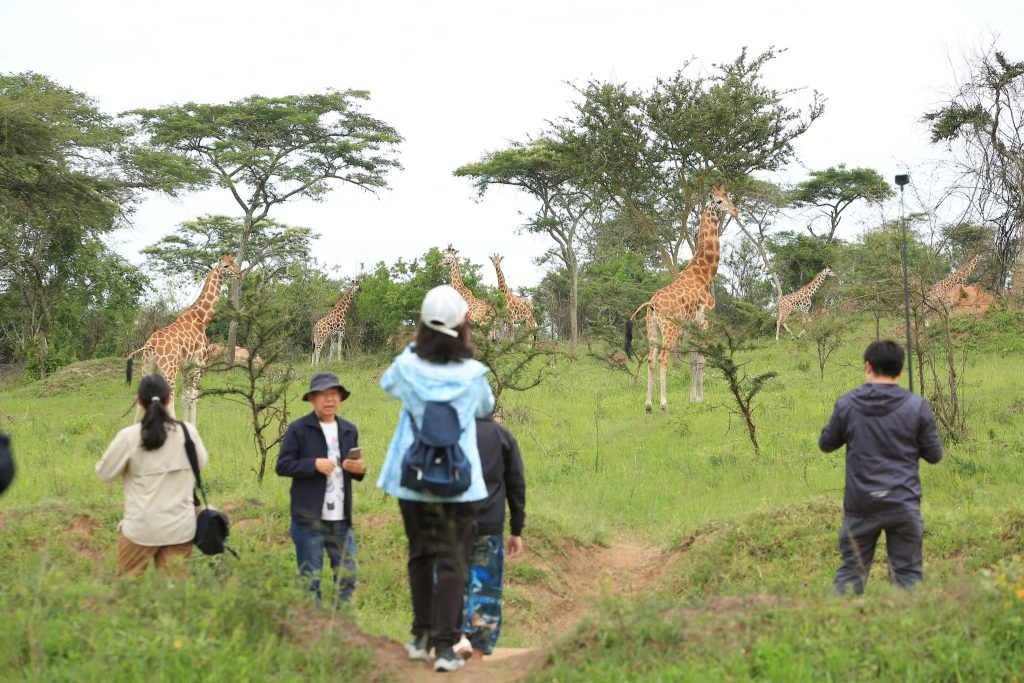
Most people who visit Bwindi come for one thing—the mountain gorilla trek—and they leave without discovering that the forest holds an entirely different walking experience when you are not tracking gorillas. Bwindi is a UNESCO World Heritage Site, one of the most biodiverse forests in Africa, and the network of walking trails through its canopy and undergrowth rewards a slower, more exploratory pace.
The Munyaga River Trail at the Buhoma sector is one of the best half-day forest walks available in Uganda. The trail follows the Munyaga River through dense forest, crossing wooden bridges over fast-moving streams, passing waterfalls, and moving through habitat that supports black-and-white colobus monkeys, L’Hoest’s monkeys, red-tailed monkeys, and over 350 bird species—including 23 of Uganda’s 24 Albertine Rift endemics.
The Ivy River Trail, also at Buhoma, is a longer option — a four to five hour walk that links the northern and southern sectors of the forest, crossing more varied terrain with spectacular viewpoints over the forested valleys.
What to expect: Forest walks of two to five hours depending on trial and pace. Dense rainforest terrain. Primates, birds, butterflies, and remarkable plant diversity. Some trails are steep and muddy; sturdy hiking boots and waterproof layers are essential.
Kidepo Valley National Park
Kidepo Valley National Park is Uganda’s most remote and least visited major park, sitting in the far northeast on the border with South Sudan, and it is arguably the most rewarding walking safari destination in the country for travelers who have already done the main Uganda circuit and want something entirely off the beaten track.
The landscape at Kidepo is unlike anything in the rest of Uganda—semi-arid savannah, rugged Narus Valley, and the dramatic Timu Forest in the north, all framed by mountain ranges that rise in sharp ridges on every horizon. The park holds one of Uganda’s highest concentrations of wildlife species, including lions, leopards, cheetahs, African wild dogs, ostriches, greater and lesser kudus, and the striped hyena—species you will not find in Queen Elizabeth or Murchison Falls.
Walking safaris in Kidepo are conducted with armed Uganda Wildlife Authority rangers and are some of the most genuinely wild on-foot experiences available in East Africa. The park receives very few visitors, which means the wildlife is less habituated to humans and encounters feel rawer and less managed.
Murchison Falls National Park
Murchison Falls National Park is best known for game drives and the spectacular river cruise to the base of the falls, but guided walking safaris are available in specific areas of the park and offer a completely different way of reading this landscape.
The walk to the top of Murchison Falls itself following the river gorge from the Victoria Nile boat launch point is one of the most dramatic short walks in Uganda. You follow the riverbank upward through rocky terrain as the roar of the falls builds, emerging above the gorge at the point where the entire force of the Nile squeezes through a seven-meter gap in the rock face.
Budongo Forest, to the south of the park, offers a distinct walking experience—guided forest walks through one of East Africa’s largest mahogany forests, where chimpanzees have been habituated and tracker teams locate them each morning. The Budongo chimp walk is less visited than Kibale but equally rewarding, and the forest itself has a grand, old-growth character that takes a slow walk to appreciate properly.
Queen Elizabeth National Park
Queen Elizabeth National Park is Uganda’s most visited park, and while most of the wildlife action happens on game drives and boat safaris, guided walking experiences are available in specific areas and are highly worthwhile additions to any stay.
The Maramagambo Forest on the park’s eastern boundary contains a walking trail to the bat caves—a short but memorable walk-through dense forest to a cave complex that houses hundreds of thousands of Egyptian fruit bats, alongside a resident population of African rock pythons that hunt the bats at the cave entrance. The walk takes around two hours and the cave itself, reached on foot through a dark forest, is one of those experiences that stays with you.
Best Places for Walking Safaris in Kenya
Laikipia Plateau
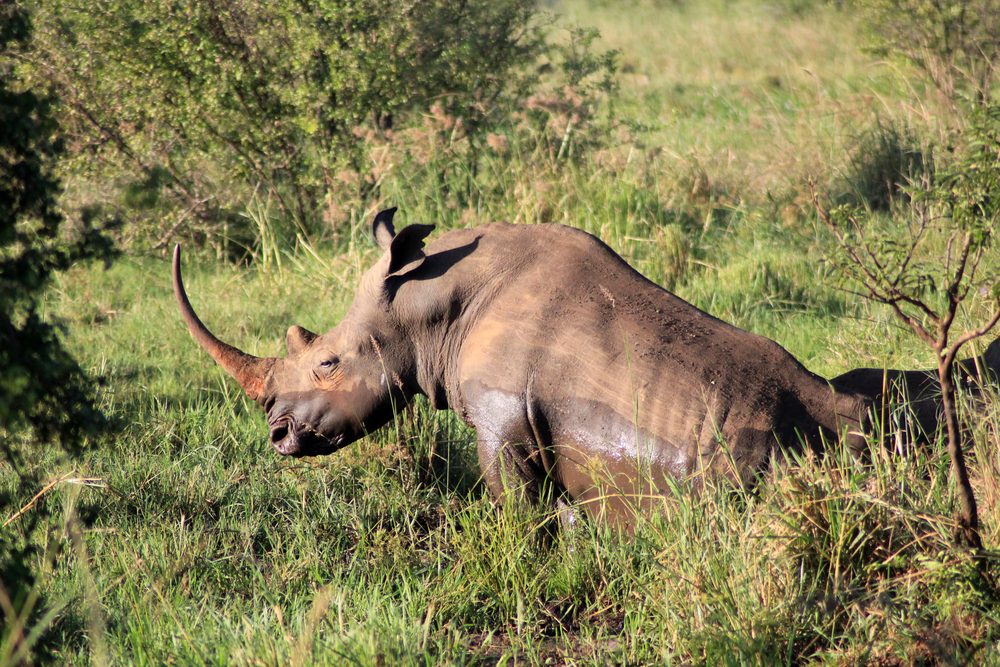
The plateau occupies a vast area of central Kenya between the Aberdare Range and the Matthews Range, encompassing private ranches, community conservancies, and wildlife corridors that together protect one of the most diverse collections of large mammals in the country, including black and white rhino, elephant, lion, leopard, cheetah, wild dog, Grevy’s zebra, reticulated giraffe, and gerenuk.
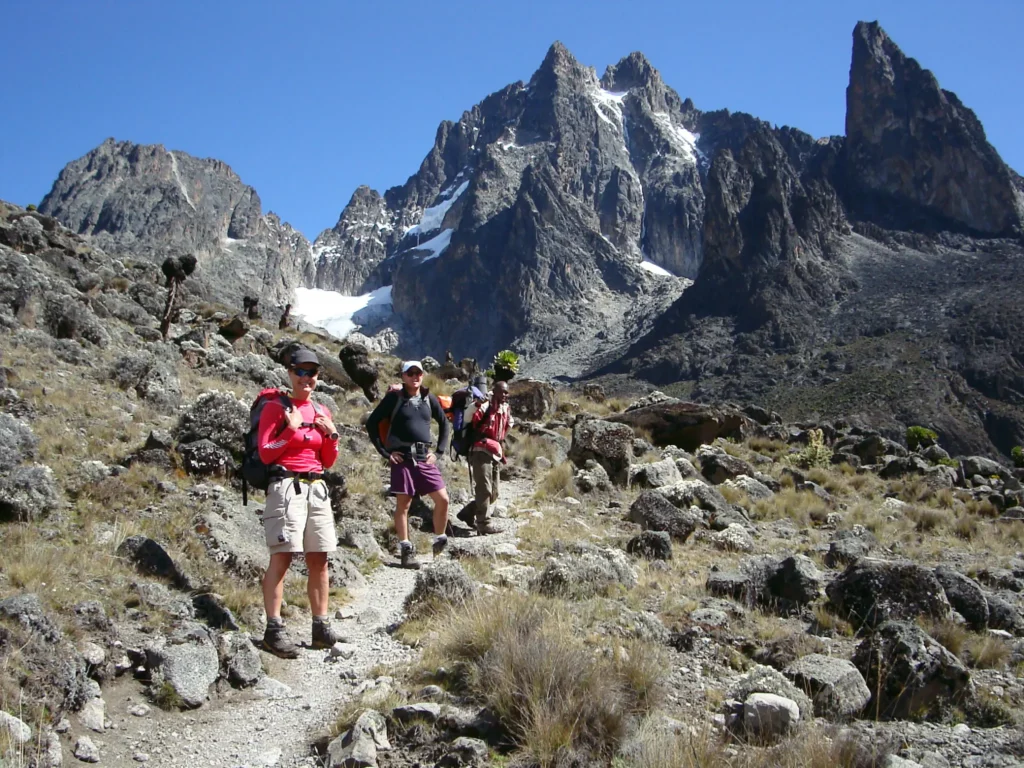
What makes Laikipia exceptional for walking is the combination of terrain, wildlife density, and guiding quality. The landscape—rocky volcanic hills, dry riverbeds, acacia woodland, and open plains—is genuinely varied in a way that makes multi-day walking itineraries compelling rather than monotonous.
What to expect: Morning walks of two to four hours from a permanent lodge or multi-day fly-camping walks of up to 15 km per day. Diverse terrain and wildlife. Professional KPSGA-certified guides and armed escorts were required. Best between June and October and January to March.
Hell’s Gate National Park
Hell’s Gate is one of the only national parks in Kenya where walking and cycling are permitted throughout the entire park without a guide requirement, making it unique in the country. The park sits in the Great Rift Valley south of Naivasha, and the landscape is one of the most dramatic in East Africa—towering volcanic columns, deep gorges carved by ancient rivers, geothermal steam vents, and cliff faces that rise sheer from the valley floor.

Walking through Hell’s Gate is a different kind of safari from the guided bush walk at Laikipia or the game walk at Lake Mburo.
Chyulu Hills and Tsavo West
The Chyulu Hills rise above the plains between Amboseli and Tsavo in a range of relatively young volcanic cones, some less than five hundred years old, covered in lush cloud forest fed by moisture off Kilimanjaro.
Walking safaris in Chyulu Hills have a specific character, quieter than Laikipia, with a different kind of wildlife. Elephant corridors pass through the hills connecting Amboseli and Tsavo, and encounters with family groups on the lava slopes are not uncommon. The forest edges support leopard and buffalo.
Tsavo West connects to the Chyulu corridor and the area around Mzima Springs’ natural pools, fed by underground water filtered through the lava, offers one of the most unusual walking experiences in Kenya.
Masai Mara Private Conservancies
Walking safaris are not permitted inside the Masai Mara National Reserve itself, but the private conservancies that border the reserve—Mara North, Naboisho, Olare Motorogi, Ol Kinyei, and Lemek, among others—operate under different rules and allow guided walks as a regular activity. This is the best way to experience on-foot wildlife in the Mara ecosystem, and the conservancies have the added advantage of far lower visitor numbers than the main reserve.
A morning walk from a camp in Mara North Conservancy, guided by a Maasai ranger with a rifle-equipped escort, takes you into terrain where lions, elephants, buffalo, and leopards are all present.
What to expect: Morning and evening walks of two to three hours. The Big Five are present—an armed escort is required. Maasai guides and community rangers. Best combined with game drives in the main reserve. June to October is peak season but walks operate year-round from the conservancies.
Best Time of Year for Walking Safaris in Uganda and Kenya
Walking safaris in Uganda and Kenya can be done all year round, but the dry seasons make for significantly better conditions on foot.
Uganda (June to September and December to February):
These dry months give you firm trails, shorter vegetation, and animals concentrated around water sources that are easier to approach on foot.
The wet seasons of March to May and October to November make the clay forest paths in Bwindi and Kidepo extremely slippery, and the long grass in Lake Mburo reduces visibility to a level that affects both safety and wildlife spotting.
Walking safaris still operate in wet season at most parks, but the dry months are clearly preferable.
Kenya (January to March and June to October):
The dry season of June to October coincides with the Great Migration in the Maasai Mara and high demand across the country, meaning lodge prices are at their peak.
January to March is an excellent, quieter alternative for Laikipia and Chyulu Hills walks as a result of good conditions, fewer visitors, and lower rates.
Avoid April to May (long rains) and November (short rains) for walking unless your specific destination confirms trails are manageable.
Combining Walking Safaris in Uganda and Kenya
Uganda and Kenya complement each other well on a combined itinerary because their walking safari environments are so different.
You can trek through the ancient mountain gorilla forest in Bwindi, walk the open acacia savannah of Lake Mburo, and then fly to Nairobi and spend three days doing guided bush walks in Laikipia’s volcanic plateau terrain.
Each experience uses your legs in a different landscape and produces completely different kinds of wildlife encounters.
A recommended 12-day combined walking safari itinerary would run like this:
Three nights at Bwindi for gorilla trekking and forest walks;
Two nights at Lake Mburo for open savannah walking and horseback safari;
One night in Kampala or Entebbe to connect;
Then fly to Nairobi and transfer to Laikipia for four nights covering multi-day walks and camel-assisted fly-camping;
One night at Hell’s Gate on the way back to Nairobi for the gorge walk and cycling.