Animals of Maasai Mara National Reserve
Maasai Mara National Reserve, also known as the Mara which is the leading safari destination in Kenya thanks to its abundant wildlife / Animals of Maasai Mara National Reserve. The reserve offers guaranteed wildlife spotting.
Maasai Mara Big Five
Maasai Mara National Reserve is famous among wildlife enthusiasts for offering travelers a chance to see the African Big Five in their natural habitat: lions, elephants, leopards, rhinos and Cape buffalo. The moniker “Big Five” was coined by early game hunters as these majestic creatures were hard to hunt on foot. Nowadays, the term is widely used by safari tour operators whose safaris contribute to habitat conservation and the peaceful observation of these creatures in their natural habitat.
The following are the Big Five in Maasai Mara National Reserve:
Lion
Considered the King of the Jungle, lions are one of the iconic cats in Africa’s wilderness thanks to their size and ferociousness as predators. In 2019, only 2000 lions were recorded left in Kenya by the Kenya Wildlife Service and in 2016, around 420 lions were recorded in Maasai Mara National Reserve by scientists from Oxford University who had devised a method of counting lions and used Maasai Mara National Reserve as a case study.
Maasai Mara National Reserve is famous for its high population of lions, and during your Kenya safari, you will find many prides here, each pride consisting of between 3 and 20 lions, stalking the savannah plains or resting under acacia trees.
The best time to visit Maasai Mara to see lions is July to November.
Elephant
African elephants are the largest land animals in the world and are easily seen in Maasai Mara National Reserve. While adult males enjoy their solitude, female elephants live in groups with young ones and are led by a matriarch.
In the past, elephants have been endangered by poaching and loss of habitat, but thanks to conservation efforts and reports from the Kenya Wildlife Service, there has been an increase in their population from 1448 to 2493 in the Maasai Mara ecosystem. Visitors on a Maasai Mara safari will experience elephants throughout the reserve.
The best time to visit Maasai Mara to see African elephants is all year round.
Cape Buffalo
Cape buffaloes are among the African Big Five and they represent the biggest human to human beings as well as other wildlife species. These animals are territorial and protective and charge at a tremendous speed when they feel threatened.
Buffaloes live in large groups, spending most of their time grazing the floodplains and savannahs. Statistics from an aerial count of the region done in 2017 show that there are just over 9,400 buffaloes in the Maasai Mara Ecosystem.
The best time to see cape buffaloes in Maasai Mara is all year round.
Rhinos
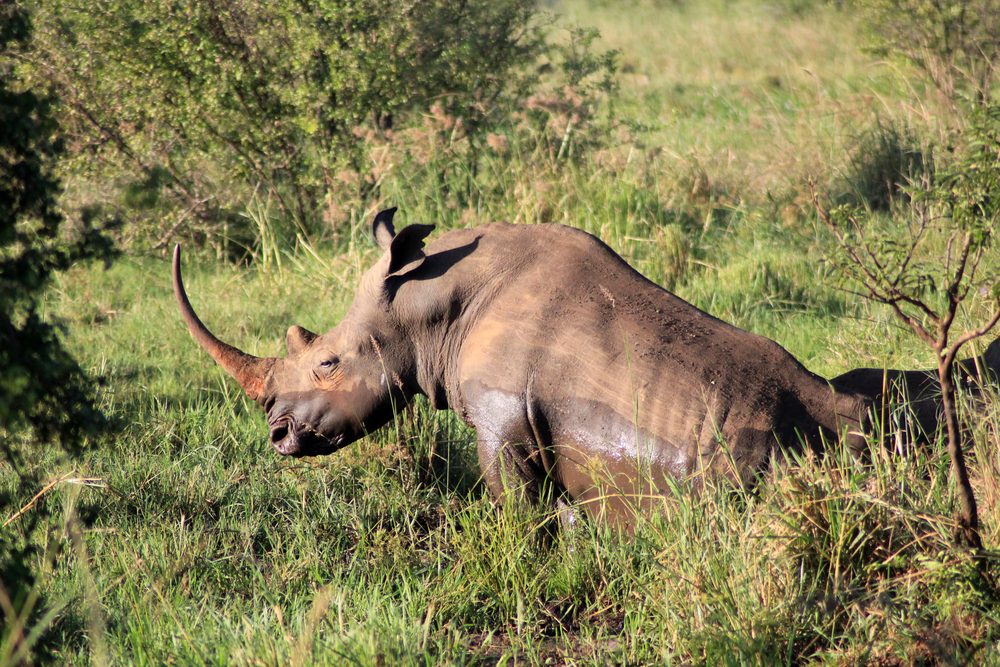
The rhinos are endangered species and catching a sight of them in Maasai Mara National Reserve is rare. Because of poaching, the numbers of rhinos in the reserve reduced from 120 in 1971 to 18 in 1984.
When the Mara Conservancy started its operations in the reserve in 2001, there was only one female rhino left. After strengthening the security and poachers began to be prosecuted, a male rhino was moved into the region to mate with the female. Although females only reproduce every two and a half to five years, the number of rhinos in Maasai Mara National Park is currently around 25-30.
The best time to see rhinos in Maasai Mara is all year round—just after sunset.
Leopards
The elusive leopards are listed as a near-threatened species on the IUCN Red List. This nocturnal cat loves rocky areas and woodland areas, and they have fantastic vision and hearing. By nature, leopards are an elusive creature.
Though leopards are elusive creatures, they can occasionally be seen in Maasai Mara National Reserve, resting in three branches.
The best time to see leopards in Maasai Mara is all year round.
The Great Wildebeest Migration in Maasai Mara National Reserve
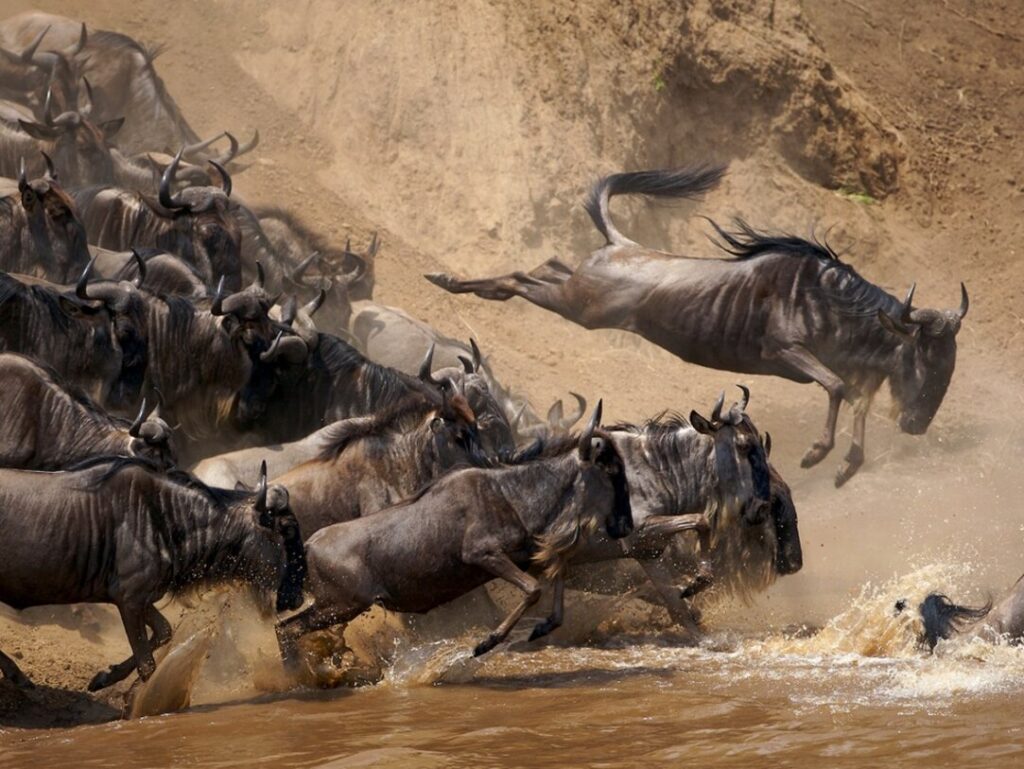
The Great Wildebeest Migration is an annual pilgrimage of over a million wildebeests together with thousands of gazelles and zebras through the Serengeti-Mara Ecosystem made up of Serengeti National Park and Maasai Mara National Reserve. The wildebeest and their companions embark on this annual journey in search for water and green pastures.
Wildebeests
The Maasai Mara National Reserve is a notable safari destination for the wildebeest migration due to their iconic Mara River Crossings. These animals prefer grassy plains to open woodlands, which is one of the reasons why they move; they are active during the day and night and like to travel in large herds, always grazing. The wildebeests are a prime source of food for Africa’s predators: lions, cheetahs, and hyenas, among others.
The best time to see wildebeests in Maasai Mara National Reserve is from July to October—when the Great Migration arrives.
Zebras
These beautiful striped creatures come from the horse family; they are social animals and like spending time with other herds. Zebras in Maasai Mara National Reserve are often seen grazing on the grass together and even grooming each other.
In case of an attack from a predator like a lion, the whole zebra family always comes to protect the threatened zebra.
Zebras take part in the annual wildebeest migration and they are best seen from July to October, though there are also resident wildlife species in the reserve.
Thomson’s Gazelles
Also known as gazelles, they are one of the animals that take part in the annual Great Migration; over 500,000 Thomson Gazelles migrate alongside zebras and wildebeests. These animals are a favorite meal to Maasai Mara’s big cats; however, their speed that rivals that of a cheetah has saved them from falling victim to predators.
Gazelles are territorial and the best time to spot them in Maasai Mara National Reserve is from July to October during the Great Migration.
Other animals of Maasai Mara National Reserve
Giraffe
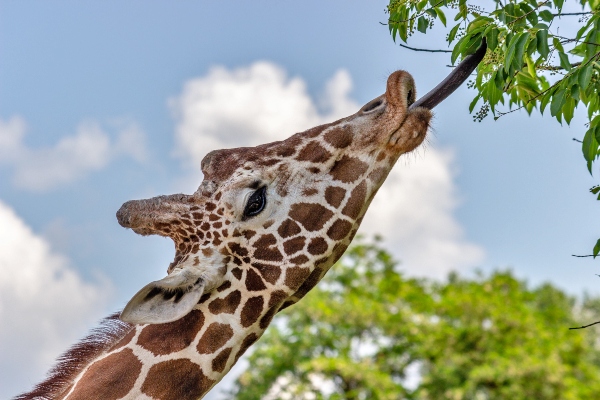
Giraffes—the world’s tallest mammals—are common in Maasai National Reserve, with towering legs and tall necks. Seeing giraffes out in the wild is an exciting experience, similar to seeing the big cats of Maasai Mara.
The aerial count of the region yielded a presence of over 2,500 giraffes in Maasai Mara National Reserve.
Giraffes in Maasai Mara can be spotted all year round and the chances of seeing them are high.
Cheetah
Maasai Mara National Reserve is considered to be one of the best places in the world to see cheetahs. These cats are the fastest land animals in the world, reaching up to 95 km/h (60 mph) in only three seconds. Cheetahs thrive in open grasslands and even though Maasai Mara has a high density of cheetahs, these species face threats such as habitat loss and the increasing human presence in the Mara Region.
Cheetahs in Maasai Mara can be spotted all year round and the chances of seeing these cats are medium.
Crocodile
Crocodiles are solitary creatures and can be found in murky waters, feeding mostly on fish. In Maasai Mara, the Mara River is home to one of the largest crocodilians in Africa and during the annual Great Wildebeest Migration, wildebeests have to make a perilous journey across the crocodile-infested waters of the river, and crocodiles will attack them for a meal.
The best time to spot crocodiles in Maasai Mara is throughout the year and the chances to spot them are high.
Hippo
Hippos are semi-aquatic creatures inhabiting flowing river waters, swamps and lakes. During the day they cool off by staying submerged in water or mud, but when the sun sets, they come out to graze on grass. Hippos are incredibly aggressive animals and are among the most dangerous animals in Africa.
In sub-Saharan Africa, there are around 125,000 to 150,000 hippos. They face a serious threat from poachers wanting their ivory canine teeth.
Hippos in Maasai Mara National Reserve can be spotted all year round and the chances of seeing them are medium.
The list of animals of Maasai Mara National Reserve goes beyond the wildlife species listed above.