Where To Go On A Road Trip To Kenya?
Where To Go On A Road Trip To Kenya? Kenya bits the other East African countries when it comes to tourist in flow annually. The famous wildebeest migration attracts a lot of travelers to the Maasai Mara National Reserve.
Many travelers when planning a Kenyan safari, they spend time on websites and social media looking at glossy photos. For example, photos of lions on a jeep hood or people drinking gin and tonics in white linen while the sun sets.
Those pictures are nice, they might raise your wanderlust, but will never truly share ground information. Doing a road trip here is the only way to really see the country, but it takes some planning because things don’t always go like they do in the brochures. You have to think about the distances, the roads that look like they were hit by a hammer, and the fact that a map might say two hours while the reality says five.
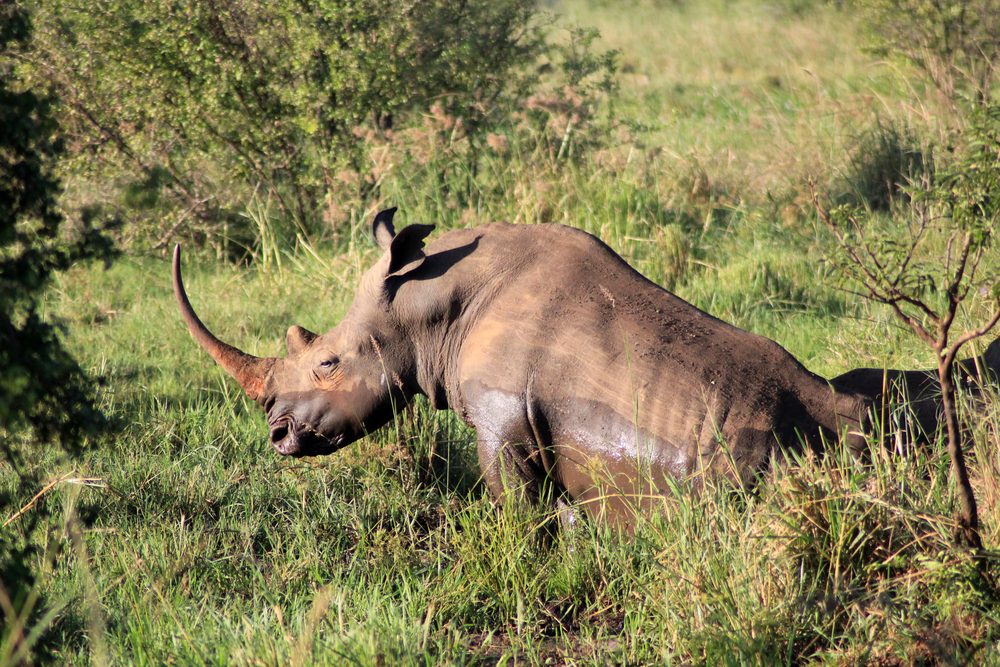
Nairobi is where everything starts. It is a big, loud, messy city that somehow works. Most people just land at the airport and leave, which is a mistake. If you stay a night, go to Nairobi National Park. It is the only place in the world where you can see a rhino with skyscrapers in the background.
It is a good way to warm up for the bush. Just keep in mind that the city traffic is a beast of its own. If you are trying to leave town for your road trip on a Friday afternoon, you might as well stay and have a beer because you won’t get far.
The city has a weird energy. You have high end malls in Westlands and then you have the chaotic markets in the city center. For a road tripper, Nairobi is where you stock up. Go to a big supermarket like Carrefour or Naivas and buy your snacks, your water, and maybe a cheap cool box. You do not want to be buying these things at a safari lodge where a bottle of water costs three times as much.
Planning for Kenyan road trip
When you start planning the actual driving, the first thing everyone talks about is the Maasai Mara. It is the big one. It is famous for a reason. There are more big cats there than almost anywhere else. But getting there is a journey.
From Nairobi, you are looking at about five or six hours of driving. The road to Narok town is fine, mostly paved and smooth. You will drive down the Mai Mahiu escarpment which gives you your first real view of the Great Rift Valley. It is huge. You will want to stop for a photo, but be careful of the trucks. That road is the main artery for cargo going to Uganda and Rwanda, and the truck drivers are in a hurry.
Once you pass Narok, the road towards the park gates changes. This is where the “African massage” starts. The road becomes gravel and dirt, full of corrugations that make the whole car shake. If you are driving a small car, you may not like it.
You need something with high clearance. Even a van is okay if the weather is dry, but if it rains, you want a four wheel drive. I have seen many people in small hatchbacks trying to reach the Sekenani gate, and usually, they are the ones waiting for a tow truck while the baboons laugh at them from the trees.
Important factors to consider for your Kenyan road trip
Money is the part that confuses people the most. People think Africa is cheap, but safaris are not. You have to pay for the car, the fuel, the driver if you hire one, and the park fees. In 2026, those park fees have gone up significantly.
For a foreigner, you might be looking at one hundred or even two hundred dollars per person just to go through the gate for twenty four hours in the peak season. If you are from East Africa, it is much cheaper, but you still have to budget for it.
The car is your biggest expense after the lodges. You can rent a safari van with a pop up roof for maybe eighty to one hundred dollars a day. A proper Land Cruiser is going to be more like two hundred or two hundred and fifty dollars. Then you have to fuel it.
Fuel prices in Kenya can jump around, and those big cruisers drink a lot of it. If you are traveling as a couple, the car cost feels heavy because it is just the two of you paying. If you have four or five people, it becomes much more realistic because you split the vehicle and the driver fee.
A driver is worth the money, honestly. If it is your first time, trying to navigate the backroads while looking for a leopard in a bush is hard. A local driver knows the “language” of the bush. They talk to other drivers on the radio. They know that a certain tree always has a certain pride of lions nearby.
They also know how to fix a flat tyre in the mud, which is a skill you might need. I once saw a tourist trying to change a tyre near the Talek River while a buffalo watched him from fifty yards away. The tourist looked terrified, and he should have been. A driver handles that stress for you.
Road trip to Amboseli National park
Let’s talk about Amboseli. It sits right at the foot of Mount Kilimanjaro. The view is spectacular, especially in the morning before the clouds cover the peak. It is famous for elephants.
Huge ones with tusks that almost touch the ground. The drive from Nairobi to Amboseli is about four hours. It is a lot easier than the road to the Mara. You go down the main highway towards Mombasa and then branch off at Emali.
Watch out for the police on that highway. They have speed cameras hidden behind bushes, and they will pull you over for going even five kilometers over the limit. If you get pulled over, stay polite. Don’t be aggressive. Usually, they just want to see your license and insurance.
In Amboseli, the dust is everywhere. It is a dry, salty place because of the old lake bed. If you are on a budget, you can find camps just outside the park gates for maybe seventy dollars a night. You still see the same animals during the day, but you save a lot of money compared to the luxury lodges inside the park that can cost seven hundred dollars a night. Mid-range is usually around three hundred dollars. Bring a scarf to cover your face when you are in the open roof car, or you will be coughing up grey dust for a week.
Tsavo National Park Road trip
If you want to go further, look at Tsavo. It is split into Tsavo East and Tsavo West. This is the “wild” Kenya. It is massive. In the Mara, you might see ten other cars around a lion. In Tsavo, you might drive for one or two hours and not see another soul.
The dirt is red there, so the elephants look like they are made of clay. Tsavo West is hilly and beautiful, with places like Mzima Springs where you can see hippos through a glass tank. Tsavo East is flat and vast, perfect for those long, lonely drives where you really feel like you are in the middle of nowhere.
One thing people forget is that the distances are long and the roads are tiring. You can’t see the Mara and Amboseli and Tsavo in four days. You will spend all your time looking at the road and not the lions. If you have a week, pick two or three places. If you have ten days, you can do four destinations. If you try to rush it, you will just end up exhausted and grumpy.
If you are a solo traveler, the road trip is tougher on the wallet. You are paying for the whole car yourself. A good trick is to look for “join-in” safaris in Nairobi. You get a seat in a van with other people. You lose some freedom, you can’t tell the driver to stop for an hour to watch a bird, but you save hundreds of dollars. If you are a family, the road trip is great because the kids can make noise and you can stop whenever you want for a bathroom break or to buy roasted maize on the side of the road.
Kenya safari seasons
The seasons matter a lot for your budget. June to October is the dry season. This is when the Great Migration happens in the Mara. It is incredible to see a million wildebeest, but it is also when the prices are highest and the parks are crowded. If you go in November or April, it might rain.
The roads get messy, and some camps close. But the grass is green, the babies are being born, the birds are everywhere, and the hotels might give you a big discount. I actually prefer the “green season” because the air is clear and the colors are better for photos.
African Safari tipping culture
Let’s get into the practical stuff that books do not tell you. Tipping is a big deal in Kenya. Your driver works hard. He is your guide, your mechanic, and your protector. A good rule is ten to fifteen dollars per day from the whole group. For the staff at the lodges, a few dollars here and there goes a long way.
Safari road trip meals
Food on a road trip can be an adventure. If you stay in lodges, the food is usually a buffet with a mix of Kenyan and international stuff. You will eat a lot of chicken, beef stew, and vegetables. If you are out on the road, stop at a “hoteli”, which is just a small local restaurant, and ask for nyama choma and kachumbari. Kachumbari is a salad of tomatoes and onions, and it goes perfectly with the roasted meat. Just make sure the meat is hot and fresh.
Self-Drive Safari road trip
If you are driving yourself, download maps for offline use because the internet will disappear the moment you leave the main highway. And watch out for the speed bumps. Kenyan speed bumps are not like the ones in Europe or America. They are like small mountains. If you hit one at speed, you and your luggage will hit the roof and you might break an axle.
If you are traveling as a couple, it can be very romantic, but be prepared for the fact that a long day of dusty driving can lead to some bickering. If you are solo, you will meet plenty of people at the camps. Kenyans are some of the friendliest people you will ever meet. They love to talk about their country, their politics, and their football. Strike up a careful conversation.
Back roads as a contributing factor to a Kenyan road trip
Another thing is the “panya routes.” These are small backroads that locals use to skip traffic or tolls. Unless you are with a local, stay on the main tracks. It is very easy to get lost in the bush, and there are no street signs. If your car breaks down in the middle of a park, stay inside. I know it sounds obvious, but every year someone gets out to take a photo of a “cute” lion and realizes too late that lions don’t think humans are cute; they think we are lunch.
Safari Accommodation type
A budget safari means you are sleeping in a tent, maybe with a shared bathroom, and eating simple meals. You’ll pay maybe one hundred and fifty dollars a day total. Mid-range means a permanent tent with a wooden floor and a real bed, plus your own bathroom and nice three course meal
That’s maybe three hundred dollars a day. Luxury is a whole different world. You’re paying for exclusivity. We are talking about tents that are larger than most city apartments, with copper bathtubs and private chefs. You can easily spend fifteen hundred dollars a night for that. The secret is that the lions don’t care how much you paid for your bed. You see the same animals whether you are in a tent or a palace.
Coast adventure
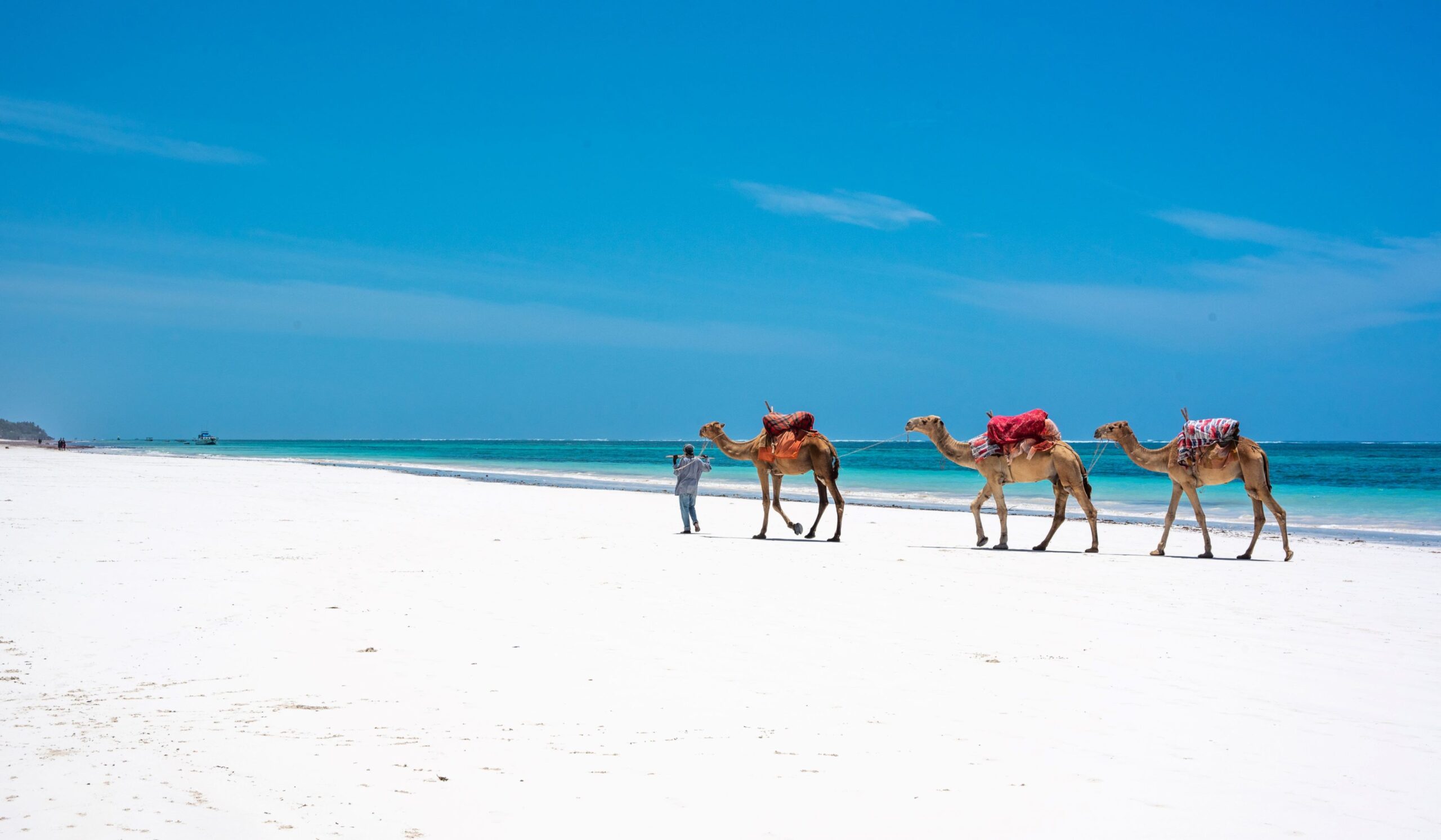
If you go to the coast after your safari, which a lot of people do, the road trip continues. The drive from Tsavo to Diani beach or Watamu is long and the road to Mombasa is famous for being one of the most dangerous because of the trucks. A lot of people take the SGR train now.
It’s a modern train that goes from Nairobi to Mombasa in about five or six hours. It even goes through a section of Tsavo, so you can see elephants from your train window. It’s a great way to end a trip if you are tired of bouncing around in a car.
What to pack for your Kenyan road trip
When you are packing, leave the bright colors at home. You don’t need to look like a soldier in full camo, but bright red or yellow makes you stand out to the animals and can actually attract tsetse flies in some areas like North Tsavo. Blue and black also attract those flies, and their bite feels like a hot needle. Wear tan, green, or grey. And bring a warm jacket. People think Africa is always hot, but in the early morning in the Mara or at night in Nairobi, it can get very cold.
The best part of a road trip is the small moments. It is stopping at a viewpoint and seeing a Maasai herder walking his cows across the plains. It is the smell of the rain hitting the dry earth—what people call petrichor—which is the best smell in the world. It is the feeling of being completely away from your phone and your emails.
Kenya stays with you. You will come home and the silence of your house will feel weird because you are used to the sound of crickets and the distant whoop of a hyena. Just keep your budget realistic. Don’t try to squeeze every penny or you will miss out on the magic. Pay for the good driver, buy the extra bottle of water, and keep your eyes open. You never know what is around the next corner.
I’ll tell you one last thing. Don’t spend the whole time looking through a camera lens. Some of the best memories I have are the ones where I put the camera down and just watched a mother cheetah teach her cubs how to hunt. No photo can capture the tension in the air or the way the grass moves.
So, pack your bags. Get a sturdy car. Be ready for some bumps and some long days. Kenya is waiting for you, and it is way better than any magazine photo. You just have to be willing to go and find it for yourself.
One final tip on the budget, always have a “buffer” fund. Maybe five hundred dollars extra that you don’t plan to spend. Use it for an emergency repair, a last minute flight if a road gets washed away, or a hot air balloon ride in the Mara if you decide you can’t leave without doing it. That balloon ride will cost you about four hundred and fifty dollars per person, but drifting over the savannah at sunrise is something you will tell your grandkids about.
A road trip to Kenya is a test of your patience and your sense of adventure. But if you do it right, it will be the best thing you ever do. Just remember to watch for the speed bumps and keep the windows up when the baboons are around. They are much faster and smarter than they look, and they love a good ham sandwich.
The park fees are usually paid via the eCitizen portal now. This is a government website. It can be a bit of a headache to navigate, so try to set up your account before you leave Nairobi. Sometimes the network at the park gate is slow, and you don’t want to be sitting there for two hours while the sun goes down just because a website won’t load. If you have a driver, he will usually handle this for you, which is another reason why they are worth their weight in gold.
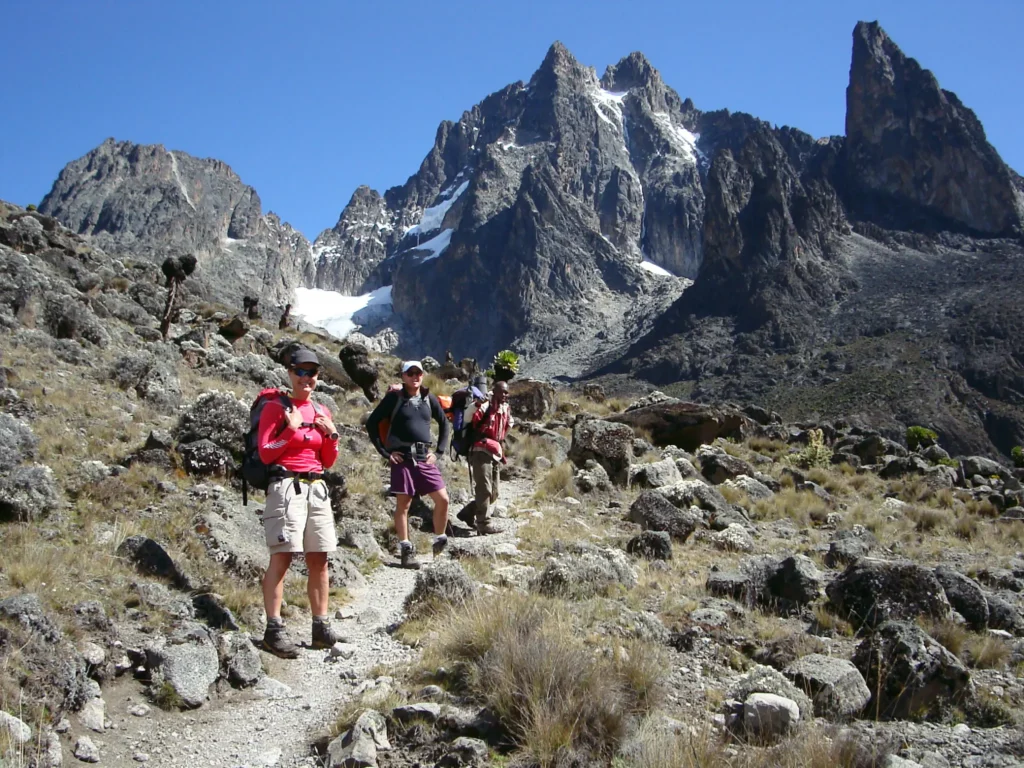
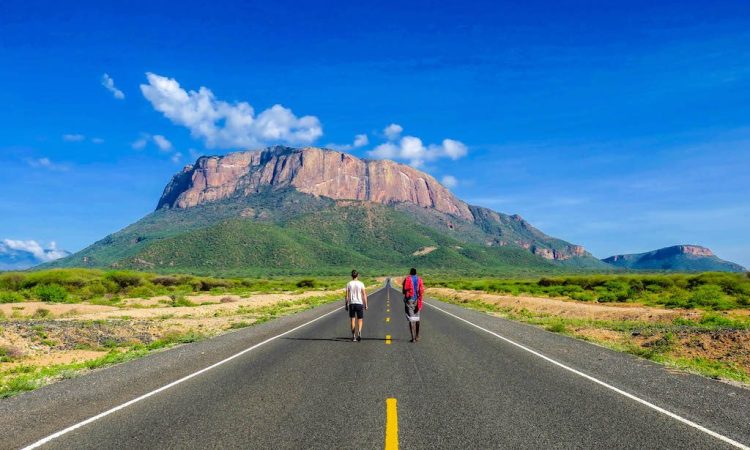
If you’re heading up north towards Samburu, the landscape changes again. It gets even drier, more desert-like. The animals there are different, you get the “Special Five,” like the reticulated giraffe and the Grevy’s zebra. The drive up there from Nairobi takes about six hours and takes you right past Mount Kenya. If the weather is clear, the jagged peaks of the mountain are beautiful. It’s a bit of a climb in the car, so make sure your cooling system is working well.
No matter which way you turn the steering wheel, whether you go south to the elephants of Amboseli, west to the lions of the Mara, or east to the red dust of Tsavo, you’re going to see things that change how you look at the world. Just keep it simple, stay grounded, and don’t expect everything to run like clockwork. That’s the beauty of it. That’s the real Kenya.