
Shimba Hills National Reserve: Complete Travel Guide
Shimba Hills National Reserve protects 192.5 square kilometers of coastal rainforest, mixed woodland and open grassland in Kwale County, roughly 33 kilometers from Mombasa and about 15 kilometers inland from the coast.
Gazetted in 1968, the reserve holds Kenya’s only breeding population of sable antelope, a striking, dark-coated species with long, curved horns found nowhere else in the country, a fact that earns Shimba Hills its local nickname, the Paradise of the Sable Antelope.
For travelers based on Kenya’s south coast, particularly around Diani or Mombasa, Shimba Hills offers something quite valuable: a full safari-style experience, forest canopy, waterfalls, elephants and rare antelope, without the flights or multi-day travel that a trip to Kenya’s interior parks requires. This guide covers what makes the reserve worth the short detour inland, how to plan a visit, and what to expect from one of the coast’s most underrated wildlife destinations.
Should You Visit Shimba Hills?
Shimba Hills suits almost any traveler already spending time on Kenya’s south coast around Diani or Mombasa. Close enough for a day trip yet substantial enough to justify an overnight stay, the reserve delivers a meaningfully different experience from beach time, without requiring the logistics of a flight to Kenya’s better-known interior parks.
It particularly suits travelers interested in rare wildlife and plant conservation. Beyond the sable antelope, Shimba Hills protects over half of Kenya’s recorded rare plant species, including endangered cycads and orchids, within a coastal rainforest ecosystem found almost nowhere else in this condition along the East African coast.
Birders and butterfly enthusiasts will also find the reserve nationally significant for both groups.
Where it suits people less is as a Big Cat safari destination. While the reserve does hold leopard, predator sightings are far less reliable here than herbivore and elephant encounters, and travelers specifically chasing lion or cheetah sightings should look to Tsavo or one of Kenya’s savannah parks instead. Shimba Hills is fundamentally a forest and grassland reserve built around a different kind of wildlife experience.
Why Shimba Hills Matters
The sable antelope population here, numbering around 100 individuals, represents Kenya’s last breeding herd of the species, making Shimba Hills nationally significant for a single reason that few other reserves in the country can claim. Spotting one of these animals, with their dramatically curved horns and bold black-and-white facial markings, is a real highlight unavailable anywhere else on a standard Kenya itinerary.
Elephants present a more complicated picture. An estimated 700 elephants live within the reserve’s boundaries, a population density that conservationists consider unsustainably high for the available habitat, contributing to vegetation damage and significant human-elephant conflict in surrounding communities.
The Kenya Wildlife Service has worked to manage this through measures including a dedicated exit corridor via the neighboring Mwaluganje Elephant Sanctuary and periodic relocation efforts to parks like Tsavo East. For visitors, the practical upshot is straightforward: elephant sightings here are close to guaranteed, a function of the very density that poses the reserve’s biggest management challenge.
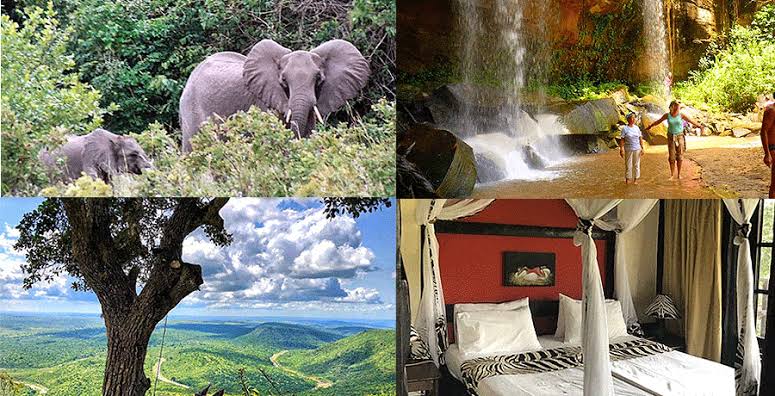
The coastal rainforest itself is the reserve’s quieter but equally important asset. More than half of Kenya’s recorded rare plant species occur here, including endangered cycads, ancient plants that predate flowering species by millions of years, and various orchid species found in few other protected areas along the coast. This botanical richness, combined with strong bird and butterfly diversity, gives Shimba Hills a depth that extends well beyond its headline mammal species.
Where Are Shimba Hills and How Do You Get There?
From Mombasa, the standard overland route crosses via the Likoni ferry to the southern coast, then continues roughly ten kilometers south on the A14 coast road to the main crossroad before turning onto the C106 road, climbing toward Kwale town.
The reserve’s main gate sits about one kilometer off the C106 and roughly three kilometers from Kwale itself. From Diani, the drive is similarly short, making this one of the most accessible reserves for south coast-based travelers anywhere in Kenya.
No flights or specialist charter arrangements are needed. Most visitors arrange a day trip or overnight stay directly through their coastal hotel or a local tour operator, with transport typically included or easily arranged as part of the package, often alongside other nearby excursions such as a Diani spice tour or a boat trip to Wasini Island.
When to Visit: Seasons and Weather
Shimba Hills has a hot, humid climate, moderated by sea breezes and a noticeably cooler feel than the coast itself, with morning mist and cloud a regular feature given the hills’ elevation. Annual rainfall ranges between roughly 855 and 1,682 millimetres, and mean temperatures sit around 24°C, generally comfortable year-round.
| Season | Months | What to Expect | Best For |
| Long dry season | June – October | Easier trail conditions, clearer visibility | General visits and hiking to Sheldrick Falls |
| Short dry spell | January – February | Similar dry-season advantages | Travellers wanting dry conditions outside peak months |
| Long rains | March – May | Heavier rainfall and lush forest growth mean trails can be slippery. | Birders and photographers who don’t mind wetter conditions |
| Short rains | November – December | Intermittent showers, green landscape | Flexible travellers comfortable with some rain |
Because Shimba Hills sits so close to the coast and functions well as a day trip, seasonal planning here matters less than for Kenya’s more remote reserves. Most travelers simply fit a visit around their broader coastal holiday schedule rather than timing a trip specifically around the reserve’s calendar.
How Much Does a Visit Cost
| Component | Cost | Notes |
| Park entry, non-resident adult | USD 22 per day | Children pay USD 13; East African citizens and residents pay considerably less. |
| Guide fee | KES 1,720 for up to 4 hours; KES 3,015 for longer | Required for hikes, including Sheldrick Falls |
| Sable Bandas accommodation | USD 50 per night for non-residents | Self-catering units sleeping two, with en-suite bathroom |
| Shimba Hills Lodge | Rates vary; contact directly. | Privately owned tree lodge overlooking a waterhole |
| Camping | Included at public campsites | No advance booking required; basic facilities with water and toilets |
Shimba Hills sits at a notably affordable price point relative to its ecological significance, particularly for travelers already on the coast who can visit as a day trip without the transport costs that eat into budgets at more remote reserves.
Where to Stay
Shimba Hills Lodge
A privately owned tree lodge set within the rainforest, with a veranda overlooking a waterhole where elephants and other wildlife regularly visit. This is the standout choice for travelers wanting an immersive overnight stay directly within the forest canopy.
Sable Bandas
Four self-catering units, each sleeping two with an en-suite bathroom, solar or kerosene lighting, and a hireable communal kitchen. A practical, affordable option for travelers comfortable with simple, self-sufficient accommodation.
Public Campsites
Makadara and the Sable Bandas campsite both offer basic facilities, water, toilets and a kitchen area, with no advance booking required, making this the most flexible and budget-friendly accommodation option within the reserve.
What to Do in Shimba Hills
Hiking to Sheldrick Falls
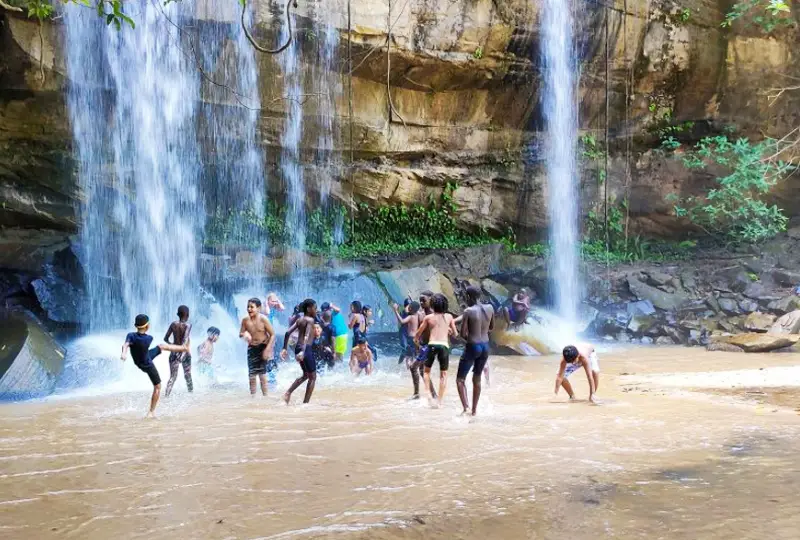
A guided hike through forest trails leads to Sheldrick Falls, where a cool pool at the base offers a rare opportunity to swim during a Kenya safari. This is the reserve’s signature activity and well worth the required guide fee and moderate walking effort.
Game Drives
Standard wildlife drives offer close to guaranteed elephant sightings given the reserve’s high population density, alongside a reasonable chance at sable antelope, buffalo and various forest-adapted antelope species. Early morning drives tend to produce the best overall activity, with animals moving more freely before the day’s heat and humidity set in.
Viewpoints at Pengo and Ocean View Point
Pengo, the reserve’s highest point, and the aptly named Ocean View Point both offer sweeping views across the forest canopy and, from the latter, out toward the Indian Ocean coastline, a worthwhile stop for photographers and anyone wanting a sense of the reserve’s scale.
Birdwatching and Butterfly Spotting
The reserve’s status as a nationally important site for both birds and butterflies rewards visitors willing to slow down and look closely, particularly along forest trails and near the waterhole visible from Shimba Hills Lodge.
Archaeological Safaris
Several operators offer guided visits taking in archaeological points of interest within the reserve, adding a historical dimension to what’s otherwise a nature-focused visit.
Shimba Hills and the Mwaluganje Elephant Sanctuary
Understanding Shimba Hills’ elephant management situation helps explain a feature you’ll likely notice on any visit: a fenced boundary running along much of the reserve’s perimeter, with a dedicated corridor connecting to the neighbouring Mwaluganje Elephant Sanctuary to the north.
This sanctuary, Kenya’s first community-owned wildlife sanctuary, was established specifically to give Shimba Hills’ elephant population additional range and to ease the human-wildlife conflict that high elephant density here has historically caused for surrounding farming communities.
Many visitors combine a Shimba Hills visit with a stop at Mwaluganje, extending the elephant-watching experience into a community-run conservation setting that also channels tourism revenue directly to local landowners. If your itinerary allows for it, asking your guide or operator about combining the two offers a fuller picture of how elephant conservation actually works in this densely populated stretch of the Kenyan coast, beyond what a single reserve visit shows on its own.
Comparing a Shimba Hills Day Trip to an Overnight Stay
| Factor | Day Trip | Overnight Stay |
| Time required | Half to full day from Diani or Mombasa | One to two nights, including evening and early morning activity |
| Wildlife viewing | Daytime game drive and Sheldrick Falls hike | Adds dawn and dusk sightings, plus waterhole activity from the lodge |
| Cost | Lower, transport and entry fees only | Higher, includes accommodation, though still modest relative to interior parks |
| Best for | Travellers with limited time or a packed coastal itinerary | Those wanting a deeper, more relaxed forest experience |
Neither option is wrong, and the choice really comes down to how much of your coastal trip you’re willing to allocate. A day trip captures the headline experiences efficiently, while an overnight stay, particularly at Shimba Hills Lodge with its waterhole view, adds a quieter, more atmospheric dimension that a rushed day visit can’t replicate.
Who Shimba Hills Suits Best
| Traveller Type | Fit | Why |
| South coast and Diani-based travellers | Excellent | A full wildlife and forest experience within easy driving distance, no flights required |
| Families | Excellent | Manageable day-trip length, swimming at Sheldrick Falls, and reliable elephant sightings |
| Botanists and plant enthusiasts | Excellent | Home to more than half of Kenya’s recorded rare plant species |
| Travellers wanting Kenya’s only sable antelope | Excellent | The reserve’s last breeding herd makes this a unique sighting opportunity |
| Big Cat-focused safari travellers | Moderate | Predator sightings are far less reliable here than herbivore and elephant encounters |
Planning Your Visit
Shimba Hills is one of the easiest additions to make to a south coast Kenya holiday, delivering real safari substance, rare wildlife, waterfall swimming and significant plant biodiversity, without the time and cost of reaching Kenya’s interior parks. A single day covers the highlights comfortably, while an overnight stay at Shimba Hills Lodge adds the kind of quiet evening wildlife activity around the waterhole that a day visit simply can’t match.
Book your guide and, if staying overnight, your accommodation ahead of peak coastal holiday periods, since Shimba Hills’ convenience means it draws steady demand from the large number of travellers passing through Diani and Mombasa each year, even if it never feels crowded once you’re inside the forest itself.
If you’re planning a south coast stay and want help deciding how Shimba Hills fits alongside your beach time, or whether a day trip or overnight stay makes more sense for your itinerary, our team is happy to help you plan it.


