Ol Donyo Lodge | Chyulu Hills, Kenya
Set on the south-western flank of the volcanic Chyulu Hills, between Amboseli and Tsavo West National Parks, ol Donyo Lodge occupies a landscape Ernest Hemingway once called the Green Hills of Africa. With unbroken views toward Mount Kilimanjaro, rooftop “star beds” for sleeping directly under the night sky, and horseback safaris across open volcanic plains, it’s one of Kenya’s most distinctive and quietly luxurious properties, and one built from the ground up around genuine community partnership.
I recommend ol Donyo to clients who want their trip to genuinely support community-led conservation and who appreciate a flexible, unscripted style of safari over a fixed daily itinerary, since few properties in Kenya let guests shape each day as freely as this one does, and its current Relais & Châteaux status confirms the level of quality behind that flexibility.
From ol Donyo Wuas to Today
The lodge was originally built in 1987 by bush pilot and conservationist Richard Bonham under the name ol Donyo Wuas before being fully transformed in 2008 into the designer safari base for horseback riding, bush walking, and game drives that guests experience today. It sits within the roughly 275,000-acre Mbirikani Group Ranch, land owned collectively by around 4,000 Maasai.
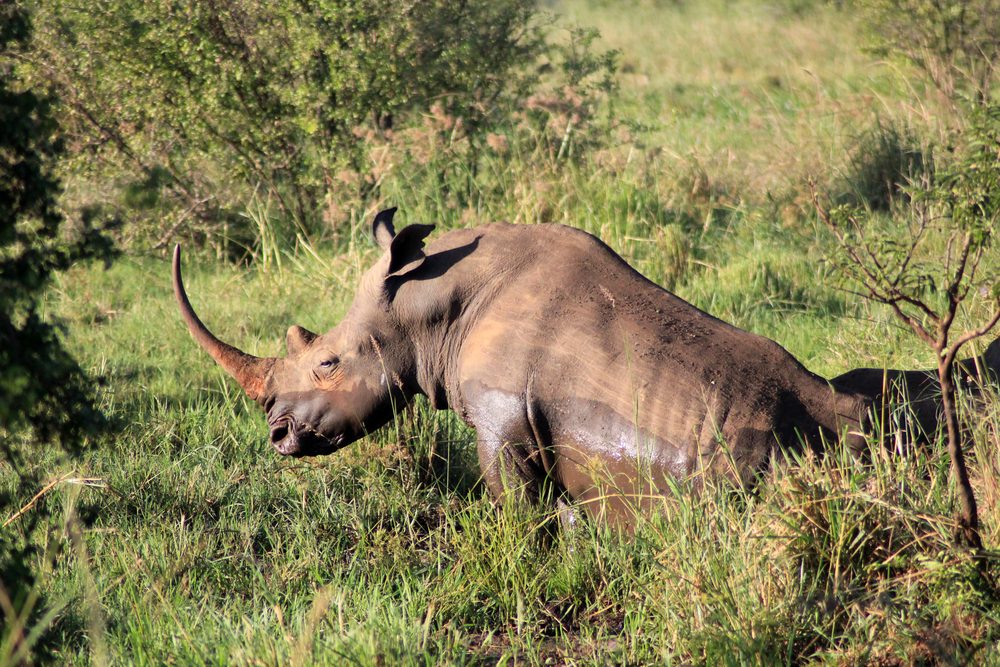
The lodge is a Great Plains Conservation property, and it works closely with the Maasailand Preservation Trust, founded by Bonham himself and now part of the Big Life Foundation, an organisation credited with helping local communities view wildlife as a genuine economic asset rather than a source of conflict, while running an active anti-poaching programme protecting the region’s elephants and its last wild-roaming black rhino population, among the very few still surviving outside a dedicated sanctuary.
This partnership model means a meaningful share of lodge revenue flows directly to the Mbirikani community through lease fees and conservation payments, and the presence of Big Life’s ranger network across the surrounding landscape has helped stabilize wildlife numbers here after years of pressure from poaching and human-wildlife conflict.
The Suites and Their Star Beds
ol Donyo’s suite count has varied slightly over the years as the lodge has been reconfigured, with current descriptions citing either eight deluxe suites plus a two-bedroom family suite, or nine suites including the two-bedroom Sambu Suite, depending on the specific season and source.
Whichever the exact current count, every suite includes a private plunge pool, a lounge, veranda, indoor and outdoor showers, double wash basins, a flush toilet, and a proper bathtub, and no two suites are finished identically, so returning guests often request a specific one by name.
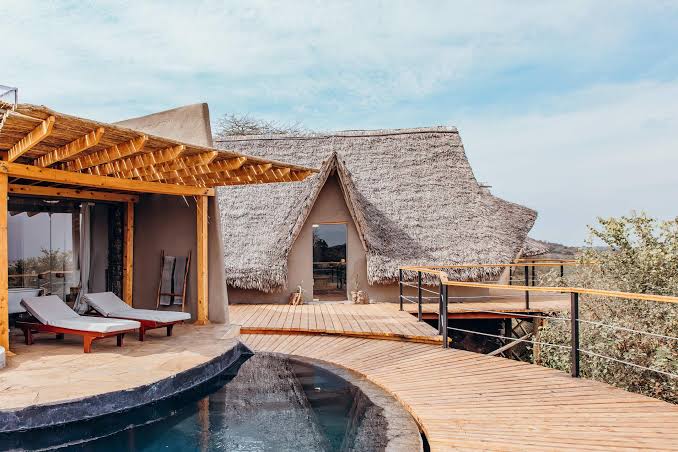
The property’s signature feature is its rooftop star beds, accessed via a winding stone staircase from each suite: a private terrace where the bed itself can be wheeled out beneath the open sky, letting guests fall asleep watching for shooting stars over the Chyulu Hills, with the distant silhouette of Kilimanjaro visible by day from the same spot.
The experience is genuinely comfortable rather than a novelty stunt, proper bedding, mosquito protection, and enough elevation to feel private and secure while still fully immersed in the surrounding wilderness. The main lounge and dining area are genuinely striking in their own right, built around rich earth tones, a soaring stone fireplace, and grand wrought-iron chandeliers.
Amenities
The main lodge area centres on a breathtaking infinity pool with its own private lounge and dining area, offering views directly over a well-known waterhole, and the property’s small guest count keeps the overall atmosphere genuinely intimate rather than resort-like.
Beyond the infinity pool, guests can retreat to a sunken log-pile hide built into the landscape near the waterhole, an extraordinary, quiet spot to watch elephants and other wildlife come and go at close range, and past guests consistently name breakfast, lunch, or sundowners at this hide among the most memorable parts of their stay.
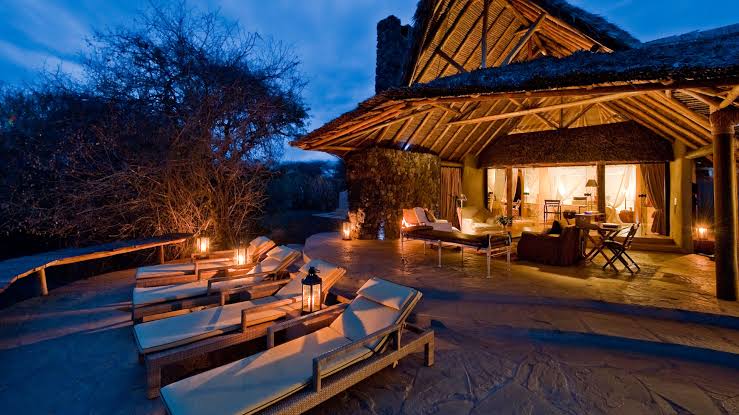
Dining draws on fresh, seasonal, farm-to-table ingredients befitting the property’s Relais & Châteaux affiliation, and meals can be arranged in a range of settings across the property: al fresco lunches on the flagstone veranda, candlelit dinners in the main dining room, or lantern-lit bush dinners out in the landscape itself.
A spa, gym, viewing hides, and a small safari boutique round out the property’s facilities, and given the lodge’s genuinely remote setting, most guests arrive via a short scheduled or chartered flight into the ol Donyo private airstrip followed by a roughly 30-minute transfer, rather than the considerably longer 4.5 to 5 hour road journey from Nairobi.
A Landscape Built for Exploration on Your Own Terms
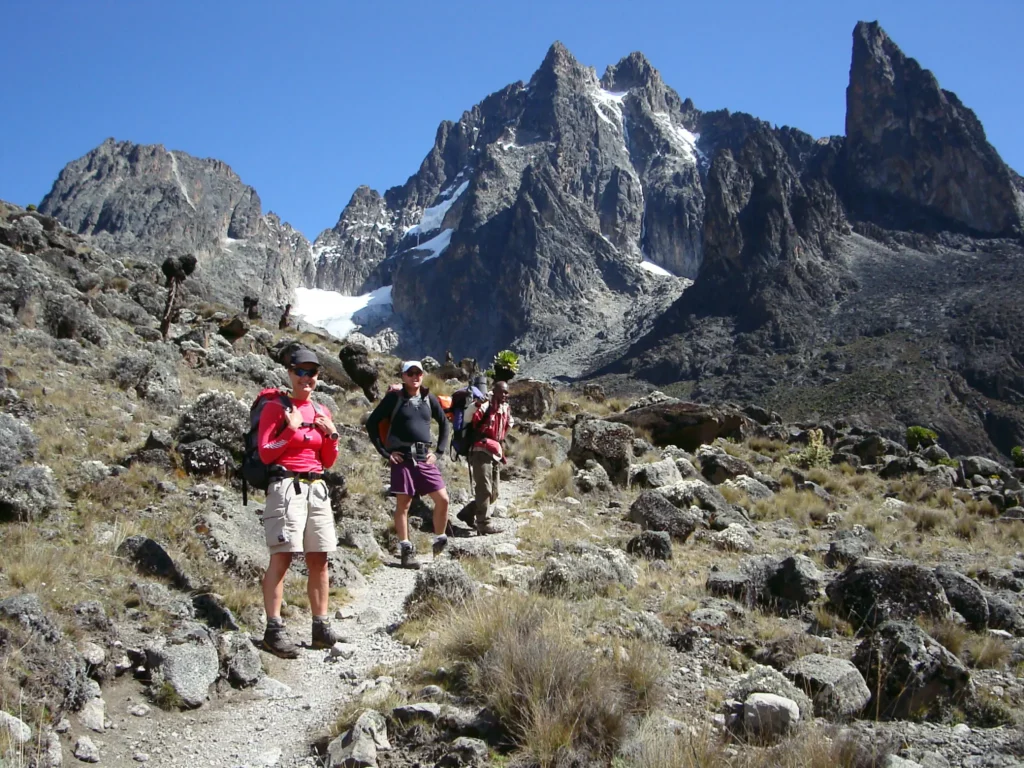
Unlike many safari lodges built around a fixed daily schedule, ol Donyo takes a deliberately flexible approach: guests simply tell their guide how they’d like to spend the day, and the itinerary adjusts accordingly. Horseback safaris across the open plains are a genuine highlight for intermediate and advanced riders, offering a completely different vantage point on the region’s elephants and big cats than a vehicle ever could, and the lodge also offers guided walking safaris, night drives for nocturnal wildlife, mountain biking across the volcanic terrain, day trips into neighboring Amboseli National Park, and, for the truly adventurous, helicopter excursions over the wider landscape.
One genuinely unusual highlight within the Mbirikani Ranch is the chance to hike up into the high-altitude mist forest found in a specific pocket of the property, a genuine microcosm of biodiversity unlike anywhere else on the ranch, where leopard and rhino are known to move through the cloud-covered undergrowth.
The surrounding plains and rolling hills serve as a genuine migratory corridor for wide-ranging species, meaning elephant sightings directly from your veranda are a realistic, everyday occurrence rather than a rare stroke of luck, and every stay here contributes directly to the conservation and community programmes that keep this landscape wild. Guides here are drawn substantially from the local Maasai community and bring a depth of personal, generational knowledge of the landscape that few other properties can match.
Best Time to Visit
The Chyulu Hills region’s dry seasons, roughly June through October and January through February, offer the clearest Kilimanjaro views and the most comfortable conditions for horseback safaris and mountain biking. As with much of southern Kenya, this timing reflects general wildlife concentration and comfort rather than a single migration event, making it a more straightforward planning decision than a Mara-focused trip.
The wetter months bring lush, vividly green scenery and excellent value, along with strong birdlife, though cloud cover can more frequently obscure Kilimanjaro’s summit during these months. Given the flexible, unscripted nature of activities at ol Donyo, the property works well across a genuinely wide range of dates, and I’d generally suggest choosing a season based on personal weather preference and rate considerations rather than any hard constraint tied to wildlife viewing.
Why It’s Worth the Price
ol Donyo sits in Kenya’s upper luxury tier, with rates commonly starting from around $2,500 per person per night, and the price reflects both the genuinely small, exclusive guest count and the depth of the conservation and community partnership underpinning the entire property.
For travelers who want their safari spending to translate into real, tangible support for community-led conservation and who value a flexible, personalized pace over a fixed daily schedule, ol Donyo offers one of the most genuinely distinctive experiences in Kenya, anchored by its rooftop star beds, its horseback safaris, its sunken elephant hide, and a landscape that remains genuinely wild specifically because of the model the lodge helped pioneer.