Maasai Mara National Reserve Weather and Climate
Maasai Mara National Reserve Weather and Climate: Kenya’s Maasai Mara National Reserve experiences a tropical savannah climate, making it a year-round safari destination. Generally, the temperatures are mild and pleasant, ranging between 50°F (10°C) on the cooler nights and 85°F (29°C) on the warmest days.
The reserve has two rainy seasons, the long rainy season and the short rainy season, which result in dramatic changes to the Mara landscape and the rhythm of wildlife.
As you are planning a Kenya safari to Maasai Mara National Reserve, it is important to understand the weather and climatic patterns, as they will help you decide the best time to visit based on your preferences, such as avoiding the rains, catching the iconic wildebeest migration, and having excellent sightings of the Big Five.
Rainfall in Maasai Mara National Reserve
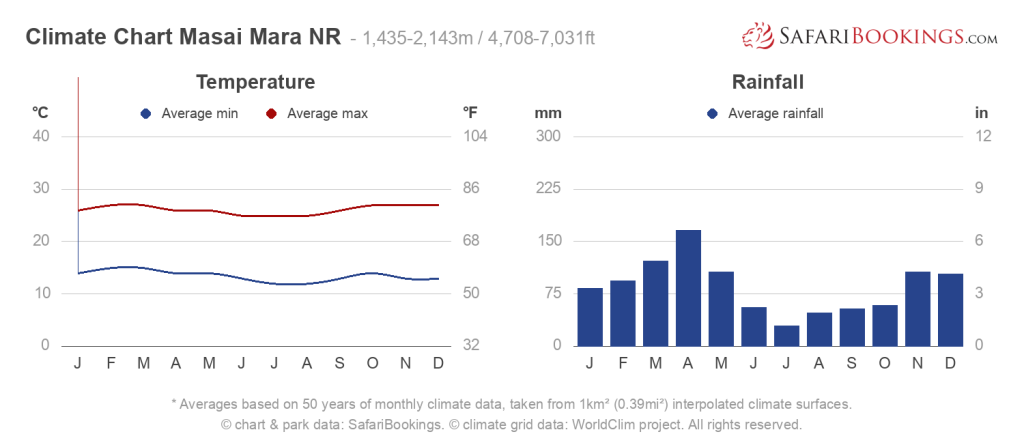
On the average, rains in Maasai Mara National Reserve are approximately 1400 millimeters (55 inches) per year. You are likely to encounter a rain shower in April and least likely to feel raindrops in July. The reserve has two rainy seasons: the short rainy season in November and December and the long rainy season in March–May. Expect the heaviest rainfall in April; however, flooding can occur in both rainy seasons.
Maasai Mara National Reserve weather and climate Charts
Month-to-month average rainfall in mm
| JAN | FEB | MAR | APR | MAY | JUN | JUL | AUG | SEP | OCT | NOV | DEC | |
| in mm | 95 | 100 | 145 | 210 | 155 | 95 | 60 | 80 | 95 | 100 | 155 | 115 |
| in inches | 3.7 | 3.9 | 5.7 | 8.3 | 6.1 | 3.7 | 2.4 | 3.1 | 3.7 | 3.9 | 6.1 | 4.5 |
Hours of sunshine per day in Masai Mara
| JAN | FEB | MAR | APR | MAY | JUN | JUL | AUG | SEP | OCT | NOV | DEC | |
| hours / day | 9 | 9 | 8 | 7 | 7 | 8 | 7 | 7 | 8 | 8 | 8 | 8 |
Month-to-month average maximum and minimum temperatures
| JAN | FEB | MAR | APR | MAY | JUN | JUL | AUG | SEP | OCT | NOV | DEC | |
| Max °C | 28 | 28 | 27 | 26 | 25 | 25 | 25 | 25 | 27 | 28 | 27 | 27 |
| Min °C | 12 | 12 | 12 | 13 | 12 | 13 | 12 | 11 | 11 | 11 | 12 | 12 |
| Max °F | 82 | 82 | 81 | 79 | 77 | 77 | 77 | 77 | 81 | 82 | 81 | 81 |
| Min °F | 54 | 54 | 54 | 55 | 55 | 54 | 52 | 52 | 54 | 54 | 54 | 54 |
Weather and Climate of Maasai Mara National Reserve—Month-by-Month Breakdown
January to March – Warm and Dry
January–March is the dry spell between short and long rainy seasons in Maasai Mara National Reserve, only with an incidental rain shower a day. The reserve experiences warm, dry weather with daytime temperatures averaging between 75°F (24°C) and 85°F (29°C). The landscape begins to dry, making wildlife easier to spot as animals congregate near the remaining water sources.
In this period, expect clear skies and excellent conditions for game-viewing safaris, hot air balloon safaris, and guided walks, among others.
During the period of January to March, expect conducive weather conditions with minimal rain, ideal for wildlife viewing. As you pack for your Maasai Mara safari, include lightweight, breathable clothing, a wide-brimmed hat for sun protection, sunscreen and sunglasses, and sturdy shoes for game walks.
April to May—Long Rains Season
The long rain season arrives in Maasai Mara National Reserve in April to May, the rains transforming the reserve into a lush, verdant paradise. Expect frequent downpours; however, they are often short-lived, with episodes of sunshine in between.
Regardless of the long rains, wildlife activity in Maasai Mara National Reserve is high. However, the number of tourists drops significantly during this time of year, making it ideal if you prefer an intimate safari experience. In this period, expect stunning green landscapes, fewer tourists, quieter lodges and excellent birdwatching opportunities.
If you are planning to visit Maasai Mara National Reserve, your packing list should include waterproof clothing, a lightweight rain jacket, boots and quick-dry trousers and shorts.
June to August—Cool and Dry
June to August marks the dry season in Maasai Mara National Reserve; it is also the busiest safari season in the reserve as well as in Kenya. The mornings and nights can be quite chilly, with temperatures dropping to around 50°F (10°C). The days remain clear and mild.
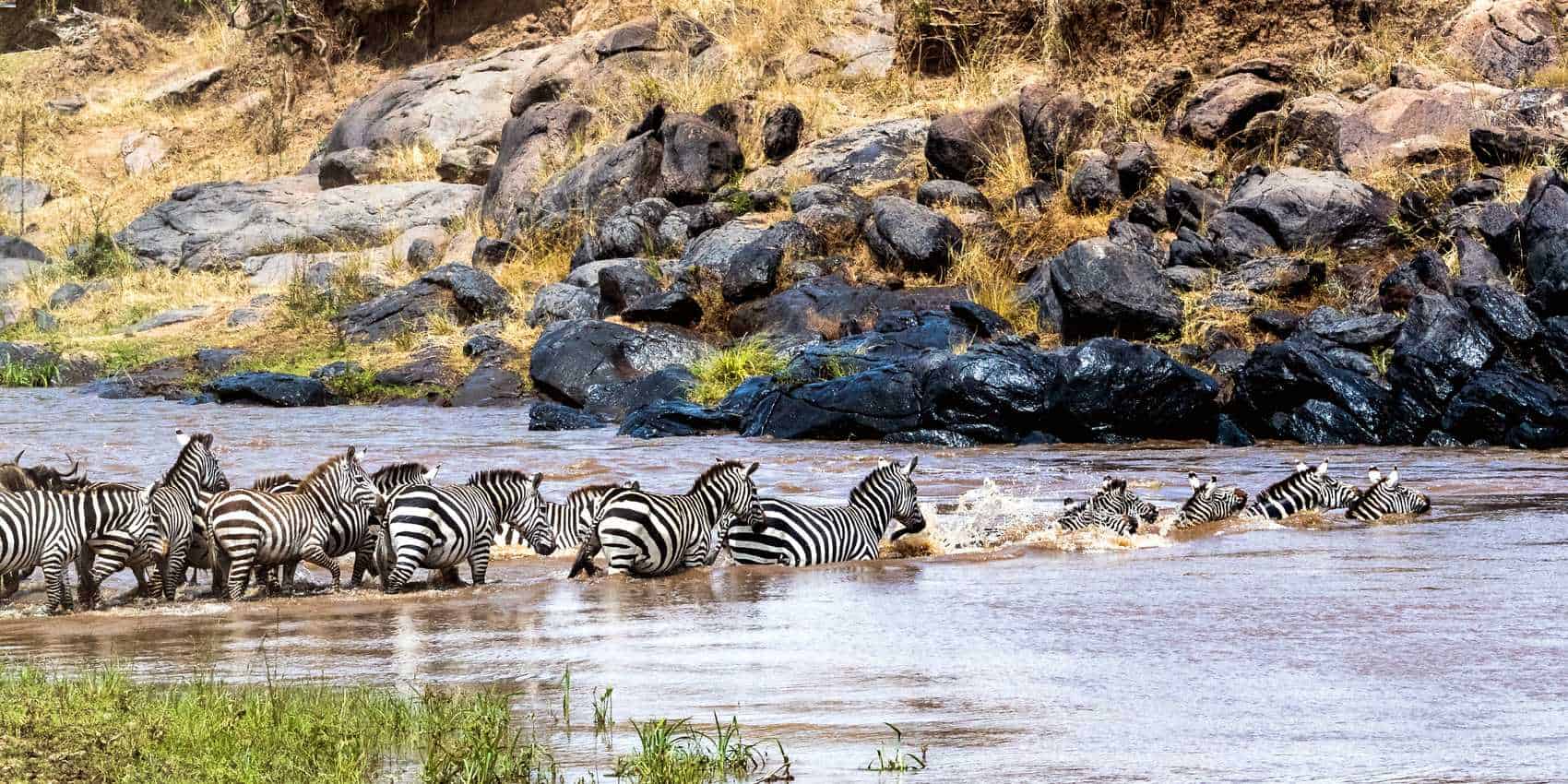
These months are marked by anticipation for the Annual Wildebeest Migration, as the millions of wildebeests accompanied by zebras and gazelles begin their annual movement towards Maasai Mara from Serengeti with Mara River Crossing. In these months, expect clear skies, incredible visibility, and the arrival of the Great Migration as well as peak safari conditions.
As you pack for a Maasai Mara safari in July to August, your packing list should include layers such as a fleece jacket or sweater, warming clothing for morning and evening game drives, and a pair of binoculars for long-distance wildlife viewing.
September to October—Peak Safari Time in Maasai Mara
September and October experienced balanced weather, with daytime highs in the 70s°F (24–26°C) and occasional showers. In October, daytime temperatures are slightly higher at 27 degrees Celsius (81 degrees Fahrenheit). After rain, it can be slightly cooler. The early morning game drives can be chilly at around twelve degrees Celsius (54 degrees Fahrenheit).
During this period, the plains of Maasai Mara National Reserve are buzzing with large predator-prey interactions as they unfold. If witnessing the iconic Great Migration is the main aim for your Maasai Mara safari, consider visiting during September to October.
If you are planning to visit Maasai Mara National Reserve during this period, your packing list should include comfortable, lightweight clothing with layers for cooler mornings, a good-quality camera for capturing dramatic moments, sunscreen and insect repellent.
November to December—Short Rains
The short rains return to the plains of Maasai Mara in November and December, transforming the landscape into fresh greenery.
While short bursts of rain are frequent, they rarely disrupt your daily activities in the reserve. Also, this is a low season offering great deals on accommodations. Most safari lodges and camps in Maasai Mara National Reserve offer discounted rates for accommodations.
The advantages of visiting Maasai Mara National Reserve during the short rains period are affordable safari options, few visitors and renewed wildlife experiences.
As you travel to Maasai Mara National Reserve for a safari during this period, your packing list should include light rain gear, waterproof footwear and layers for fluctuating temperatures.