How Much Does a Kenya Safari Cost?
How Much Does a Kenya Safari Cost? If you ask ten people this question, you will get ten different answers. Some will say it is very expensive. Others will tell you it can be done on a tight budget. Both are true, depending on how you approach it.
The mistake most people make is thinking there is one fixed price for a safari, which is not true. A safari in Kenya can cost as little as a few hundred dollars or go all the way into several thousand for just a few days.
The cost of your Kenyan safari really comes down to choices. For example, where you go, how you move, where you sleep, and even the time of the year. All these quietly push the price up or down, not forgetting the activities you engage in. Let me break the factors that contribute to Kenyan safari cost down in a way that actually makes sense.
- First thing people underestimate: park fees
Before you even think about hotels or transport, there is something you cannot avoid. Park entry fees. If you go to the Maasai Mara, you are paying park fees daily. And these are not small amounts. For nonresidents, it can be around one hundred dollars per day per person depending on the season.
Masai Mara park entry fees in 2026 for non-residents are USD 100–200 per adult per day, depending on the season (high season is July–December). Gates open 6:00 AM – 6:00 PM, with popular entrances including Sekenani, Talek, and Oloololo.
Payments for Narok County are managed via the E-Citizen portal or cashless at the gate. Now imagine you stay three days. That alone is already three hundred dollars, and you have not eaten, slept, or moved around yet.
Amboseli is slightly cheaper, but still not cheap. Tsavo can be more affordable, but it depends on which part you enter. Amboseli Pricing: Entry is roughly 90 USD per adult/day for non-residents, with lower rates for East African citizens and residents. Luxury experiences like Angama Amboseli, can take your Kenyan safari much higher, often requiring higher budgets.
For locals or East African residents, the cost drops a lot. But for international visitors, this is usually the first shock. East African tourism often features a two-tier pricing system where residents/locals pay significantly less than international visitors, who face high park fees and luxury-level costs for popular destinations.
The EAC Visa Advantage: The East Africa Tourist Visa (Kenya, Rwanda, and Uganda) helps mitigate costs for international visitors by offering access to three countries with one visa.
Getting there is where things start adding up
Kenya is not small when you are traveling by road. From Nairobi to Maasai Mara, you are looking at about five to six hours by car. Sometimes more if the roads are rough or if it rains. You have two main options, either go by road or you fly.
The journey from Nairobi to Maasai Mara typically takes 5–6 hours by road (approx. 225–275 km), with possible delays during rains or on rougher sections. Flying takes 40–60 minutes, usually departing from Wilson Airport. Both options offer distinct experiences, where road driving allows scenic views and flying providing efficiency.
Road is cheaper, but it comes with its own cost. You need a safari vehicle, fuel, and a driver guide. If you are in a group, this becomes manageable. If you are alone, it can feel expensive very quickly. A private safari vehicle with a driver can cost anywhere from one hundred fifty to three hundred dollars per day. That cost is shared if you are more people.
Note: The costs for 2026 are heavily influenced by rising fuel prices and updated National Park fees, making it important to confirm whether park fees are included in a quoted price.
Flights are faster, making it a great option for your luxury Kenyan safari. About forty five minutes from Nairobi to Maasai Mara. But now you are paying maybe two hundred to four hundred dollars one way depending on the season.
Sometimes to enjoy fully, you can combine both road and flight to fully immerse into the wholesome Kenyan safari experience if your budget allows
Accommodation is where the biggest difference shows
This is the part that changes everything about the cost of your Kenyan safari. You can sleep in a simple camp or in a luxury lodge that feels like a five star hotel in the middle of the wild. The choice you make about your preferred accommodation, will shoot your budget up or down
- Budget camps can cost around 80 to one hundred dollars per night. These are basic but decent. You get a bed, a shower, breakfast, and access to game drives.
- Mid range lodges sit somewhere between two hundred fifty and four hundred dollars per night. These are more comfortable, better food, better locations.
- Then you have luxury lodges. These can go from 800 hundred dollars to over one thousand dollars per night. Some of them include everything. Food, drinks, game drives, even laundry.
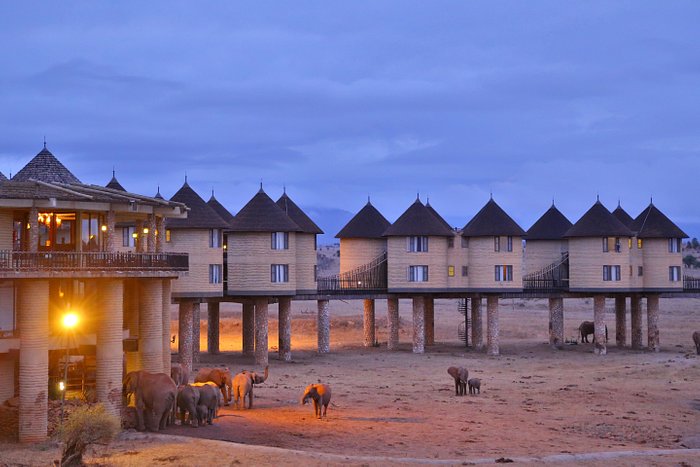
The difference in the cost of accommodation is not just comfort, but also the location. Some luxury camps, like &Beyond Bateleur Camp and Angama Mara, are inside the park or very close to key wildlife areas. That means you see more without driving too far or waking up too early for a drive to the safari/game drive.
Food is usually included but not always
Most Kenyan safari packages include meals. Especially in mid-range and luxury setups. But if you are doing a more independent or budget trip, you might need to pay for food separately.
In Nairobi, like at the Street kitchen, you can eat well for ten to twenty dollars per meal. Inside or near parks, prices go up. You might pay twenty to fifty dollars per meal depending on where you are.
The guide matters more than people think
Most safari costs include a driver guide. But the quality varies. A good guide can make your Kenyan safari feel alive. A bad one can make it feel like a long drive with nothing happening. Sometimes paying a bit more for a better operator makes a big difference. Not in comfort, but in the experience itself.
Some guides know the land, the animals, and the behavior. They talk to other drivers, track movement, and get you to the right place at the right time. Other guides just drive, ending up taking your money and your safari experience.
Season changes everything
If you go during the migration season in Maasai Mara, which is usually between July and October, prices go up. Accommodation becomes more expensive, Flights fill up, and even park fees can vary. However, you see thousands of animals moving across the plains, which feels unreal, according to several traveler reviews.
If you go during the low season, like April or May, prices drop. You can get good deals. But there is more rain, and some roads can be difficult. Depending on your preferences, the season and safari cost might not matter, but the experience.
Other factors to how much your Kenyan safari cost
One of them is how your travel setup changes everything.
Solo vs group safari; if you are traveling alone, for example, things can feel unfair very quickly. A safari vehicle does not become cheaper just because you are one person. The fuel is the same. The driver is still there the whole day. The park charges you the same daily fee. So unless you join a group, you end up carrying most of the cost yourself.
This is why you will see many solo travelers trying to find shared safaris. It spreads the cost across four, five, sometimes six people. Suddenly something that felt expensive becomes manageable.
However, group safaris come with some lose ends. You lose a bit of control. The schedule is not fully yours. If someone in the group wants to stay longer at one spot, you wait. If others are tired, the day can end early. Group travel is not bad, just different.
Now compare group travel with traveling as a couple. This is where things start to balance out. You split the vehicle cost, the guide, sometimes even accommodation deals become easier to negotiate. Some lodges price per room, not per person, so two people naturally get better value.
As a Couple, you still pay park fees individually, that part does not change. But overall, the cost per person drops compared to traveling alone.
Then you have small groups. Three to six people. This is usually the sweet spot if you are trying to manage cost without losing flexibility. A full safari van divided among a group makes transport much more affordable per person. You can also afford slightly better accommodation without stretching too far.
But the whole safari experience, again, it depends on the group dynamic. Not everyone travels the same way. Some people want to wake up at five in the morning every day. Others want to take it slow. Those small differences can affect how much value you actually get from what you paid.
Families are a different story. If you are traveling with children, costs can either go down or up depending on how you plan it. Some lodges offer reduced rates for kids. Others charge almost full price if they are older.
You might also need a larger vehicle, or even two rooms instead of one. That pushes accommodation costs higher. But families sometimes stay longer in one place, which can reduce transport movement and help balance the total spend.
The question is how you book your Kenyan Safari
Some people go through agents to book there African safaris. Others try to plan everything themselves. If you go through an agent, the price might look higher at first. But sometimes it includes things you would have missed. Permits, smoother transfers, better coordination.
If you plan your Kenyan safari by yourself, you might save money, but you need to understand the logistics. Timing matters. Distances matter. A small mistake can turn into extra fuel, extra nights, or missed activities.
Now, something else that quietly shapes your budget is the kind of costs that do not show up clearly at the beginning.
Fuel/gas is one of them. People rarely think about it directly, but it is already built into your transport cost. And fuel prices in Kenya do change. When they go up, safari prices follow. You might not notice it immediately, but it is there. Long drives, especially to places like Maasai Mara or Tsavo, consume a lot. If your itinerary includes moving between parks, that adds even more.
Then there are small fees that do not look like much on their own.
For example, some lodges charge extra for certain activities. Laundry in higher end lodges is often included, but in mid-range places, you might pay for it.
And then there is tipping.
It is not forced, but it is part of the culture around safaris and its widely expected. Drivers, guides, lodge staff, they all expect something small at the end of your stay. Individually, it might feel like ten or twenty dollars here and there. But across several days, it adds up.
Now think about activities outside the normal game drives.
- A balloon safari is one of the most talked about experiences in Maasai Mara. It sounds amazing, and it is. Floating over the plains early in the morning, watching animals move below. Putting the awesome experience aside, it is expensive. You are looking at around four hundred to five hundred dollars per person. Some people feel it is worth it. Others skip it and still have a full experience.
- There are also cultural visits. For example, visiting a Maasai village. These are usually arranged through guides or lodges. There is often a fee involved, sometimes around twenty to fifty dollars. It is not just a ticket. It supports the community. But it is still part of your total spend.
- Even something as simple as drinks can change your budget. In many mid-range lodges, meals are included, but drinks are not. A soda, a beer, a glass of wine, each has a price. Over a few days, especially if you are relaxing in the evenings, this builds up quietly.
- And then there are the unexpected moments. A tyre issue on the road that causes delay and forces an extra overnight stay. Weather changes that affect your plans. Last minute adjustments because animal movement has shifted and your guide suggests going further than planned.
What most people realize only after the trip is that a safari is not one single cost. It is a chain of decisions.
Each choice feels small when you make it. But together, they shape the final number in a big way.
That is why two people can go to the same place, stay for the same number of days, and come back having spent completely different amounts.
One kept things simple, stayed just outside the park, skipped extra activities.
The other chose a better located lodge, added a balloon ride, had drinks every evening, and tipped generously.
Both had a safari. Just not the same one.
Real examples to make it clearer
Let me give you a few simple scenarios. If you are a solo traveler trying to do a budget safari for three days to Maasai Mara National Reserve:
You might spend:
- Three hundred dollars on park fees
- Three hundred to five hundred on shared transport and guide
- One hundred fifty to three hundred on accommodation
- Food maybe included or another one hundred
You are looking at around eight hundred to one thousand two hundred dollars.
Now, if you are a couple doing a mid-range safari:
- Park fees still around six hundred for both
- Transport shared between you, maybe four hundred total
- Accommodation around four hundred to six hundred for two nights
- Food included
Now you are around one thousand four hundred to one thousand eight hundred. Therefore, If you go luxury, it can easily go beyond three thousand for a few days without even trying too hard.
Small things that quietly increase cost
Tips for guides and staff. It is expected. Maybe ten to twenty dollars per day. Drinks that are not included. Extra game drives or special experiences like a balloon safari. That one alone can cost four hundred to five hundred dollars per person. Souvenirs. And trust me, you will be tempted.
Nairobi itself is part of the cost
Before or after your safari, you will likely stay in Nairobi. Hotels range from budget guest houses at eighty dollars to mid-range and high end hotels at two hundred fifty dollars or more per night. You might visit places like the giraffe center or Nairobi national park. These also have entry fees. So your safari cost is not just the park. It starts and ends in the city.
So how much does it really cost
If you want a straight answer, here it is.
A Kenya safari can cost:
- Around eight hundred to one thousand five hundred dollars for a basic accommodation and using a safari van not a land cruiser.
- Around one thousand seven hundred to three thousand for a comfortable mid-range trip
- Three thousand and above for a luxury trip
And that is for about three to four days. Longer stays increase the cost, but sometimes the daily rate becomes slightly better.
One honest piece of advice
Do not just go for the cheapest option. Sometimes cheap ends up being expensive in a different way. Poor planning, bad vehicles, rushed schedules.
At the same time, you do not need to go luxury to enjoy it. A well planned mid-range safari often gives the best balance. Good comfort, good access, and a real experience.
Final thought
A safari in Kenya is one of those experiences where the value is not just in what you pay. You wake up early, drive out into open land, and suddenly there are elephants crossing in front of you, in Amboseli National Park. Or have sightings of Lions resting in the dry savannah grass.
So yes, a Kenyan safari truly costs money. But how much you spend is something you can control more by making the right choice
How much a Kenyan safari cost is not about finding the cheapest option, but rather about finding the right tour operator to offer the best safari plan for the best possible experience.